
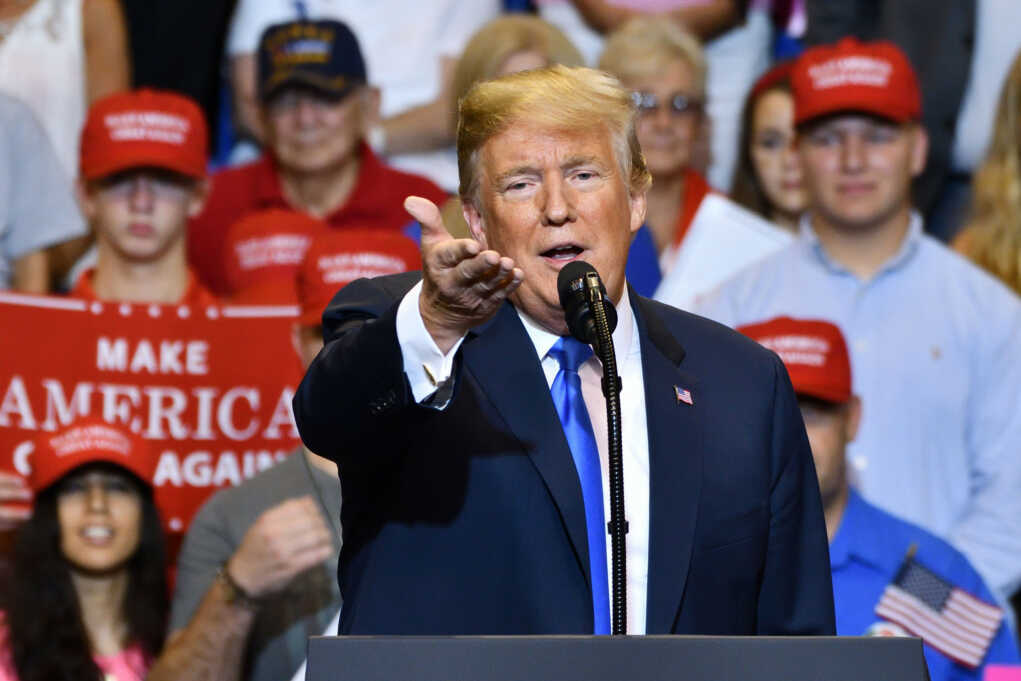
Trump’s latest “Y.M.C.A.” boast has turned a pop song into another fight over symbolism, truth, and the strange way modern politics now gets measured by viral clips instead of hard evidence.
Story Snapshot
- Trump publicly referred to “Y.M.C.A.” as the “gay national anthem” while talking about his dance moves and Melania’s reaction.[4]
- Reporting says Trump is also claiming credit for the song reaching No. 1 in 2024.[3]
- Music history sources say “Y.M.C.A.” has long been treated as a gay anthem because of its lyrics and the Village People’s styling.[2]
- The available material does not provide voter data proving broad LGBT support for Trump.[1][3][4]
Trump Recycles a Familiar Rally Line
President Donald Trump once again tied his rally routine to “Y.M.C.A.” by calling it what “sometimes is referred to as the gay national anthem” while joking about how Melania dislikes his dancing.[4] The comment confirms that Trump is using the phrase deliberately, but it also shows the bigger issue: the line is a rhetorical flourish, not evidence by itself that LGBT voters are lining up behind him.[4]
That distinction matters because the public record in this case is thin on proof and heavy on performance. LGBTQ Nation reports that Trump is “claiming credit” for the Village People’s song reaching No. 1 in 2024, but that is still a claim, not a verified measurement of political influence or voting strength.[3] The supplied materials do not include exit polls, voter-file analysis, or demographic crosstabs showing that LGBT support for Trump is broad or durable.[1][3][4]
Why the Song Carries Cultural Weight
The “gay anthem” label did not begin with Trump. Britannica says “Y.M.C.A.” is considered a gay anthem because its lyrics resonated with LGBTQ experiences in the 1970s and because the Village People’s costumes and styling evoked gay male culture.[2] Maynooth University similarly describes the track as a “camp 1970s’ gay disco anthem” that later became an unlikely hit at Trump’s rallies.[1]
That history explains why the phrase gets attention so quickly. The song already carried cultural baggage before Trump adopted it as a rally closer, so every new remark about it lands as both entertainment and political signaling.[1][2] For conservative readers, the important point is not whether the joke is funny; it is whether the media narrative is again turning symbolism into substitute evidence while skipping the factual question of who actually supports whom.[1][3][4]
What the Available Evidence Does and Does Not Show
The sources do show that Trump said the words and that he has used the song repeatedly in public settings.[1][4] They also show that commentators interpret the song as a gay anthem and that Trump is framing its popularity as part of his own political brand.[2][3] What they do not show is a measurable, independently verified LGBT voter surge for Trump, or a documented chain from his rallies to the song’s chart performance.[1][3][4]
Trump calls YMCA the “gay national anthem” while boasting about support from LGBT voters.https://t.co/CxQPCbXIym
— LifeSiteNews (@LifeSite) May 27, 2026
That gap is important because it keeps the debate grounded in reality rather than viral storytelling. A clip of Trump joking about the “gay national anthem” may entertain supporters and irritate critics, but the evidence package here does not prove his implied political claim. At most, it proves that Trump understands the value of a memorable phrase, that the song has a real LGBTQ cultural history, and that the media still rewards spectacle over documentation.[1][2][3][4]
Sources:
[1] Web – Trump again credits ‘gay national anthem’ for his LGBT support
[2] Web – Donald Trump calls “Y.M.C.A” the “gay national anthem” & brags …
[3] YouTube – Trump: “She hates when I dance” to Y.M.C.A
[4] Web – Why is Donald Trump dancing to “YMCA”? – Maynooth University