Rumors that Washington might “trade” Taiwan for Chinese help on Iran clash with on-record commitments that U.S. Taiwan policy is unchanged and backed by record arms sales.
Story Snapshot
- Secretary of State Marco Rubio said U.S. Taiwan policy remains unchanged following the Trump–Xi meeting, including defending Taiwan under longstanding policy [1].
- Chinese leader Xi Jinping warned of possible “clashes” if Taiwan is mishandled, raising pressure on summit outcomes [3].
- Trump’s team advanced the largest-ever U.S. arms sale to Taiwan and signaled even more, reinforcing deterrence [7].
- Trump signed the Taiwan Assurance Implementation Act in 2025 to ease limits on U.S.–Taiwan official contacts [2].
Public Commitments Versus Speculation About a “Trade”
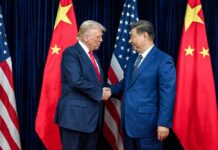
Secretary of State Marco Rubio stated that U.S. Taiwan policy remained “unchanged” after President Donald Trump’s talks with China’s Xi Jinping in Beijing, underscoring continuity across administrations and reiterating that the United States will defend Taiwan in line with established policy [1]. That statement directly counters speculation that Washington might barter Taiwan’s security for Chinese cooperation on Iran or trade. Official on-camera assurances carry more weight than anonymous chatter, particularly when paired with ongoing defense steps.
Xi Jinping publicly warned of potential “clashes” if the Taiwan issue is mishandled, language designed to signal costs and shape headlines during negotiations [3]. Taiwan’s government responded by emphasizing that China is the sole source of risk to peace across the strait, sharpening the contrast between deterrence and coercion narratives [5]. When Beijing escalates rhetorical pressure, the surest American answer is clarity backed by capability—policies that show resolve without inviting miscalculation.
Arms Sales and Legislation That Harden Deterrence
Research indicates the Trump administration authorized the largest-ever U.S. arms sale to Taiwan and prepared an even larger package, strengthening Taiwan’s self-defense and complicating any Chinese timeline for aggression [7]. Those sales complement Trump’s first-term record, when approvals reached roughly eighteen billion dollars across four years, surpassing the prior administration’s eight-year total, while shifting to a rolling approval process that sped delivery [4]. Weapons paired with training and sustainment raise the cost of coercion and anchor credible deterrence.
In December 2025, President Trump signed the Taiwan Assurance Implementation Act, directing the executive branch to explore removing self-imposed “red lines” on official interactions with Taiwan, a step that widens diplomatic space without abandoning the One China policy framework [2]. Earlier, the Taiwan Travel Act in 2018 ended several restrictions on official exchanges that had lingered since 1979, enabling more routine senior-level contact [4]. These laws bolster political ties, counter isolation efforts, and signal that the United States will not let Beijing dictate who Americans can meet.
Strategic Ambiguity, Transactional Fears, and What Actually Changed
Analysts argue the administration’s approach risks “compounding strategic ambiguity,” citing pressure on Taipei to increase defense spending even as arms sales accelerate [2]. Others worry a transactional style could prioritize short-term economic concessions over long-term security. Yet those concerns remain conjecture when stacked against concrete measures: expanded arms transfers, elevated official contact, and an explicit affirmation by the Secretary of State that policy remains steady [1][2][7]. Facts on the ground, not commentaries, set the real baseline of U.S. commitment.
Bipartisan senators reportedly warned against treating Taiwan as a bargaining chip and cautioned Beijing that American support is not for sale [7]. While the full letter text is not public, the thrust aligns with Congress’s repeated pro–Taiwan votes and sanctions on aggression. On the other side, Chinese messaging aims to create the perception of American wavering to peel allies away and test resolve [3]. The prudent response is consistency: match words with deeds, keep weapons flowing, and close loopholes that invite misread signals.
How Iran Fits—and Why Trading Security Would Backfire
Beijing positions itself as an indispensable broker on Iran while demanding limits on Taiwan arms and ties. History shows dictators pocket concessions and return for more. Trading away security for promises on Iran would invite further demands, fracture trust with allies like Japan, and reward coercion. The administration’s current course—maintain policy continuity, strengthen Taiwan’s defenses, and expand official engagement—denies Beijing leverage while preserving flexibility to pressure Iran through sanctions, interdictions, and coalition diplomacy without sacrificing allies [1][2][7].
BIG: Xi warns Trump over Taiwan during Beijing meeting.
Marco Rubio says US policy on Taiwan “remains unchanged.— James David Vance (@UpdatesUs29767) May 14, 2026
For readers concerned about constitutional strength, fiscal sanity, and peace through strength, the path forward is clear. Demand transparency on any talks that touch arms sales or military posture. Support accelerated deliveries and munitions stockpiles that raise real costs for aggression. Back legislation that normalizes U.S.–Taiwan contacts under American law, not Chinese vetoes. And hold media to account when they float rumor as inevitability. The record—policy unchanged, arms expanding, ties deepening—speaks louder than speculation [1][2][4][7].
Sources:
[1] YouTube – U.S. Taiwan policies ‘unchanged’ after Trump-Xi meeting, Rubio says
[2] Web – Trump’s Policy toward Taiwan: Compounding Strategic Ambiguity
[3] YouTube – Xi Warns Trump of Possible ‘Clashes’ If Taiwan Issue Mishandled
[4] Web – Taiwan and Trump 2.0: Partner or Bargaining Chip?
[5] YouTube – Taiwan says China ‘sole risk’ to peace after Xi warned Trump over …
[7] Web – The Return to Strategic Ambiguity: Assessing Trump’s Taiwan Stance