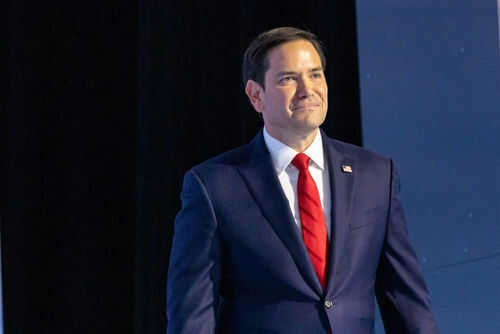
Secretary of State Marco Rubio is rapidly overtaking Vice President JD Vance as Trump’s likely successor for 2028, driven by a dramatic surge in donor support and a staggering 1,067% leap in conservative activist backing—a shift that raises serious questions about who really controls the future of the Republican Party.
Story Snapshot
- Rubio soared from 3% to 35% in CPAC straw polls within one year, signaling massive grassroots momentum
- Republican mega-donors overwhelmingly favor Rubio over Vance at recent Mar-a-Lago meeting with Trump
- Vice President Vance reportedly hedging on 2028 ambitions as political winds shift against him
- Rubio’s proximity to Trump as Secretary of State gives him operational advantages Vance lacks
Donor Class Drives Succession Shakeup
Republican mega-donors are actively pressuring President Trump to anoint Marco Rubio over JD Vance as the 2028 presidential heir apparent. At a recent Mar-a-Lago gathering, Trump directly asked major MAGA financiers to choose between his Secretary of State and Vice President—the response was overwhelmingly in Rubio’s favor. This donor-driven momentum represents an extraordinary intervention in succession politics, raising concerns about whether wealthy elites are determining the Republican Party’s future rather than grassroots voters. The donor class appears convinced Rubio offers superior electability and executive competence, but this preference exposes the tension between establishment priorities and populist principles that defined Trump’s rise.
CPAC Numbers Tell Remarkable Story
Rubio’s trajectory among conservative activists is nothing short of stunning. In late 2025, he registered just 3% support in CPAC’s presidential straw poll. By early 2026, that figure exploded to 35%—a 1,067% increase that signals a fundamental realignment within the MAGA movement’s activist base. This dramatic shift suggests Rubio has successfully transformed from 2016 primary punching bag to legitimate Trump successor. His viral White House briefing remarks about America’s future have fueled speculation that he possesses the vision and communication skills to carry the movement forward, while Vance’s constitutional separation from day-to-day Trump operations may be costing him critical visibility and relevance.
Vance Hedges as Momentum Slips
Vice President Vance, once considered the clear frontrunner for 2028, is reportedly reconsidering his presidential ambitions as political realities shift beneath him. Allies indicate Vance is hedging statements around a potential 2028 run, suggesting he recognizes the eroding support. Despite his constitutional position and ideological alignment with the populist MAGA base, Vance faces inherent disadvantages—the Vice Presidency’s separation from Trump’s inner circle limits his operational involvement, while Rubio works daily as Trump’s diplomatic right-hand man. Vance’s apparent retreat raises troubling questions: is he being pushed aside by donor preferences, or does he genuinely doubt his viability against Rubio’s establishment credentials and foreign policy expertise?
Competing Visions for MAGA’s Future
The Rubio-Vance succession battle represents more than personal ambition—it embodies competing visions for conservatism’s future direction. Rubio appeals to traditional Republican establishment figures and donors with his foreign policy expertise, diplomatic experience, and more conventional conservative credentials. Vance represents the populist, anti-establishment wing that fueled Trump’s initial rise, emphasizing working-class concerns and ideological purity over donor preferences. This divide exposes the fundamental tension conservatives have long suspected: do wealthy Republican elites control the party’s direction, or does the grassroots base? Trump’s eventual choice will determine whether the MAGA movement continues as a populist rebellion or reverts to establishment Republicanism with nationalist branding.
Is Marco Rubio The New Heir Apparent To Trump? https://t.co/QKG3bPuefv
— zerohedge (@zerohedge) May 9, 2026
The 2028 race won’t formally ignite until after the 2026 midterms, but succession dynamics are already reshaping Trump’s inner circle and Republican donor strategies. Rubio’s rise and Vance’s apparent hedging suggest the battle for Trump’s mantle is far from settled—and that ordinary conservatives may have less say in that decision than the wealthy power brokers who fund campaigns and demand access. Whether this represents pragmatic electability concerns or elite manipulation of grassroots sentiment remains the central question facing the Republican Party’s future.
Sources:
Viral Marco Rubio clip with vision for America sparks 2028 speculation