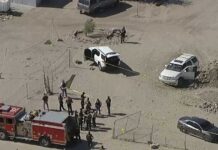
A Cold War workhorse crashed moments after takeoff in California, and officials still won’t say why.
Story Snapshot
- Base officials said emergency crews responded fast and the probe is ongoing [4].
- Reports place the crash near 11:20 a.m., shortly after takeoff, with no cause released [4].
- Military investigations often take time and hold details back until findings are final [5].
- Past B-52 mishaps show causes can range from human error to configuration issues [20].
What We Know So Far From Edwards Air Force Base
Edwards Air Force Base officials confirmed a United States Air Force B-52 Stratofortress crashed shortly after takeoff around 11:20 a.m. in California. The base said emergency crews responded right away and the situation remained active. Officials did not release a cause, crew status, tail number, or mission details. The base said more information would come as it becomes available. Early coverage framed the event as a developing incident under investigation, not a closed case [4].
The lack of details is normal in the military crash playbook. Investigators protect evidence, review data, and brief families before public release. The Air Force Safety Center process often separates internal safety reviews from public accident board findings. That structure means facts can take weeks or months to surface. Past B-52 cases show that final reports often reveal specific, technical chains of events that were not clear on day one [5].
Why Early Speculation Misleads More Than It Helps
Television images of debris, smoke, and scorched earth can push quick theories. But the first cycle rarely offers enough proof to name a cause. Shortly after takeoff is a high-risk phase, so people guess about engines, trim, or pilot actions. Yet guessing helps no one. Official boards use flight data, wreckage analysis, weather, load sheets, and training records to build a tested timeline before naming any factor. That slow, careful method protects truth over clicks [4].
Other B-52 mishaps underline this point. In the 2008 Guam loss, the Air Combat Command board traced the crash to an improper stabilizer trim setting and noted contributing factors, but it could not pinpoint why that trim was mis-set. The lesson was precise and sober: details matter, and they take time to confirm. The same patience now will help avoid false claims that later reports will overturn [20].
Accountability, Readiness, and What Comes Next
Military aviation runs on discipline, training, and maintenance. When failures happen, boards seek root causes to fix them. Some historic B-52 tragedies linked breakdowns to human factors and leadership lapses, which drove tough reforms for aircrew oversight and standards. Other cases found technical or configuration issues that led to changes in checklists and procedures. Either way, transparent findings help crews fly safer and keep our deterrent strong [1].
✅ Full Data Dump: B-52 Stratofortress Crash at Edwards AFB (June 15, 2026)
Incident Details:Date/Time: Monday, June 15, 2026, at approximately 11:20 a.m. PDT
Location: Edwards Air Force Base, California (on the airfield/runway area)
Aircraft: U.S. Air Force B-52… pic.twitter.com/XMJYMRAdt6
— ZeroBarkThirty (@zerobarkthirty) June 15, 2026
For now, the Edwards crash demands calm, facts, and oversight. The public deserves answers grounded in data, not rumor. Leaders must release findings promptly once verified, and Congress should ensure the process stays focused on safety and readiness, not politics. Our aircrews carry the nation’s shield. They need clear procedures, tough standards, and gear that works every time. When the board reports, we will press for fixes that honor that mission and prevent the next loss [4].
Sources:
[1] Web – American B-52 bomber crashes in California: Air Force base
[4] Web – On June 24, 1994, a U.S. Air Force B-52H Stratofortress crashed …
[5] Web – List of accidents and incidents involving the Boeing B-52 …
[20] Web – [PDF] Czar 52; A Case Study of Failed Leadership – Scholars Archive