A governor’s bill-signing turned into a marital mic-drop when California’s first lady decided the press needed a lecture, not another question.
Story Snapshot
- Gov. Gavin Newsom signed a California bill to backfill Planned Parenthood funding after a federal cut tied to President Trump’s “Big Beautiful Bill.”
- Reporters immediately steered questions toward Newsom’s political liabilities, including high-speed rail and an international meeting.
- First Lady Jennifer Siebel Newsom stepped in, scolded the press for ignoring women’s health, and framed the moment as part of a “war on women.”
- The room didn’t pivot; reporters kept pressing off-topic questions, revealing what modern political media actually rewards.
A Bill Signing Meant to Project Strength, Hijacked by the Q&A Reality
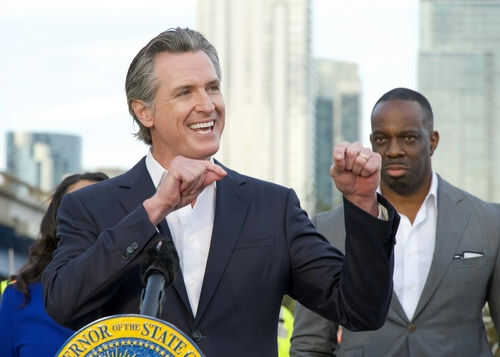
Gavin Newsom’s signing ceremony was designed to send a clean message: California will fund Planned Parenthood even if Washington won’t. That’s why the scene mattered—Democrats want a symbol, a headline, and a contrast with President Trump after federal funding cuts. Instead, the event collided with the press corps’ incentives. Reporters chased the day’s most controversial angles: high-speed rail delays and Newsom’s meeting with Germany’s chancellor.
Jennifer Siebel Newsom solved the tension the way only a spouse with a microphone can. She tapped Newsom’s shoulder, took the podium, and demanded the questions match the script: women’s health, the Planned Parenthood funding, the political stakes. She called it “incredulous” that reporters weren’t focused on the reason everyone gathered. She even delivered the punch with a disarming add-on—“with love”—while accusing the media of enabling a “horrific war on women.”
Why Reporters Ignored the Script: Accountability Beats Ceremony
The press wasn’t confused about the day’s theme; it just didn’t accept the premise that a bill-signing should limit scrutiny. High-speed rail isn’t a random tangent in California politics—it’s a signature promise that has chewed through years, headlines, and public patience. Newsom’s international meeting mattered for a different reason: it signals national ambition, the kind that invites questions about priorities at home. Reporters weren’t being rude; they were following the accountability trail.
Conservatives should recognize the dynamic immediately: politicians prefer controlled environments, while working journalists prefer unforced errors and unscripted answers. When the First Lady scolded the press, she strengthened the sense that the administration wanted a protected stage. That instinct reads as elitist to voters who don’t live inside Sacramento’s activist ecosystem. The average taxpayer hears “stop asking about the rail project” and thinks, “No, ask more.” Common sense says outcomes matter more than applause lines.
The First Lady’s Role Isn’t Ceremonial Anymore, It’s Strategic
Jennifer Siebel Newsom isn’t a traditional political spouse who sticks to photo ops. She has a public track record of advocacy on women’s issues, and she has stepped into Newsom’s political moments before, including reminders to center “real people” during partisan fights. That background helps explain why she didn’t hesitate to grab the mic. The interruption wasn’t just emotion; it was message discipline, enforced from inside the family.
That spousal dynamic matters because it changes the optics of leadership. Newsom didn’t shut it down; he yielded the floor. Voters over 40 pick up on this instantly because they’ve watched boardrooms, churches, and families operate the same way: when someone steps in to “correct the room,” it signals stress behind the scenes. It can also signal confidence—someone believes the message is so important that decorum becomes optional. Either way, it becomes the story.
“War on Women” Rhetoric Versus the Voter’s Ledger Book
Siebel Newsom framed the press’s questions as part of a broader moral failure, tying off-topic queries to a “war on women.” That line fires up a base because it casts disagreement as cruelty. The factual center is simpler: the state is stepping in after a federal funding change, and Planned Parenthood remains a political lightning rod. The rhetorical leap is where many moderates check out. People can support women’s health while still demanding answers on spending and competence.
From a conservative perspective, the episode also illustrates a recurring political tactic: treat criticism as disrespect toward a protected group. That move can shut down debate, but it rarely resolves the underlying issues—cost overruns, program results, or government performance. If California wants to fund something at the state level, voters deserve transparent numbers and measurable outcomes. A scolding doesn’t substitute for a line-item explanation, and it doesn’t answer why other priorities keep stalling.
The Punchline: The Scolding Didn’t Work, and That’s the Tell
The most revealing detail came after the interruption: reporters appeared unfazed and kept asking what they came to ask. That’s not a knock on Siebel Newsom’s conviction; it’s proof that modern political attention isn’t controlled by righteous tone. The “viral moment” economy rewards conflict, not compliance. When a public official’s spouse jumps in, cameras roll harder. The message about Planned Parenthood funding may still reach supporters, but the clip people share is the scolding.
Newsom’s team likely hoped the event would showcase a clean contrast with Trump-era federal policy. Instead, the scene reminded everyone that California’s governor can’t outrun California’s ledger: big promises, big programs, and big questions. If Newsom wants national credibility, he’ll face more of this, not less—reporters will test him on results, and voters will notice who answers and who redirects. The First Lady’s intervention grabbed headlines, but it also exposed the fragility of the message box.
Sources:
Gavin Newsom’s wife scolds reporters at Planned Parenthood funding bill signing ceremony
Wildest stories in Gavin Newsom’s new memoir