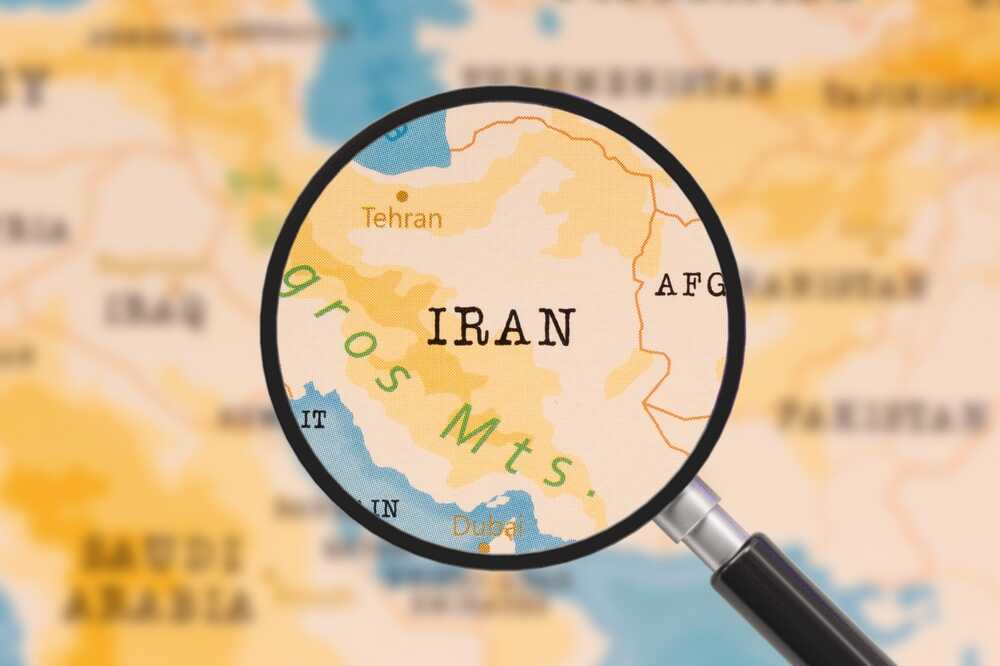
Iran’s failed missile shot at Diego Garcia didn’t just miss its target—it exposed a longer Iranian strike reach that could redraw the threat map for U.S. forces and allies.
Quick Take
- Iran launched two intermediate-range ballistic missiles toward the joint U.S.-UK base at Diego Garcia, about 4,000 km away, and neither struck the base.
- One missile reportedly failed in flight; a U.S. warship fired an SM-3 interceptor at the second, with interception success not publicly confirmed.
- Reports indicate the launch happened before March 21, 2026, but the exact date remains unclear.
- Multiple outlets framed the bigger story as Iran demonstrating greater range than its previously stated 2,000 km limit.
What happened at Diego Garcia—and what is confirmed
U.S. officials told major outlets that Iran fired two intermediate-range ballistic missiles at the joint U.S.-UK military base on Diego Garcia in the Indian Ocean, and neither missile hit the installation. Reporting indicates one missile malfunctioned during flight. A U.S. Navy warship fired an SM-3 interceptor at the second missile, but public reporting has not confirmed whether the interceptor destroyed it, only that no impact occurred.
The timeline is still partially cloudy. Several reports place the launch sometime before March 21, 2026, when the story became public through coverage citing U.S. officials. That uncertainty matters because the regional context is moving fast, and small changes in timing can affect how officials interpret intent, coordination, and the likelihood of follow-on strikes. What is not in dispute across reports is the outcome: no damage at Diego Garcia.
Why the range matters more than the miss
Distance is the headline here. Diego Garcia sits roughly 4,000 kilometers from Iran—about double the 2,000-kilometer ceiling Iranian officials had publicly described for their missile reach. Analysts cited in reporting suggested the attempted strike likely involved an intermediate-range ballistic missile in the Khorramshahr family, a system long discussed but now seemingly demonstrated at operational distance. Even an unsuccessful attack can still broadcast capability, intent, and deterrence messaging.
For American audiences who watched years of “de-escalation” rhetoric from prior leaders, the strategic lesson is straightforward: geography is no longer a comfort blanket. A base traditionally viewed as a deep rear-area hub—supporting bombers, submarines, destroyers, and intelligence—was selected as a target. That decision signals Iran is willing to threaten high-value nodes supporting U.S. operations well beyond the immediate Middle East, even while under sustained pressure.
The Diego Garcia base: why it is strategically tempting
Diego Garcia is a British Indian Ocean Territory site that has hosted a critical U.S.-UK military footprint since the 1970s. Reporting describes it as a unique platform for long-range air operations and maritime presence, including infrastructure associated with the B-2 Spirit. The base’s role makes it a logical focal point when adversaries want to complicate American power projection without directly striking the U.S. homeland.
The same reporting also places Diego Garcia inside a wider operational tempo: U.S. and Israeli actions against Iranian military assets and shifting strike patterns that included stand-in or stand-off approaches. In that setting, Iran’s choice of target can be read as an attempt to impose costs, signal endurance, and pressure allied basing and access decisions. What remains unproven publicly is how many additional systems Iran can field at this range under ongoing campaign pressure.
How this fits into the broader campaign—and what remains uncertain
Outlets described Iran’s missile force as heavily degraded compared with prewar estimates—down to a small fraction of earlier inventories—yet still partially survivable due to mobile launchers. That combination can be frustrating for planners: even when fixed infrastructure is hit, mobile systems can complicate detection and allow sporadic shots. The Diego Garcia incident is consistent with that picture: limited salvos, high signaling value, and uncertain technical reliability.
Two uncertainties remain central. First, public accounts do not settle the precise launch date, only that it occurred before March 21, 2026. Second, while an SM-3 was reportedly fired, reporting does not conclusively verify a successful intercept; it only confirms no strike on the base. Those details matter for assessing air and missile defense performance and for judging whether Iran’s failure was primarily technical, defensive, or both.
For the Trump administration, the practical takeaway is not panic—it’s prioritization. A longer-range Iranian shot, even a failed one, reinforces the need to protect forward forces, harden critical bases, and maintain credible missile defense at sea and on land. For Americans tired of watching adversaries test boundaries while Washington debates semantics, the Diego Garcia episode is another reminder that deterrence depends on capability, clarity, and the willingness to defend U.S. interests without apology.
Sources:
Iran Fires Two Ballistic Missiles at US-UK Military Base Diego Garcia Beyond Known Range
Iran Fires Two Intermediate-Range Ballistic Missiles at Diego Garcia Base
Iran targets Diego Garcia base