Long before chants of “Death to America,” one July morning in 1988 gave millions of Iranians a brutally personal reason to never trust Washington again.
Story Snapshot
- A U.S. Navy cruiser fired two missiles at a civilian Airbus, killing all 290 people aboard Iran Air Flight 655.[1][4]
- The jet was on a standard commercial route, climbing and broadcasting a civilian code when it was shot down.[1]
- Washington called it a “proper defensive action,” then paid compensation without admitting legal liability.[3][4][5]
- For many Iranians, this single incident crystallizes a larger story: American power treats their lives as expendable.[1][3][4]
The morning when a routine flight became a defining trauma
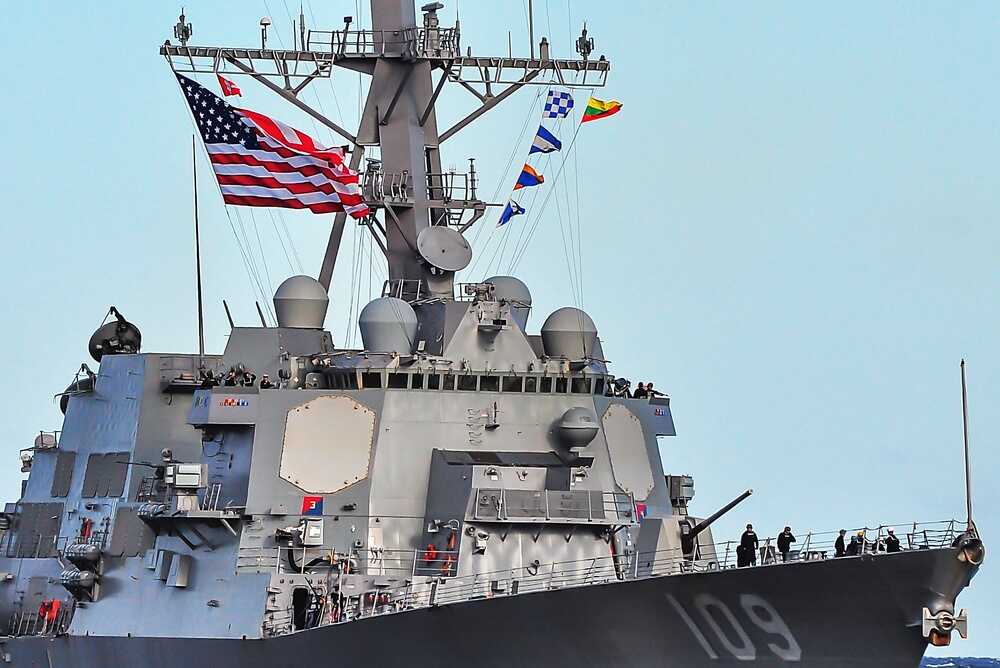
On July 3, 1988, Iran Air Flight 655 lifted off from Bandar Abbas, headed to Dubai on a short, utterly ordinary hop across the Strait of Hormuz.[1][4] The Airbus A300 climbed along a normal civilian airway, transponder squawking a commercial code, its path and altitude exactly what air-traffic controllers expected from a passenger jet.[1] Minutes later, two surface-to-air missiles from the United States Navy cruiser USS Vincennes tore through the aircraft, killing all 290 passengers and crew.[1][4]
Victims included 66 children, entire families, and workers commuting across the Gulf, none of whom had anything to do with the Iran–Iraq war raging around them.[1][4] The Vincennes sat in a sea already tense from Iranian speedboat attacks and earlier U.S. retaliatory strikes on Iran’s navy.[4] Yet the stark civilian reality is not in dispute: a clearly scheduled commercial flight on a published route disintegrated in the sky because an American warship decided it was a threat.[1][4]
How a superpower convinced itself a passenger jet was an attacker
The U.S. Navy’s own reconstructions describe a cascade of misidentification inside the Vincennes’ high-tech combat center.[1][3] Operators misread radar information and believed the target was an Iranian F-14 fighter diving toward them, even though later analysis showed the aircraft was ascending, not descending.[1][3] The plane’s transponder was transmitting a civilian Mode III code, yet the crew convinced themselves they faced a military jet, and acted under rules that allowed “self-defense” shots in a split second.[1][3]
President Ronald Reagan’s statement that same day told Americans this was a “proper defensive action” by a ship under threat.[5] He said the airliner headed directly at the Vincennes and ignored repeated radio warnings, framing the shootdown as an unavoidable tragedy in combat.[5] For U.S. audiences, that narrative fit a familiar pattern: our forces, under fire, made a terrible mistake. For Iranians, the same facts sounded different: a nuclear superpower sailed into their war zone, misread a civilian jet, and killed hundreds.[1][3][4][5]
Compensation without guilt and why it still stings
In the years that followed, the United States expressed “deep regret” and, under a 1996 settlement, agreed to pay $131.8 million, including $61.8 million for the families of those killed.[3][4] But Washington carefully avoided admitting legal responsibility or issuing a formal apology, insisting the crew acted in good faith and under accepted rules of engagement.[3][4] For American lawyers, that distinction protected precedent and liability. For Iranian families, it sounded like the world’s most powerful state saying, “We killed your loved ones, but we did nothing wrong.”[3][4]
Internationally, the downing of Flight 655 quickly became one of the deadliest and most infamous civil-aviation disasters.[1][4] Iran took its case to the International Court of Justice before eventually accepting the compensation and dropping the suit.[3][4] Nothing in that legal process resurrected a single victim or fully confronted the moral core: advanced radar and training did not stop a U.S. crew from destroying a clearly civilian aircraft, and the government that ordered them there declined to label it a crime.[1][3][4][5]
Why this one event anchors Iranian distrust of America
Iranians do not remember Flight 655 as a complicated radar story; they remember that 290 civilians died and Washington immediately defended the trigger-pullers.[1][3][4][5] When Reagan described the attack as “proper,” the White House cemented the impression that American security concerns instantly outweigh foreign civilian lives.[5] Later expressions of regret and checks written to families did little to change that first, defining message. Many conservatives would say intent matters; many Iranians reply that consequences matter more.[3][4][5]
Why doesn’t Iran trust the U.S.?
Americans remember 9/11. Israelis remember 10/7.
Most of us have never heard of Iran Air Flight 655 or have been invited to forget.
On July 3, 1988, the USS Vincennes shot down an Iranian civilian airliner, killing 290 people. The U.S.… pic.twitter.com/AF15UCO5rP
— Natali Morris (@natalimorris) June 1, 2026
Seen through this lens, today’s Iranian skepticism toward U.S. promises about sanctions relief, security guarantees, or regional de-escalation is not simply ideological anti-Americanism; it is rooted in lived experience of lethal error followed by limited accountability.[1][3][4] Americans remember September 11 and expect the world to understand how that day shaped their worldview. Iranians remember July 3, 1988, and wonder why Americans rarely even know the flight number.[1][3][4]
Sources:
[1] YouTube – Why Iran Doesn’t Trust America
[3] Web – USS Vincennes Shoots Down Iranian Civilian Plane – EBSCO
[4] Web – USS Vincennes Shoots Down Iran Air Flight 655 – ADST.org
[5] Web – Iran Air flight 655 | Background, Events, Investigation, & Facts