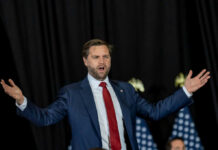

Mike Rogers branded Abdul El-Sayed a national security risk by tying him to a Treasury-designated charity and anti-Israel stances, thrusting security and foreign aid to the center of Michigan’s Senate race.
Story Highlights
- Rogers linked El-Sayed to a terror-linked charity through his mother’s past employment.
- El-Sayed opposes U.S. military funding for Israel and downplayed Iran as the top threat.
- Fact-checks say no proof shows El-Sayed has Muslim Brotherhood ties; he publicly disavowed them.
- Trump amplified Rogers’ warnings, keeping national security front and center for voters.
Rogers’ Charge Focuses On Security Risk And Foreign-Policy Judgement
Mike Rogers, a former House Intelligence Committee chair, told Michigan voters that Abdul El-Sayed is a national security risk. Rogers said El-Sayed’s judgment is suspect on Israel, Iran, and terrorism. He pointed to El-Sayed’s opposition to U.S. military funding for Israel and reluctance to name Iran as the greater threat compared with Israel. Debate coverage and transcripts confirm El-Sayed’s positions. He urged diplomacy with Iran and rejected U.S. tax dollars for foreign militaries.
Rogers pressed a specific link to the Islamic American Relief Agency. He noted that the U.S. Treasury designated that charity in 2004 for supporting terrorism. Reports say El-Sayed’s mother worked there as a nurse practitioner until 2004, and that prosecutors later charged figures tied to the group over illegal transfers to Iraq. Rogers argued that these facts, paired with El-Sayed’s foreign-policy views, raise red flags for voters.
What The Record Shows About Alleged Muslim Brotherhood Ties
Reporters have not produced a document showing El-Sayed personally joined or got money from the Muslim Brotherhood. Bridge Michigan found no evidence he pledged support to the group. The outlet also reported no clear evidence that the Council on American-Islamic Relations backed the Brotherhood. El-Sayed denied the allegations. The public record says his mother was not indicted in connection with the charity and left in 2004, which narrows the scope of the claim.
PolitiFact reported that El-Sayed did, in fact, disavow the Muslim Brotherhood. Video from an October town hall shows him saying, “Sure, yes, absolutely,” when asked to do so. That counters a later claim that he would not disavow it. The fact-check does not clear up every concern Rogers raised, but it undercuts the narrow charge that El-Sayed refused to disavow the organization when asked.
Trump’s Amplification And The Stakes For Michigan Voters
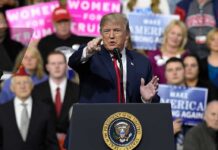
President Trump and Rogers amplified warnings about El-Sayed’s ties and judgment during the final stretch of the race. The Detroit News reported that the attacks picked up over the weekend before the debate. That kept the focus on national security, Israel, Iran, and the risk of foreign influence. For many voters concerned about terrorism, border security, and American strength, those questions carry real weight this fall.
Michigan Republican Senate nominee Mike Rogers described his Democratic opponent, Abdul El-Sayed, as a national security threat in their second and final debate, while appealing to Jewish and other disaffected Democratic voters to support him.https://t.co/wk1z83vxyI
— Jewish Insider (@jewishinsider) October 22, 2026
Michigan conservatives want clear lines: stand with allies, confront enemies, and keep U.S. tax dollars from helping regimes that hate us. El-Sayed’s stated policy is to oppose U.S. military funding for Israel and to favor diplomacy with Iran. Rogers argues those views reflect poor judgment when Iran arms terror proxies and threatens regional stability. El-Sayed says his views reflect a different approach to peace and spending, not support for extremism.
How Voters Should Weigh The Evidence And The Gaps
Voters face two buckets of facts. First, the record on the charity is real and troubling: the Treasury designation is official, and prosecutions followed. El-Sayed’s mother worked there until the year of designation, but she was not charged. Second, the Brotherhood claim lacks a named donor, document, or payment tied to El-Sayed in public reporting. Fact-checks emphasize that gap and also record his disavowal on video.
For citizens who prize a strong America, the clearest test is policy. Do a candidate’s choices make our country safer and our allies stronger? Rogers stakes his case on El-Sayed’s foreign-aid and Iran stands, and on caution flags from the charity’s past. El-Sayed insists the attacks are false and that his policy is about ending endless wars and cutting foreign military aid. The next senator will vote on war, peace, and our tax dollars. Choose with eyes open.
Sources:
nypost.com, politifact.com, nytimes.com, miamiherald.com, washingtontimes.com, bridgedetroit.com