
New York’s governor expanded protections and funding that shield and support migrants, sparking a fierce fight over costs, safety, and the ballot box.
Story Highlights
- Governor Kathy Hochul advanced policies that protect immigrants and fund legal aid and services.
- Bruce Blakeman argues these moves encourage more illegal migration and burden taxpayers.
- New York’s top court blocked New York City’s plan for noncitizen municipal voting.
- Only citizens can vote in state and federal elections, and voting by noncitizens in federal races is a crime.
Hochul’s Policy Record: Protection, Services, and Funding
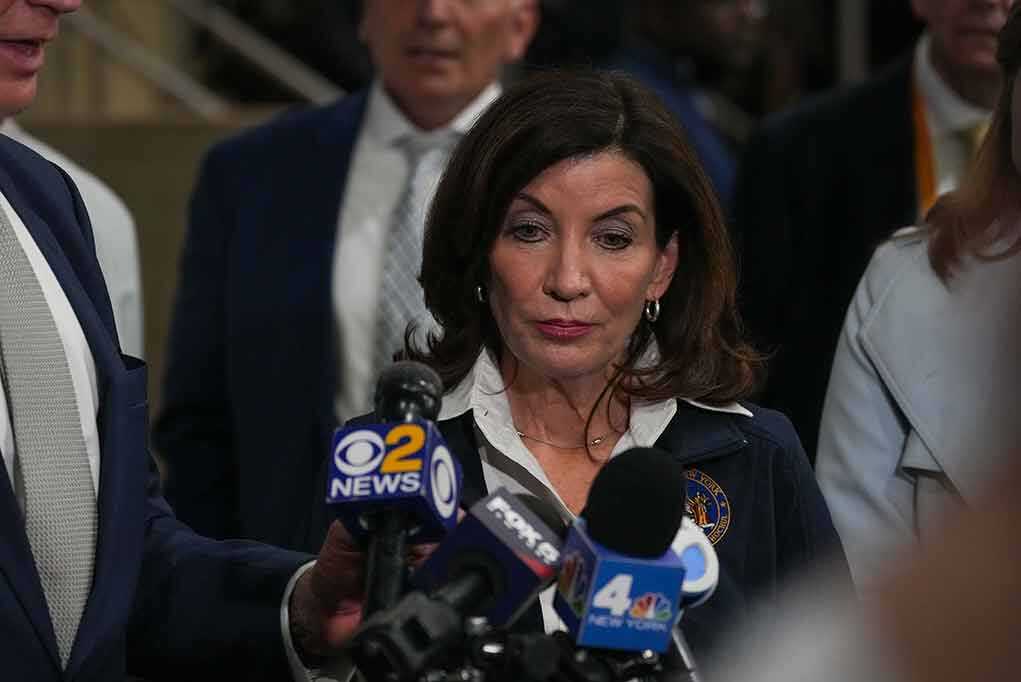
Governor Kathy Hochul announced new protections and services for immigrants, including people who are undocumented, through state-backed programs and legal changes. Her office launched the Institute for Immigration Integration Research and Policy to help immigrants move into schools and jobs, and celebrated laws that shield residents from certain immigration-status threats counted as coercion or extortion. She also unveiled millions in new state funding to deliver legal help for unaccompanied immigrant children and youths across New York.
Hochul later signed a budget package that further limited aggressive federal immigration enforcement within the state, while ensuring access to a free public education for immigrant students. These measures fit a broader “sanctuary-style” approach that narrows cooperation with federal agents and expands service access. Supporters call this humane and orderly. Critics say it signals that state leaders protect people who break immigration law and pass the bill to taxpayers.
Blakeman’s Charge: Costs, Safety, and State Priorities
Republican challenger Bruce Blakeman faulted Hochul for spending what he called billions in public dollars on benefits for migrants, including housing and transit, and said her rules blocked police from working with federal immigration agents. He argued these policies draw more illegal migration to New York and make communities less safe by weakening enforcement. Debate coverage shows Blakeman tying rising public concern over crime and costs to policies that limit cooperation with federal Immigration and Customs Enforcement.
Blakeman’s case echoes a common conservative view: state and city “sanctuary” rules lower the risks of removal after arrest, reduce deterrence, and strain city budgets. Academic research is mixed on crime effects, with several studies finding no crime increase from sanctuary policies and showing deportations do decline when cooperation narrows. That leaves the spending and control questions front and center for voters who want firmer boundaries, lower bills, and a clear rule of law.
The Voting Fight: Courts Rein In Local Experiments
New York City leaders tried to let some noncitizens with legal status vote in city races. The New York Court of Appeals stopped that plan, ruling that the state constitution limits voting to citizens for municipal elections as well. That decision closed the door on a city-only franchise that would have included green card holders and other legally present residents, but not undocumented immigrants, and not state or federal elections.
Claims that “illegal immigrants can vote in New York” are false for state and national contests. New York law limits statewide voting to citizens, and federal law makes noncitizen voting in federal elections a crime. The legal push in New York City was real, but it was narrower than some headlines, and the state’s top court shut it down. Still, the episode alarms many voters who see a pattern of chipping away at core civic norms.
What It Means for Safety, Spending, and Control
New York’s current posture protects access to services and legal help for migrants, while it narrows cooperation with federal enforcement in key areas. Supporters frame this as humane and stabilizing. Opponents highlight budget stress, shelter costs, and street disorder, and argue the approach invites more illegal crossings. Research does not show a clear crime surge tied to sanctuary rules, but it does confirm fewer deportations when local-federal ties loosen, which concerns many residents who want firm borders and swift removals.
"We will no longer be a sanctuary state when I become governor."
Bruce Blakeman, who's challenging Gov. Kathy Hochul in November, vows to overhaul New York's immigration policies on "Hannity," claiming the state spends $81,000 per illegal migrant.
"It's a tragedy. It's wrong,… pic.twitter.com/rmra0pEpd4
— Fox News (@FoxNews) October 15, 2026
For conservatives, the path is clear. The state should restore strong cooperation with federal agents, focus aid on citizens and legal residents, and stop local experiments that blur the meaning of citizenship. Transparent costs, strict enforcement, and respect for the vote protect families, neighborhoods, and the rule of law. Albany’s choices set the tone. Voters can demand policies that secure streets, guard the franchise, and put taxpayers first.
Sources:
npr.org, spectrumlocalnews.com, patch.com, governor.ny.gov, timesunion.com, nypost.com, breitbart.com