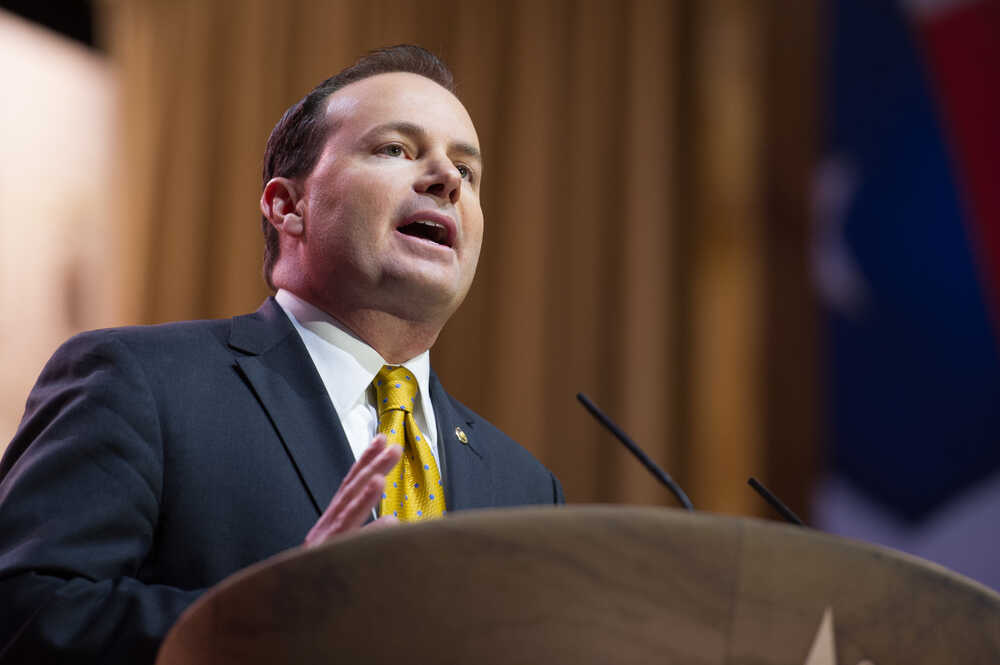
Kids were filmed taking swings at a piñata made to look like a sitting U.S. senator—at an event promoted as “family-friendly,” reigniting a raw debate about political violence, free speech, and adult activism aimed at children.
Quick Take
- A Pride event in Provo, Utah featured a Mike Lee-themed piñata that children hit, plus art depicting President Trump’s severed head and decorative Molotov cocktails for sale.
- The event was held at Provo Memorial Park and organized by the Cougar Pride Center, which serves BYU students but is not affiliated with Brigham Young University.
- Sen. Mike Lee amplified the footage online, while the organizer apologized and said vendors were “minimally vetted.”
- The artist defended the pieces as protected political expression tied to protest history and said the piñata included candy and a copy of an anti-trans bill.
What Happened at Provo’s “Pride in Progress” Event
Images and video from the April 11 “Pride in Progress” event in Provo showed children hitting a piñata resembling Sen. Mike Lee, alongside a painting depicting President Donald Trump’s severed head on a platter titled “Liberation with The Head of Hegemony.” Reports also described decorative Molotov cocktails displayed for sale. The visuals spread quickly online, with critics arguing the displays crossed a line from protest into violent political imagery.
Artist Sav Kubensis had promoted the Lee piñata in advance on Instagram with an invitation to “smash Mike Lee” at a specified time in Provo Memorial Park. After the event, Lee posted video on X showing children taking turns swinging at the piñata and responded with the comment, “Not subtle.” The rapid backlash illustrates how quickly a local gathering can become a national culture-war flashpoint once it hits social media.
Clearing Up the BYU Claim: Who Organized It and Where It Took Place
Some online commentary framed the incident as a Brigham Young University event, but reporting and statements emphasized the gathering was not on campus and not run by BYU. The organizer was the Cougar Pride Center, described as an independent LGBTQ+ resource center that supports BYU students and the broader Provo community. BYU publicly distanced itself, stating it was not a BYU group, not a BYU-sponsored event, and did not occur on BYU property.
That distinction matters in Utah’s political and religious landscape, where BYU’s institutional policies and the Church of Jesus Christ of Latter-day Saints’ influence shape public expectations. When viral posts attach controversial imagery to BYU, they can mislead audiences about accountability and decision-making. In this case, the decision-making authority ran through the event organizer and its vendor process, not a university administration, even if BYU students attended or benefited from services.
Organizer Apology vs. Artist Defense: The Line Between Protest and Incitement
The Cougar Pride Center issued an apology to people who were offended, saying it had been unfamiliar with the intensity of the art and that vendors were “minimally vetted.” The center also emphasized that the event was intended to be family-friendly, with guidelines discouraging violent displays. That combination—family branding plus limited vetting—helps explain why the controversy landed so hard, especially once footage showed children interacting with the political prop.
Kubensis defended the work as political expression rather than a threat or call to action, linking it to historical resistance movements and protest traditions referenced in her statements. She also said the piñata included a copy of an anti-trans bill and Dum-Dum suckers. The sources do not describe any official investigation or legal action following the event, leaving the dispute primarily in the realm of public standards, community judgment, and what organizers should filter out at public gatherings.
Why This Story Resonates Nationally in 2026
For conservatives, the core issue is less about abstract art debates and more about normalization: when violent symbolism is displayed at an all-ages event, and children are filmed participating, it collides with expectations of basic civic restraint. For many liberals and LGBTQ+ advocates, the counterpoint is that harsh, provocative protest art has a long history and is often used to dramatize perceived harms from policy—especially on issues like transgender legislation. The reporting does not establish broader coordination or intent beyond the vendor’s activism.
LGBT Event at Brigham Young University Features Painting of Trump’s Severed Head, Children Bashing a Piñata of Republican Senator Mike Lee
READ: https://t.co/N4v4wcRQF5 pic.twitter.com/KeyIrHO8K0
— The Gateway Pundit (@gatewaypundit) April 21, 2026
Politically, the episode lands in a moment when many voters—right and left—say institutions no longer enforce consistent rules. Conservatives see soft standards for inflammatory activism; liberals see selective outrage and attempts to chill speech. The most concrete takeaway is procedural: if an event markets itself as family-friendly, organizers are effectively promising a baseline of appropriateness, and “minimal vetting” increases the chance that fringe content becomes the headline.
Sources:
Mike Lee piñata, Trump head painting draw ire at Utah Pride event
Mike Lee piñata, Trump head painting draw ire at Utah Pride event
Utah pride event has children smashing Mike Lee piñata and a painting of Trump’s severed head