A U.S. jet firing a Hellfire missile into a defiant tanker bound for an Iranian oil terminal signals that Washington is finally backing its words with action in the Strait of Hormuz.
Story Snapshot
- U.S. Central Command says a Hellfire missile disabled a tanker that ignored repeated blockade warnings on its way to Iran’s Kharg Island.
- The tanker was unladen but allegedly headed toward one of Iran’s main export hubs during an ongoing U.S. maritime blockade.[1][3]
- This marks at least the sixth tanker stopped under the blockade, underscoring a serious test of American resolve and energy security.[2][4]
- Supporters see firm enforcement against Tehran’s regime, while critics question the legality and long-term escalation risks.[1][3]
U.S. Hellfire Strike Halts Tanker Bound for Iran’s Kharg Island
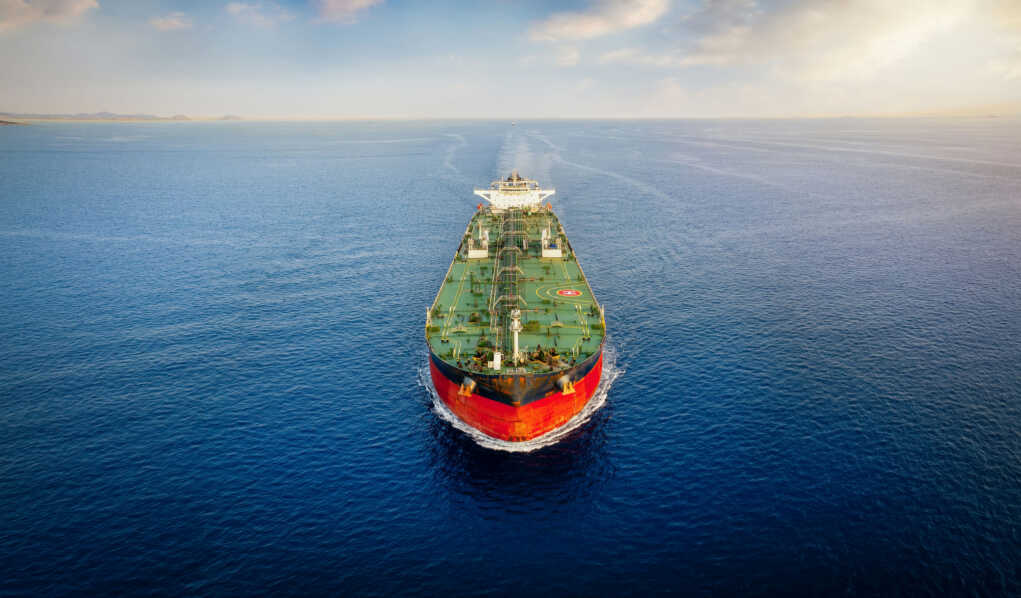
United States Central Command reported that American forces disabled the Botswana-flagged oil tanker M/T Lexie as it transited international waters toward Iran’s Kharg Island, a major export terminal, under a declared U.S. maritime blockade.[1][3] Command officials said the crew ignored repeated radio calls, warning shots, and clear instructions issued over roughly twenty-four hours before a U.S. aircraft fired a Hellfire missile into the engine room, stopping the ship short of Iranian waters and preventing it from reaching the sanctioned port.[1]
Central Command emphasized that the tanker was unladen, meaning it was not carrying oil or cargo at the time of the strike, and framed the action as measured enforcement rather than an attempt to cause an environmental disaster.[1][3] Media coverage from national outlets described this as part of a broader blockade effort targeting ships entering or leaving Iranian ports tied to the regime’s energy revenues, which have bankrolled proxy militias and destabilizing activities across the region for years.[1][2] Officials stressed that no casualties have been confirmed, pending further assessment.[1]
Blockade Enforcement, Escalation Risks, and Legal Dispute
Reports indicate that this is at least the sixth oil tanker stopped under the U.S. blockade of the Strait of Hormuz and approaches to Iranian ports, highlighting a sustained effort rather than a one-off show of force.[2][4] The Pentagon and Central Command maintain that the blockade is lawful under existing sanctions authorities and that each interdiction has followed warnings, documentation, and opportunities for vessels to alter course or submit to inspection.[1][3] Critics, including some foreign commentators and legal analysts, argue that the public record lacks independent verification such as radio transcripts or neutral maritime findings.
Independent reporting notes that most open information so far comes from U.S. military statements and sympathetic defense press, which reinforces the tactical narrative but does not, by itself, resolve questions about the blockade’s legal basis under international law.[1][2] This dispute fits a familiar pattern in maritime coercion incidents, where the enforcing government describes precise, rules-based interdictions while opponents focus on whether the underlying sanctions and blockade rules are valid in the first place. Regardless of the legal debate, the practical message to Tehran’s leadership and shipowners worldwide is that attempts to run this blockade now carry real kinetic consequences.[1][3]
What This Means for American Strength, Energy Costs, and Voters at Home
Conservative observers see the disabling of the Iran-bound tanker as a signal that the United States is no longer content with paper sanctions that rogue regimes learn to ignore.[1][3] Under previous administrations, many readers watched Iran attack tankers, harass U.S. vessels, and funnel oil through shadow networks with little consequence, feeding a sense that Washington elites tolerated endless provocation while Americans dealt with higher gas prices and uncertainty. By enforcing the blockade with visible military power, the current administration is betting that real pressure on Tehran will deter aggression and ultimately bring more stability to global energy routes.
🇮🇷 Middle East tensions update:
US Sec. State Rubio tells Congress: Any sanctions relief for Iran is tied to its nuclear programme, not reopening the Strait of Hormuz.
IAEA’s Grossi: Many Iranian nuclear activities have now stopped.
US military disables Botswana-flagged tanker… pic.twitter.com/cvp8xOauv6
— Mario Nawfal (@MarioNawfal) June 3, 2026
At the same time, some critics warn that each missile strike on a tanker raises the risk of direct confrontation with Iran’s regime, potential retaliatory moves against U.S. assets, and more volatility in oil markets that already punish working families at the pump.[2] For constitution-minded conservatives, the key questions ahead are whether Congress remains fully informed, whether rules of engagement stay clear and limited, and whether this pressure campaign is tied to concrete objectives rather than an open-ended forever standoff.[3] The coming weeks of blockade enforcement and Iranian response will show whether this tougher line restores deterrence or forces a broader showdown in one of the world’s most vital energy chokepoints.
Sources:
[1] Web – U.S. forces disabled an oil tanker headed for an Iranian port after …
[2] Web – US forces disable Iranian-flagged tankers trying to cross blockade
[3] Web – US forces disable Iranian-flagged tankers trying to cross blockade
[4] Web – U.S. Forces Disable Vessel in Gulf of Oman Attempting to Violate …