Washington is now fighting over whether “public health” means bigger bureaucracy—or measurable results for families paying the bills.
Quick Take
- HHS Secretary Robert F. Kennedy Jr. defended the administration’s proposed FY2026 HHS budget of $94.7 billion while facing sharp Democratic criticism over cuts and layoffs.
- Democrats warned that proposed reductions to agencies like CDC and NIH could weaken disease prevention and medical research; Republicans argued the current system is costly and underperforming.
- Kennedy framed the plan as a “Make America Healthy Again” shift away from administrative growth and toward chronic-disease outcomes in a country spending about $4.5 trillion on health care.
- The hearing also aired disputes over measles, vaccines, and Kennedy’s shakeups at HHS—issues that remain politically explosive and difficult to separate from budget questions.
A budget fight that doubles as a referendum on the health system
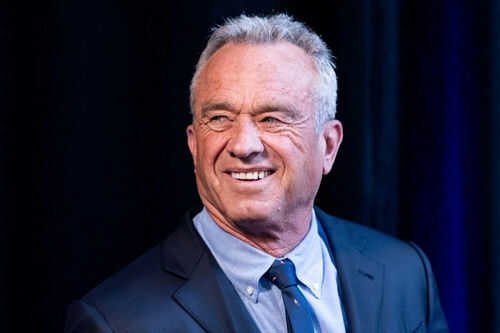
HHS Secretary Robert F. Kennedy Jr. testified before House lawmakers on the administration’s FY2026 budget request, defending a proposed $94.7 billion topline even as opponents described the plan as a historic rollback. The numbers being debated are not simple: reports cited cuts of nearly $4 billion at CDC and roughly $18–$20 billion at NIH, with some lawmakers and groups describing reductions of 25% to more than 50% in certain programs.
Kennedy’s central argument was that higher spending has not delivered commensurate health outcomes, especially as chronic disease worsens. He pointed to America’s extraordinary cost burden—roughly $4.5 trillion in total health spending—and argued that simply “throwing money” at the same structures will not reverse negative trends. That framing resonates with voters who see a federal apparatus that grows reliably, while affordability and life expectancy measures fail to improve.
Staff cuts and grant disruptions drive the sharpest Democratic attacks
Democrats focused their questioning on the operational disruption already underway at HHS. In the run-up to the hearing, HHS moved staffing toward pre-Biden levels, fired or separated roughly 20,000 employees, and terminated about $12 billion in state and local funding referenced in reports. Critics also highlighted ended CDC prevention activities and disruptions to programs addressing HIV, opioid misuse, mental health, and other community priorities across multiple states and territories.
Those critiques center on a straightforward concern: prevention and research programs are often hard to restart once funding, personnel, and data pipelines are broken. Democratic members argued that sweeping reductions could translate into missed outbreaks, slower detection, and fewer resources for vulnerable populations, including children. Supporters of the cuts countered that HHS has grown into a tangle of overlapping offices and grants that reward compliance and paperwork rather than real-world health improvements taxpayers can see.
NIH, CDC, and “what works”: the core dispute over chronic disease
Republicans on the panel used the hearing to challenge a familiar Washington reflex—protecting every existing line item as if it were inherently effective. Kennedy emphasized chronic disease as the nation’s central health crisis and argued for redirecting resources away from bureaucracy and toward interventions that move outcomes. Some accounts tied the debate to proposed reductions at NIH and the administration’s intent to pull back from certain research categories characterized as risky or ideologically driven.
The tradeoff is real and difficult. NIH-funded research supports long-horizon work on cancer, Alzheimer’s, and emerging threats, while CDC funding supports surveillance and prevention that can lower downstream costs. Conservatives who want limited government still have a stake in competence: if federal programs shrink, the remaining core must be sharply targeted and transparently measured. The hearing offered plenty of rhetoric, but limited independent metrics on what specific cuts would do in specific communities.
Measles, vaccines, and trust: policy gets tangled with credibility
Measles became part of the hearing’s political flashpoint, with lawmakers pressing Kennedy about prevention strategy, vaccination messaging, and public confidence. Reports also referenced Kennedy’s decision to remove the entire ACIP vaccine advisory committee, a move opponents described as reckless. Supporters argue that institutions earn trust through openness and performance, not by demanding deference—especially after years when many Americans felt public-health authorities blurred science and politics.
RFK Jr. defends proposed 12% health budget cut, measles response in House testimony – CBS News https://t.co/xLLrNRQVCn
— Cathlene Sareli (@cbtuck62) April 17, 2026
What remains unresolved is the basic governance question: can a major department be “right-sized” without undermining critical disease control and biomedical research? Kennedy promised to spend appropriated funds while pushing a restructuring agenda, and Democrats alleged improper withholding or “impoundment” without offering a final adjudication in the materials provided. With Republicans controlling Congress, the next step is whether lawmakers can impose clear guardrails—forcing HHS to prove savings while protecting essential functions Americans expect.
Sources:
RFK Jr. testifies on HHS budget proposal during House subcommittee hearing
Secretary Robert F. Kennedy Jr. testifies about health programs budget