House overwhelmingly passes bipartisan ALERT Act, mandating collision-avoidance tech after a preventable midair crash killed 67 Americans—including 28 figure skaters—exposing deep federal aviation failures ignored for years.
Story Highlights
- House votes 396-10 to pass ALERT Act, fast-tracked under GOP leadership, responding to January 2025 crash near Reagan National Airport.
- Crash between American Airlines jet and Army Black Hawk cited NTSB findings of FAA route errors, military altimeter flaws, and lack of ADS-B In tech recommended since 2008.
- Bill requires ADS-B In on civilian and most military aircraft near busy airports by 2031, closing gaps after prior ROTOR Act rejection.
- Victim families and NTSB praise amendments addressing 50 safety recommendations, pressuring Senate for swift action.
The Deadly Crash That Shook the Nation
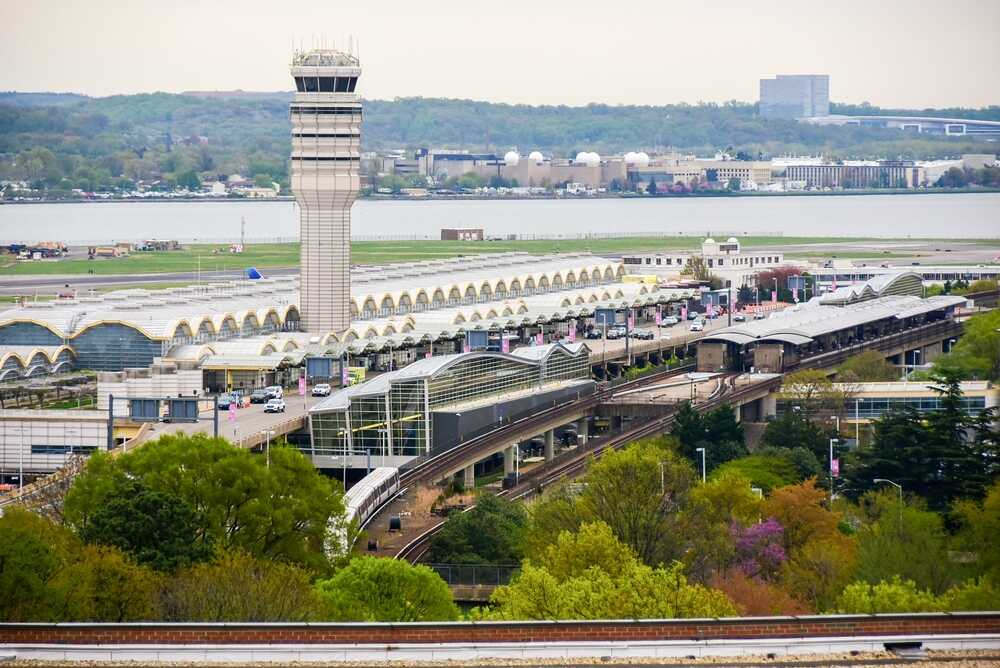
On January 29, 2025, American Airlines Flight 5342 from Wichita collided with an Army Black Hawk helicopter near Ronald Reagan Washington National Airport. All 67 aboard perished when both aircraft plunged into the icy Potomac River. The NTSB investigation pinpointed FAA failures in helicopter route placement too close to runway approaches, lack of regular reviews, and overworked air traffic controllers relying on visual separation. Army helicopters had undisclosed faulty altimeters, exacerbating altitude errors in busy D.C. airspace.
NTSB’s Long-Overdue Warnings Ignored
NTSB Chair Jennifer Homendy testified that ADS-B In technology—receiving precise location data from nearby aircraft—could have prevented the collision. Recommended since 2008, it remained unmandated despite prior near-misses. The crash marked the deadliest U.S. aviation disaster since 2001, highlighting military exemptions from civilian rules in mixed-use airspace like DCA. Systemic lapses included FAA inaction on risks and Army’s incomplete safety management, fueling bipartisan demands for reform.
From ROTOR Rejection to ALERT Triumph
The Senate unanimously passed the ROTOR Act in early 2025, but the House rejected it 264-133 due to Pentagon opposition over military operations. House committees, led by GOP Chairman Sam Graves (R-MO) and Democrat Rick Larsen, advanced the broader ALERT Act unanimously on March 26, 2026. Last month’s amendments incorporated NTSB’s 50 recommendations, requiring FAA, DOT, and DoD actions like helicopter route fixes and ATC training. Fast-tracked Tuesday, it passed 396-10 with no amendments allowed.
Victim families, outraged by the ROTOR failure, pushed for strict timelines and military broadcasting. Airlines for America and general aviation groups backed ALERT as comprehensive. Senators Ted Cruz (R-TX) and Maria Cantwell (D-WA) seek enhancements. Rep. Sharice Davids advanced it from committee.
A Bipartisan Win Amid Government Failures
This near-unanimous passage signals rare unity in a divided Congress, yet underscores frustrations with federal incompetence. Conservatives see it as essential accountability for taxpayer-funded agencies like FAA and DoD, prioritizing American lives over bureaucratic inertia. Liberals join in decrying elite mismanagement that endangers citizens. The ALERT Act mandates ADS-B In near busy airports, with military installs by 2031 except for fighters, bombers, and drones, potentially saving lives long-term.
Short-term, civilian retrofits could proceed quickly; long-term, it standardizes collision avoidance, boosting public trust post-tragedy. Economic costs for installations offset crash prevention benefits. Families and the figure skating community gain closure through reforms. As the bill heads to the Senate, it tests whether lawmakers prioritize safety over special interests, echoing widespread distrust in a government failing the American people.
Sources:
House passes ALERT Act aviation safety bill in response to deadly midair collision near D.C.
Aviation safety bill based on deadly midair collision near Washington faces a House vote
House to vote on aviation safety bill after deadly DC midair crash
House falls short on aviation safety bill after deadly DC midair crash
Following Deadly Midair Collision, Davids Passes Bipartisan Aviation Safety