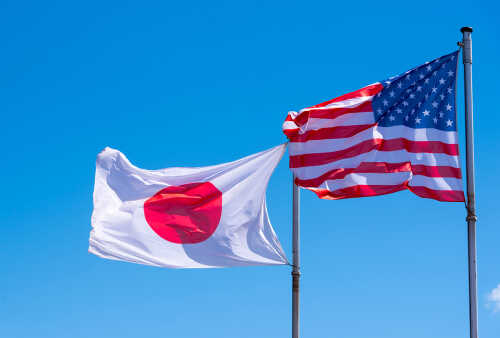
Amid China’s aggressive actions, the US and Japan fortify their alliance, sparking a debate on global security and sovereignty.
Story Highlights
- The US and Japan have agreed to co-produce defense equipment, including advanced missiles.
- This agreement comes as a direct counter to China’s recent export bans.
- Strategic military drills are set to expand in Japan’s Southwest region.
- These moves signify a strengthened Japan-US alliance amid rising Asia-Pacific tensions.
US and Japan Strengthen Military Ties
On January 16, 2026, Japan and the United States solidified their defense partnership by agreeing to co-produce air-to-air missiles and surface-to-air interceptors. This agreement is a strategic move to counteract China’s recent aggressive actions, including export bans on “dual-use” goods, which have raised concerns over rare earth supply security. The cooperation also aims to enhance supply chain resilience in critical minerals, crucial for national security.
These developments are set against the backdrop of a rapidly deteriorating security situation in Asia. Japan’s Southwest islands, particularly Okinawa, are strategically positioned for monitoring Chinese activities, making them essential in the expanded military drills agreed upon by the US and Japan. The joint statement issued after the meeting reaffirmed the “absolutely unwavering” Japan-US alliance, emphasizing cooperation as a counterbalance to potential threats from China and North Korea.
Watch:
China’s Aggressions Prompt Defensive Measures
China’s decision to block exports to Japan has spurred these defensive measures, highlighting the importance of secure supply chains in today’s geopolitical climate. Japan’s recent approval of a record 9 trillion yen defense budget underscores its commitment to bolstering its military capabilities and ensuring national security. This budgetary increase is a direct response to China’s provocations and aligns with Japan’s strategic goals of safeguarding its sovereignty.
Moreover, the pact has drawn attention to the strategic significance of the Japan-US collaboration in missile defense, an alliance that has roots dating back to 1960. This partnership has evolved over the years, with notable advancements like the joint development of the Glide Phase Interceptor (GPI) for hypersonic threats. Such collaborations are not only critical for Japan and the US but also set a precedent for other allied nations in the region.
Global Implications and Reactions
While the agreement strengthens the defense capabilities of Japan and the US, it also stirs political tensions. China perceives these actions as encirclement, which could escalate regional tensions. However, for the US and Japan, these measures are necessary steps to safeguard freedom and security in the Indo-Pacific region. The collaboration also benefits defense industries, ensuring technological advancements and economic growth in both nations.
Japan and US agree to expand cooperation on missiles, military drills https://t.co/yQawtVbRme
— Ldyhear01 (@_Ldyheart_) January 16, 2026
As the world watches these developments, the Japan-US alliance serves as a crucial pillar in maintaining stability and deterring potential aggression in the region. The agreement is a testament to the enduring strength of their partnership and a clear signal of their readiness to confront any threats to peace and security.
Sources:
Japan and US agree to expand cooperation on missiles, military drills
Japan and US agree to expand cooperation on missiles, military drills
United States and Japan sign agreement to enhance missile defense capabilities
Japan and US agree to expand cooperation on missiles, military drills