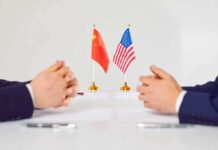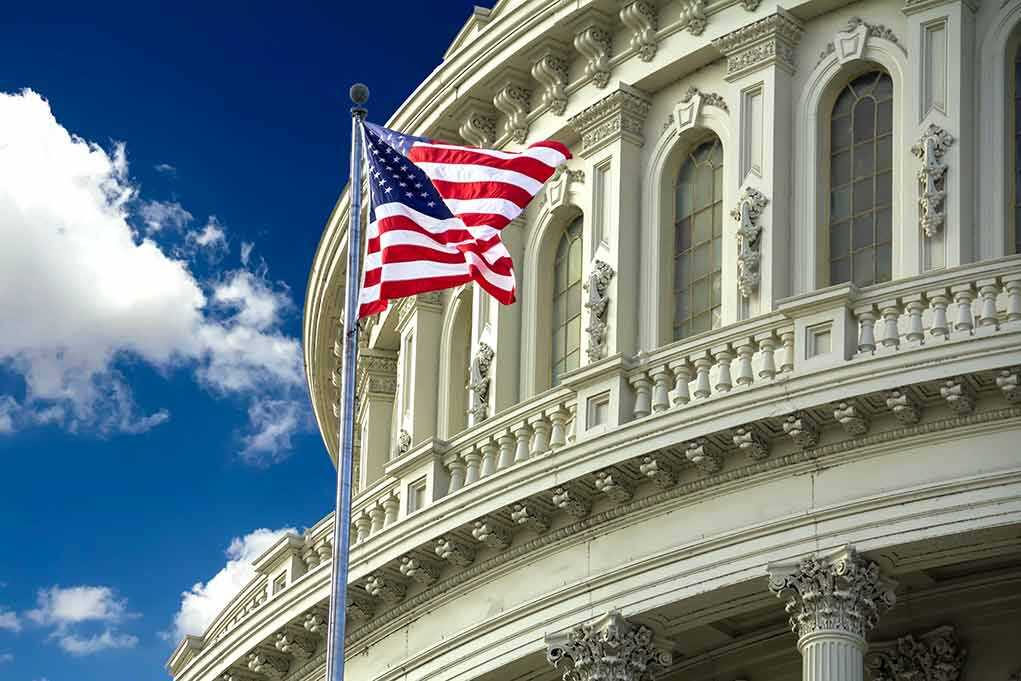
Washington is set to tell partners to pick a side in the global artificial intelligence race with China as President Trump doubles down on winning the fight for America’s security, jobs, and technological edge.
Story Highlights
- U.S. plans to urge allies to align with Washington over Beijing on artificial intelligence policy and supply chains.
- Treasury leaders link artificial intelligence leadership to control of advanced chips and industrial power.
- Officials accuse Chinese firms of large-scale copying of U.S. artificial intelligence models.
- President Trump warns heavy-handed regulation would cost America the artificial intelligence race.
U.S. Signals Allies: Choose America’s Artificial Intelligence Bloc
Reuters reported the United States plans to tell dozens of countries they must choose sides in the artificial intelligence race with China. The push comes as allied standards, chips, and data-sharing norms harden into rival camps. The message ties advanced technology to national power and security, echoing President Trump’s view that “whoever wins artificial intelligence wins”. This framing seeks clear alignment on research, export rules, and trusted vendors so adversaries cannot exploit gaps across friendly markets.
Treasury officials and national security aides describe artificial intelligence leadership as inseparable from control over high-end semiconductors. Treasury Secretary Scott Bessent said artificial intelligence runs on advanced chips where the United States holds a substantial lead, and that restricting rival access is part of Washington’s approach. This policy pairs export rules with on-shore buildouts and ally coordination. The goal is simple: keep the most capable compute, toolchains, and know-how inside a trusted network, and deny it to strategic competitors.
China’s Tactics and U.S. Countermoves
Reuters reported U.S. officials accuse China-based artificial intelligence firms of “aggressive, malicious, and targeted” model copying at industrial scale. These allegations underscore why Washington is pressing partners to adopt common defenses around cloud access, model security, and data safeguards. American officials have also flagged attempts to route around chip bans through third countries. Together, these claims support stricter screening, tighter vendor lists, and faster action when red flags appear at the edge of allied supply chains.
Beijing’s response seeks to soften the confrontation frame. China’s foreign ministry criticized narratives of “threat, confrontation, and malicious competition,” calling them harmful to global cooperation. At the same time, Chinese leaders and firms promote rapid progress in robotics, data centers, and lower-cost open-weight models that can spread quickly across markets. That combination—public diplomacy plus fast deployment—raises the stakes for U.S. and allied resilience, procurement speed, and standard-setting that protects core technologies while keeping innovation moving.
Trump’s Line: Win Fast, Regulate Smart
President Trump has warned that a rush by Congress to clamp down on artificial intelligence would hand an edge to China. He argues the United States must move fast, keep rules targeted, and scale real-world deployment to sustain the lead. The administration’s stance favors risk controls that protect critical uses—defense, infrastructure, and elections—without throttling research, chips, or data pipelines that power growth. The White House has paired this with diplomacy to lock in shared standards among allies.
Officials have also explored channels to reduce miscalculation without slowing competition. Reporting says Washington proposed a United States–China artificial intelligence dialogue and notification system focused on common threats and crisis signals, not joint development. The concept mirrors Cold War guardrails: talk to avoid accidents, but keep strategic pressure on. That fits an approach where the United States defends its technological edge, backs industry, and builds a broader coalition that shuts off adversary access to the crown jewels of compute and models.
Why This Matters to American Families
Artificial intelligence strength protects jobs, deters adversaries, and keeps supply chains out of hostile hands. Leadership means factories and data centers here, not overseas. It means safer borders, smarter energy grids, and better tools for police and first responders. If China floods the world with cheap, copied models or skirts chip rules, America risks losing control over data, standards, and even our kids’ privacy. That is why alignment, secure chips, and swift deployment are now core national priorities.
Trump and Xi Jinping are set for a closely watched meeting as the US-China relationship faces major questions over trade, Taiwan and technology.
With tensions shaping everything from AI competition to the wider global balance of power, what happens in Washington could have… pic.twitter.com/Vp6LtBbmXm
— Firstpost (@firstpost) September 22, 2026
The picture is clear: allies must row in the same direction; the United States must keep the high ground in compute and models; and rules must stop theft without smothering growth. Conservative principles fit this path—limited but firm government, strong borders, and strategic industry. Win the artificial intelligence race first, then keep the peace from a position of strength. The stakes are our security, our paychecks, and the freedom to write our own rules in the digital age.
Sources:
wholestory.news, reuters.com, livemint.com, cnn.com, cfr.org, modeldiplomat.com, techtimes.com