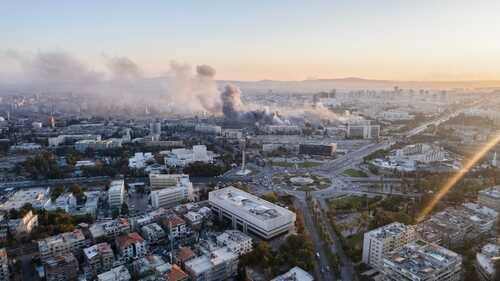
Israel’s strike on Syria’s military headquarters after explicit warnings to Damascus about targeting the Druze minority sends shockwaves across the Middle East and lays bare how quickly the region can ignite when leaders scoff at red lines.
At a Glance
- Israel bombed Syria’s military HQ in Damascus after warning against attacks on the Druze minority.
- Deadly sectarian clashes in Sweida, a Druze-majority city, triggered the crisis and Israeli intervention.
- The strike marks a rare escalation, hitting a military target near Syria’s presidential palace.
- The incident heightens the risk of broader conflict involving Iran, Hezbollah, and regional powers.
Israeli Airstrike Delivers Stern Warning to Damascus
Israel’s military is done with empty threats. After the Syrian government sent its forces barreling into Sweida—a city where the Druze minority has tried to keep out of everyone’s crosshairs—Israel drew a line in the sand and, for once, enforced it. The Israel Defense Forces (IDF) struck a Syrian military target near the presidential palace in Damascus, right on the heels of public warnings that any aggression toward the Druze would meet with force. The message was unmistakable: Israel will not sit back while Assad’s regime tramples its own citizens, especially when those citizens share kin across Israel’s own borders.
Israel has bombed Syria’s Ministry of Defense headquarters in Damascus, launching multiple airstrikes! pic.twitter.com/pmExGHAcKh
— Namkeen Chai نمکین چائے (@enigmaakh) July 16, 2025
The airstrike, carried out on July 16, followed a chaotic day in Sweida where nearly 250 people reportedly lost their lives in sectarian violence. Syrian state media predictably tried to downplay the damage, but you don’t launch airstrikes near Assad’s palace as an idle gesture. Israel’s decision to hit so close to the Syrian capital signals not just a warning to Damascus but a pointed reminder to everyone in the region: threats against minorities are not going to slide by under the radar anymore.
Watch: Syria-Israel conflict:
Druze Community in the Crosshairs—And the World Watches
The Druze of Sweida are a community that has survived by keeping their heads down while the rest of Syria burned. But with Assad’s troops entering under the guise of restoring “order,” the Druze have once again found themselves scapegoated and squeezed between government and opposition forces. Israel’s stake in this is as much personal as it is strategic: there are tens of thousands of Druze citizens in Israel, and their safety and the safety of their families across the border is not a negotiable issue.
Regional and International Stakes: A Powder Keg Waiting for a Spark
The aftermath of the strike is still unfolding, but the warning bells are ringing. Israel has shown it’s willing to defend minorities across its borders, but that doesn’t come without risk. Syria’s regime is propped up by Russia and Iran, with Hezbollah lurking in the wings. Every action like this increases the likelihood of direct confrontation, and the potential for escalation is sky-high. The local impact is immediate—fear, displacement, and more instability for the Druze and other civilians in southern Syria. The broader consequences could involve a messy entanglement of regional powers, dragging the Middle East back into the headlines for all the wrong reasons.
International observers and human rights groups are already warning about the potential for ethnic cleansing and further reprisals. Security experts are quick to point out that Israel’s willingness to strike so close to Assad’s heart could provoke a response from Iran-backed militias. The region remains on a knife’s edge, and the world’s willingness—or unwillingness—to hold Syria accountable will be tested in the days to come.