

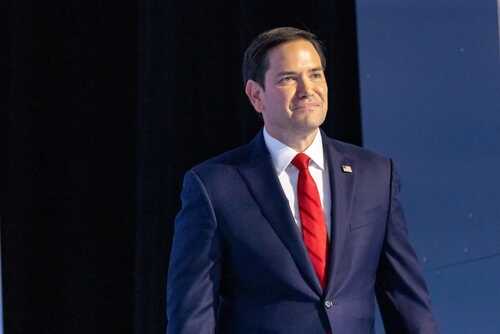
Secretary of State Marco Rubio firmly rebuffed demands for oversimplified answers on complex foreign policy issues during a tense House hearing, telling Rep. Brad Sherman, “This is not a game show.”
At a Glance
- Secretary Rubio and Rep. Sherman clashed during a House Foreign Affairs Committee hearing over foreign policy issues
- Sherman repeatedly demanded “yes or no” answers on complex topics including nuclear proliferation and Iran sanctions
- Rubio insisted that foreign policy questions deserve nuanced answers rather than binary responses
- The heated exchange highlighted ideological divides on U.S. foreign aid and measuring benefits to American interests
- Rubio emphasized that government actions should make America “safer, stronger, or more prosperous”
Contentious Exchange Over Foreign Policy
A heated confrontation between Secretary of State Marco Rubio and California Democratic Representative Brad Sherman dominated a recent House Foreign Affairs Committee hearing. The tension escalated when Sherman repeatedly pressed Rubio for “yes or no” answers on multiple complex foreign policy issues, including nuclear proliferation in the Middle East, sanctions on Iran, and U.S. involvement in Ukraine. Rubio pushed back against this approach, emphasizing that such significant geopolitical matters require thoughtful, detailed explanations rather than simplified responses.
When Sherman continued to demand binary answers, Rubio firmly stated, “This is not a game show.” The Secretary maintained that foreign policy decisions involve nuanced considerations that cannot be reduced to single-word responses without losing critical context. Throughout the exchange, Rubio attempted to provide comprehensive answers while Sherman interrupted, insisting on the format he preferred for the questioning.
— Congressman Brad Sherman (@BradSherman) May 21, 2025
Nuclear Concerns and Middle East Strategy
A significant portion of the hearing focused on nuclear policy in the Middle East. Sherman questioned Rubio about potential nuclear cooperation agreements with Saudi Arabia, a topic of increasing concern for lawmakers monitoring proliferation risks in the region. Rubio clarified that the administration had not engaged in conversations about entering into such an agreement with Saudi Arabia, contradicting implications in Sherman’s questioning. This exchange highlighted the delicate balance American diplomacy must maintain in the volatile region.
The conversation then pivoted to Iran policy, with Sherman pressuring Rubio on whether the Trump administration would maintain sanctions until Iran completely abandons nuclear enrichment. Rubio explained that the administration’s stance was more sophisticated than a simple yes or no, involving multiple considerations about Iran’s nuclear capabilities, regional influence, and the broader implications for American interests and allies in the region. Sherman appeared frustrated by what he characterized as “filibustering,” though Rubio pointed out that such parliamentary tactics belong in the Senate, not House committee hearings.
American Interests and Foreign Aid Effectiveness
Throughout the hearing, Rubio consistently returned to a core principle guiding his approach to foreign policy: government actions should deliver measurable outcomes that benefit American interests. He articulated that every foreign policy decision should make the country “safer, stronger, or more prosperous.” This standard, Rubio argued, applies to all international engagements, from military aid to diplomatic initiatives and economic sanctions.
The back-and-forth between Rubio and Sherman represents a broader ideological divide in Washington over foreign aid allocation and measuring policy effectiveness. Republicans have increasingly called for greater accountability in international spending, while many Democrats emphasize the importance of maintaining American leadership through continued engagement, even when immediate benefits are difficult to quantify. This fundamental difference in approach appears unlikely to resolve soon, as both sides remain committed to their views on America’s proper role in global affairs.