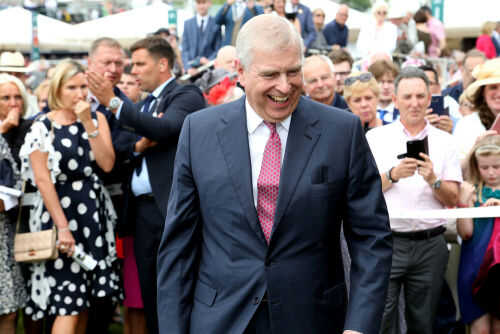
Police expanding an inquiry from misconduct in public office to potential sexual misconduct and corruption against a former prince is not a routine update—it is a line in the sand.
Story Snapshot
- Thames Valley Police are assessing potential offences including sexual misconduct and corruption tied to Andrew Mountbatten-Windsor’s role as the United Kingdom’s trade envoy [2][3].
- Investigators renewed a call for witnesses as the scope widened beyond earlier allegations linked to emails and trade-related materials associated with Jeffrey Epstein [3].
- A reported U.S. woman, not publicly named, is sought for a formal statement about an encounter in the United Kingdom [1].
- No charges have been filed; the most serious claims remain allegations under active review [2][3].
Police say the scope now includes potential sexual misconduct and corruption
Thames Valley Police have publicly indicated the inquiry is considering potential offences including sexual misconduct and corruption, moving beyond the original focus on misconduct in public office [2][3]. Officers also renewed a call for witnesses, signaling a phase shift from background scoping to evidence gathering that can stand up in court, not just in headlines [3]. The emphasis on potential offences preserves due process while unmistakably raising the stakes for a figure who served as the United Kingdom’s special representative for trade and investment.
Reports describe investigators weighing allegations that Andrew exploited his trade envoy position for sexual purposes, a claim that—if substantiated—would fuse abuse-of-office concerns with personal misconduct [1][2]. Journalistic accounts also say police are looking at material tied to communications and trade-related documents linked to Jeffrey Epstein, a context that has historically generated both intense attention and uneven records [1][3]. The decision to explore possible corruption alongside sexual misconduct reflects how financial leverage, access, and influence can intertwine in elite misconduct cases [2][3].
What evidence exists in public—and what still does not
Coverage cites a U.S. woman whom police want to provide a formal statement about travel to the United Kingdom and a claimed encounter with Andrew; she has not been publicly named in the available reporting [1]. Without a sworn account, forensic substantiation, or corroborating records in the public domain, these remain allegations, not tested evidence [1][3]. Reports also reference emails from the 2010 period tied to trade information and Epstein, but the underlying communications have not been disclosed publicly, limiting independent verification [1][3].
Parliamentary releases add a documentary layer around governance. The United Kingdom government produced records relating to Andrew’s 2001 appointment as special representative for trade and investment, including proposals and internal communications [3]. These show how the role was established and overseen, which matters for conflict-of-interest analysis. They do not, by themselves, prove sexual misconduct or corruption, but they frame the institutional architecture where abuse could occur if other evidence later substantiates it [3].
Allegations expand beyond sex to fraud, bullying, and perverting justice
Reports say police are also assessing claims of fraud, corruption, bullying, and perverting the course of justice as they examine the trade envoy decade [1]. That list reads like a checklist of potential leverage points common in complex influence cases, where money, access, and intimidation can reinforce one another. The public record so far offers no disclosed documentary exhibits, named complainants, or detailed timelines to substantiate these additional strands. Prudent readers should separate investigative interest from evidentiary confirmation [1].
Thames Valley Police (and supporting forces) are actively investigating Andrew Mountbatten-Windsor (formerly Prince Andrew, Duke of York) over allegations of misconduct in public office, with the probe now widened to include sexual misconduct and potential corruption.…
— 𝗔𝗯er (@Mdgaslh) May 22, 2026
Andrew and his representatives deny criminal wrongdoing. No charges have been filed, and he remains under investigation rather than before a court [2][3]. That distinction matters. In a media environment primed by Epstein-linked scandals, suspicion can harden faster than facts. Responsible scrutiny demands patience for evidence and respect for presumption of innocence, even when the subject is powerful and unpopular. Equal justice requires both a thorough inquiry and due process that does not bow to headline pressure.
Accountability, due process, and what happens next
Police want witnesses. That is where cases like this either clarify or fade. If the unidentified U.S. woman provides a formal statement with verifiable details, investigators can test it against travel logs, visitor records, communications metadata, and corroborating witnesses [1][3]. If officials produce more trade-envoy documentation or if relevant emails surface through lawful channels, the corruption and misconduct questions gain definition. If these do not materialize, the widened probe may contract back to inconclusive suspicion.
Two truths can coexist. The public has a legitimate interest in whether a government-appointed trade representative mixed state access with private vice. The accused has a right to a fair investigation unwarped by tabloid economics. The balance point is evidence. For readers who prize American conservative values—limited government, individual responsibility, and the rule of law—the compass is simple: demand transparency from institutions, insist on facts over frenzy, and let consequences flow from proof, not pressure [2][3].
Sources:
[1] YouTube – New Andrew bombshell as cops probe claims of sexual …
[2] Web – Andrew Mountbatten-Windsor inquiry looks at ‘sexual misconduct’
[3] Web – UK police renew call for witnesses as they broaden inquiry into …