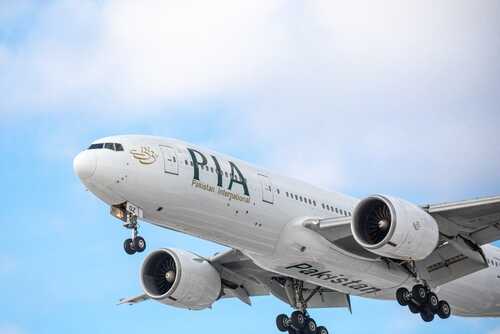
After five years of being locked out of British skies, Pakistani airlines—the same outfits once grounded by a fake pilot license scandal that made flying in Pakistan a real-life game of “trust, but verify”—are back in the game, and not everyone is clinking teacups in celebration.
At a Glance
- Britain officially lifted its ban on Pakistani airlines on July 16, 2025, citing improved aviation safety standards after years of reforms and international inspections.
- The ban was originally imposed in 2020 after a deadly PIA crash and the shocking revelation that nearly a third of Pakistan’s pilots had dubious or outright fake licenses.
- PIA, Pakistan’s flagship carrier, lost hundreds of millions in revenue and saw its reputation crash harder than one of its planes during the ban.
- The decision is a major win for Pakistan’s government and the country’s large diaspora in the UK, but skeptics wonder if real reform has taken root or if this is just another round of window dressing.
- Flights between Pakistan and the UK could resume soon, but airlines must first secure individual operating permits from British regulators.
The Backstory: How We Got Here
Pakistan International Airlines (PIA) was once a source of national pride, but decades of mismanagement, political meddling, and a culture of cutting corners turned it into a case study in how not to run an airline. The final straw came in May 2020, when PIA Flight 8303 crashed in Karachi, killing 97 people. Investigations pinned the blame on pilot error and air traffic control mistakes, but the real bombshell dropped when Pakistan’s own Aviation Minister admitted that nearly a third of the country’s pilots were flying with licenses as authentic as a three-dollar bill.
International regulators, including the UK, EU, and US, responded with swift bans, grounding PIA and other Pakistani carriers from their airspace. The move wasn’t just a slap on the wrist—it was a full-body takedown, costing PIA an estimated $144 million a year in lost revenue and leaving the Pakistani diaspora scrambling for connecting flights through the Middle East. The UK routes, especially to London, Manchester, and Birmingham, were PIA’s cash cows, and losing them was a financial gut punch.
Watch a report: UK lifts ban on Pakistani airlines
The Road to Redemption—Or Just Another Detour?
Pakistan’s Civil Aviation Authority spent the next five years under the microscope, implementing reforms, firing fake pilots, and inviting international inspections. The EU lifted its ban earlier in 2025, and now the UK has followed suit after a security inspection at Islamabad International Airport gave the all-clear. British High Commissioner Jane Marriott and Pakistan’s Defence Minister Khawaja Asif were quick to praise the “collaborative efforts” that led to this moment, while Prime Minister Shehbaz Sharif called it an “important milestone” for Pakistanis in Britain.
Britain has lifted a 5-year ban on Pakistani airlines, allowing them to apply to resume flights to and from the United Kingdom.
🔗: https://t.co/WEMceQkhY0 pic.twitter.com/uzHwUiDKY7
— Al Jazeera English (@AJEnglish) July 16, 2025
But let’s not pop the champagne just yet. Aviation analysts and industry watchdogs are cautiously optimistic at best. They point out that while regulatory improvements are a step in the right direction, PIA’s underlying problems—bloated payrolls, crushing debt, and a history of political interference—haven’t magically disappeared. A recent privatization attempt flopped when potential buyers lowballed their offers, a clear sign that the market still sees PIA as a fixer-upper with a shady past.
Who Wins, Who Loses, and Who’s Just Along for the Ride
The immediate beneficiaries are the 1.6 million people of Pakistani heritage in the UK, who’ve been stuck paying premium prices for indirect flights or dealing with the hassle of layovers in Dubai or Doha. For them, direct flights mean cheaper tickets, easier family visits, and a stronger connection to home. PIA employees, at least in the short term, can breathe a little easier knowing their jobs might be safe—for now.
But let’s talk about the elephant in the cabin: safety. The UK’s decision to lift the ban is a vote of confidence in Pakistan’s regulators, but it’s also a gamble. Aviation safety scholars warn that the pilot license scandal was a global wake-up call, and that only sustained, independent oversight can prevent a repeat. Some critics remain deeply skeptical, arguing that real reform requires more than just firing a few bad apples—it demands a complete overhaul of Pakistan’s aviation culture, from the cockpit to the boardroom.
The Bigger Picture: What This Means for Everyone Else
The lifting of the ban is more than just a travel story—it’s a diplomatic win for Pakistan and a potential boost for UK-Pakistan relations. It could lead to increased trade, tourism, and people-to-people ties. For the aviation industry, it means more competition on UK-Pakistan routes, which could drive down fares but also squeeze Gulf carriers that cashed in during the ban.
For American conservatives watching from across the pond, this saga is a reminder of what happens when government-run enterprises are allowed to fester without accountability. It’s a case study in how corruption, incompetence, and a lack of transparency can turn a national symbol into an international embarrassment. And it’s a warning that real reform is hard, slow, and often incomplete—especially when political interests are involved.