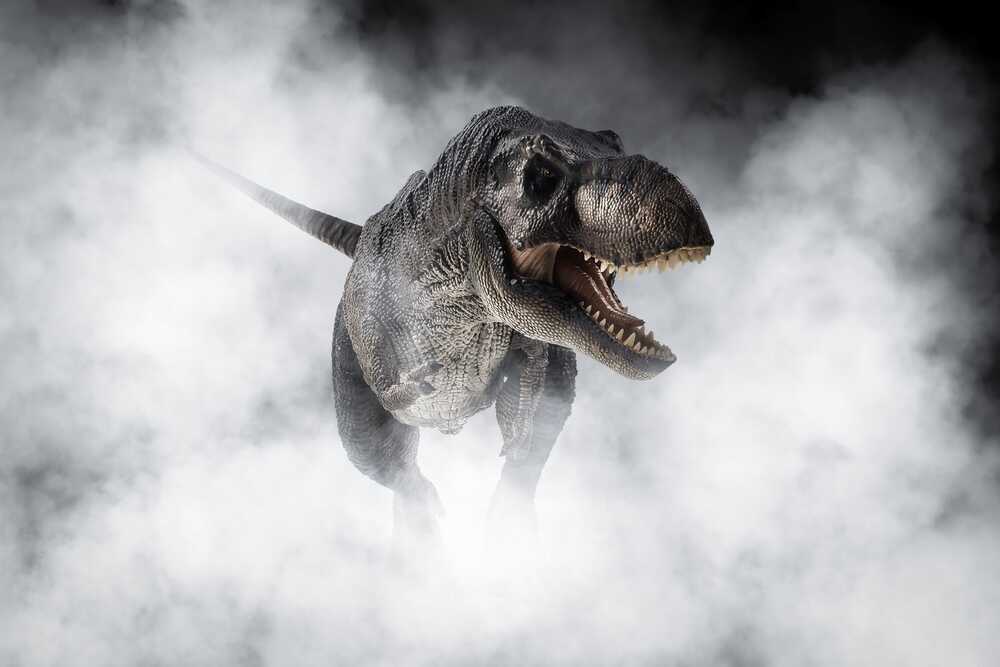
A long-assumed teenage T. rex turns out to be a fierce rival species, upending decades of paleontological dogma and reminding us how elite scientific consensus can blind even experts to hard evidence.
Story Highlights
- Researchers confirm Nanotyrannus lancensis as a distinct adult species, not a juvenile T. rex, based on a complete Montana skeleton.
- Bone growth rings prove adulthood at half T. rex size, with unique skull features and longer arms for speed.
- Study in Nature journal challenges 80-year debate sparked by 1940s fossils, strengthening case for greater dinosaur diversity.
- Expert divide persists: Lead author hails rewrite of history, skeptics see a closer T. rex kin.
- North Carolina Museum displays the “Dueling Dinosaurs” specimen, boosting public fascination with pre-asteroid predators.
Decades-Old Dinosaur Debate Resolved?
Scientists analyzed a complete adult tyrannosaur skeleton from Montana’s Hell Creek Formation, discovered in 2006 as the “Dueling Dinosaurs” find, locked in combat with a Triceratops. Bone growth rings reveal it reached maturity at half the size of T. rex, with distinct skull structures including different bone arrangements, nerve paths, and sinuses. These traits persist unlike puberty changes in modern reptiles like crocodiles. Lead researcher Lindsay Zanno of North Carolina State University declared this “rewrites decades of research,” positioning Nanotyrannus lancensis as an agile predator optimized for speed.
Scientists thought this was a young T. rex. They were wrong: https://t.co/6k2M87iCIs
— Ken Gusler (@kgusler) April 16, 2026
From 1940s Mystery to Nature Publication
The controversy began in the 1940s with a tyrannosaur skull from Hell Creek, a Late Cretaceous site 66 million years ago rich in T. rex relatives. Lacking a full skeleton, experts labeled small fossils like the “Jane” specimen as juvenile T. rex. The 2006 Montana discovery provided the key evidence. Published Thursday in the peer-reviewed journal Nature, the study compares ontogeny—growth patterns—with reptiles, confirming Nanotyrannus as a valid species. This site yielded diverse tyrannosaurids before the asteroid impact ended the dinosaurs.
Expert Views Highlight Scientific Rigor
Holly Woodward, a fossil bone specialist at Oklahoma State University, called it “more support than ever” for Nanotyrannus, though she remains cautious on specimens like Jane. Thomas Carr of Carthage College agrees the skeleton is adult but argues skull similarities make it a T. rex sister species, not distant cousin, insisting the debate continues. Zanno’s team at the North Carolina Museum of Natural Sciences, which displays the skeleton, emphasizes longer, more powerful arms than T. rex, suited for a nimble hunter’s niche.
Implications for Paleontology and Public Understanding
This discovery refines T. rex growth models short-term and expands known tyrannosaur diversity long-term, reshaping views of Late Cretaceous predator ecology. Paleontologists must revise textbooks and papers, while museums like North Carolina’s see tourism boosts from exhibits. It advances methods like growth ring analysis, spurring new digs in Hell Creek for small tyrannosaurids. For Americans weary of elite overreach—whether in Washington or academia—this underscores how questioning assumptions with evidence upholds truth-seeking, a principle conservatives champion amid government failures.
Scientists thought this was a young T. rex. They were wrong
A long-running dinosaur mystery may finally be solved: Nanotyrannus, once dismissed as just a teenage T. rex, appears to have been its own distinct species after all. Scientists analyzed a tiny throat bone from the…
— The Something Guy 🇿🇦 (@thesomethingguy) April 16, 2026
Sources:
Young T. rex or a new dinosaur? New bones add to the debate
Young T. rex or a new dinosaur? New bones add to the debate