

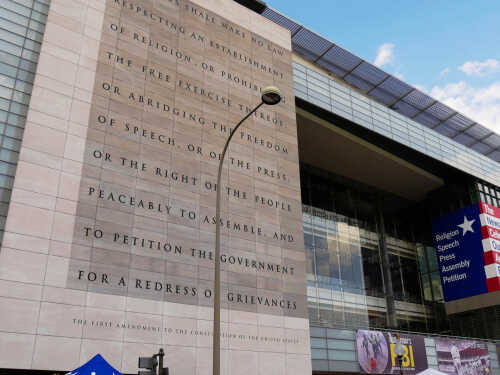
A foreign billionaire’s brazen call to strip Americans of their First Amendment rights has ignited a firestorm of conservative opposition.
Story Highlights
- Israeli tech CEO Shlomo Kramer demands U.S. government limit First Amendment protections
- Proposes government control of social media with “authenticity ranking” systems for users
- Conservative leaders unite in fierce opposition, calling proposal authoritarian overreach
- Foreign influence on American constitutional rights sparks national security concerns
Foreign CEO’s Constitutional Attack Plan
Shlomo Kramer, co-founder and CEO of Cato Networks, brazenly argued on CNBC that the U.S. government should restrict First Amendment protections to combat AI-enabled cyber warfare and misinformation. The Israeli billionaire proposed that governments control social media platforms and implement “authenticity ranking” systems for online users. Kramer justified this assault on American freedoms by claiming China’s unified narrative gives authoritarian regimes an “unfair advantage” over democracies that allow free speech.
Kramer’s proposal represents a fundamental misunderstanding of American values, suggesting that constitutional rights are obstacles rather than foundational principles. His argument that “technology is moving much faster than the political system typically can respond” reveals a technocratic mindset that prioritizes control over liberty. This foreign entrepreneur’s willingness to advocate for dismantling constitutional protections raises serious questions about foreign influence on domestic policy debates.
Watch:
Conservative Leaders Rally Against Censorship
Conservative politicians immediately mobilized against Kramer’s authoritarian proposal with unified opposition. Utah GOP Senator Mike Lee responded with a definitive “No,” while Florida GOP gubernatorial candidate James Fishback pledged to “always defend the First Amendment as Florida Governor.” Former Florida Representative Matt Gaetz declared “We aren’t going to do this,” demonstrating the strong conservative commitment to constitutional protections.
Congresswoman Marjorie Taylor Greene connected Kramer’s proposal to broader concerns about foreign influence, stating it represents “everything we voted against in ’24.” Conservative commentator Andrew Gruel warned of the dangerous precedent, noting that limiting the First Amendment leads to “arbitrary arrests, coerced confessions, show trials, transport to camps.” The unified conservative response demonstrates clear understanding that government speech control inevitably becomes government oppression.
Authoritarian Overreach Disguised as Security
Kramer attempted to frame his constitutional assault as a necessary defense against AI cyber warfare, claiming governments must use “technology to stabilize the political system” through “adjustments that are perhaps not popular, but necessary.” This classic authoritarian argument positions liberty as a luxury democracy cannot afford. His proposal for government-controlled “authenticity ranking” systems represents exactly the kind of social credit system that Americans have consistently rejected.
The proposal fundamentally misunderstands American resilience, suggesting that free speech makes democracies vulnerable rather than strong. Kramer’s argument that China’s single narrative provides advantages ignores the historical reality that authoritarian control ultimately weakens nations by suppressing innovation and truth. Americans understand that the solution to bad speech is more speech, not government censorship disguised as cybersecurity measures.
The swift conservative rejection of this proposal demonstrates that Americans remain committed to constitutional principles despite technological challenges. While cybersecurity threats are real, surrendering fundamental rights to unelected technocrats represents a far greater danger to American democracy than any foreign disinformation campaign.
Sources:
Conservatives push back on billionaire who calls for limitations on First Amendment