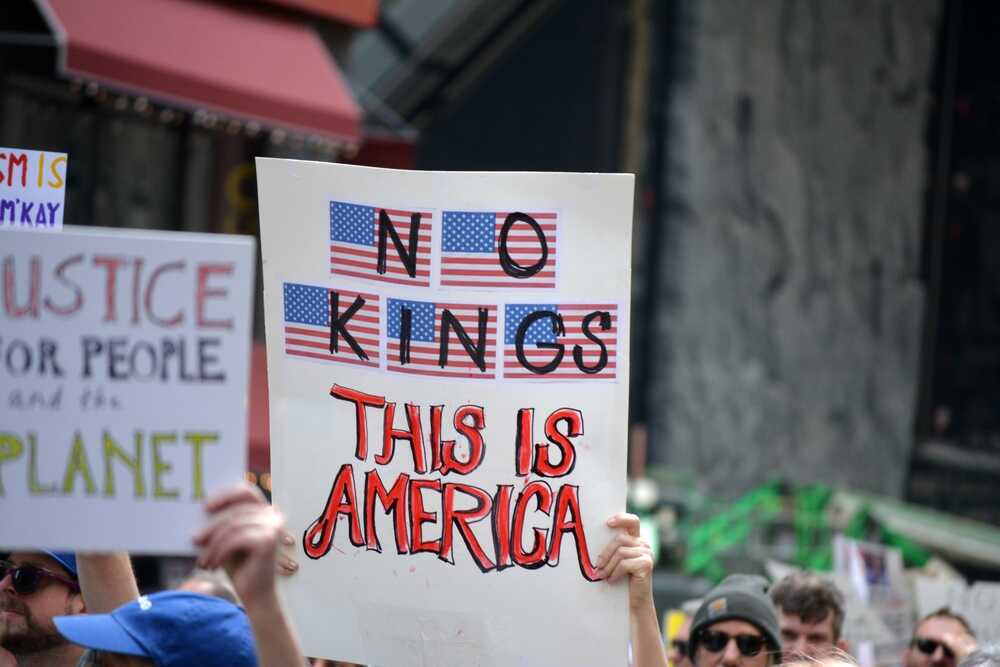
What looks like a “spontaneous” grassroots uprising against Trump is being described as a professionally coordinated, billion-dollar protest machine operating under tax-exempt banners.
Story Snapshot
- “No Kings” protests on March 28, 2026 featured 3,000+ planned events across all 50 states, with organizers predicting record-scale turnout.
- Fox News opinion reporting and related coverage argue the rallies are backed by a large network of Democratic-aligned nonprofits and unions with billions in combined annual revenues.
- Key organizing infrastructure is attributed to groups like Indivisible, with reported philanthropic support tied to major foundation networks.
- Available reporting confirms planning scale and key organizations involved, but does not provide verified attendance totals or itemized protest budgets.
How “No Kings” Became a National Protest Brand
Organizers scheduled the third major “No Kings” protest day for March 28, 2026, with more than 3,000 planned events nationwide. The movement, which began with an earlier rally in Washington, D.C. on October 18, 2025, frames its message around opposition to executive overreach. The timing landed amid a tense national backdrop that included the Iran conflict, immigration enforcement escalation, and partisan budget fights over homeland security.
Reports cited protest activity in major cities such as Washington, D.C., Chicago, and St. Paul, along with events in suburban areas. Public-facing messaging emphasized broad geographic reach, including events in heavily Republican areas. What is missing from the available source set is the basic measurement that would settle competing narratives: independently verified turnout totals. Without confirmed attendance figures, claims about “millions” participating remain difficult to evaluate strictly on the record provided.
The Funding Question: Revenues vs. Protest Budgets
Fox News coverage and related summaries argue that the rallies are coordinated by a large ecosystem of Democratic-aligned organizations. One frequently cited figure is $2.1 billion in annual revenues across about 198 groups said to be involved, with a broader network described as 465 groups totaling $3.4 billion in combined revenues. That framing is politically important, but it also requires a clear distinction: combined organizational revenues are not the same thing as dollars spent on a single protest day.
That distinction matters for readers who care about transparency and truth in political messaging. A network can be large, professional, and coordinated while still containing sincere participants who simply show up because they’re angry. The available reporting also does not include detailed methodology for how each organization was counted as an organizing partner or what their material role was for March 28 specifically. The sources provided confirm planning scale and named entities, but they do not resolve the full allocation question.
Who’s in the Network: Unions, Nonprofits, and Political Infrastructure
Several of the named stakeholders reflect a familiar model of modern protest mobilization: unions provide people and local connections, while national nonprofits provide data, messaging, and digital coordination. The American Federation of Teachers and AFL-CIO are cited as key organizing players, and Fox reporting highlights high compensation for some leaders in advocacy spaces. Indivisible is described as a coordinator managing communications and data, linking street-level events to centralized logistics.
Open Society Foundations is also referenced in the research set because it issued a $3 million grant to Indivisible, while stating the grant was not specifically designated for “No Kings” protests. That statement leaves room for two realities at once: funding may not be earmarked for a specific protest day, yet a well-funded organization can still use general operating support to build capacity that later powers mobilizations. The available sources do not provide itemized spending to settle that question.
Why This Matters to Conservatives in 2026: Rights, Trust, and War Weariness
Conservatives are watching these protests while the country faces higher-stakes pressures than protest theater: Americans are living through an Iran war, persistent cost-of-living pain, and a public that is split—even inside MAGA—over foreign entanglements and America’s posture in the Middle East. Against that backdrop, “No Kings” messaging about tyranny collides with an obvious reality in the reporting: the protests occurred openly, across the country, without government suppression.
'No Kings' Rallies Fueled By Plump $3 Billion Budget From Hundreds of Organizations: Fox News https://t.co/oKSflLS5Bi pic.twitter.com/fevRzEGoC5
— Mediaite (@Mediaite) March 28, 2026
Constitutional concerns cut both ways, and the limited source set here mostly critiques the protests rather than documenting official abuses of rights. Conservatives can fairly demand transparency when tax-exempt entities act like political operators, and they can also reject the idea that dissent itself is illegitimate. What the public still needs is verifiable data—turnout, spending, and coordination specifics—so Americans can judge whether “No Kings” is primarily a civic reaction, a partisan operation, or an uneasy blend of both.
Sources:
https://www.foxnews.com/opinion/liz-peek-democrat-fury-fuels-no-kings-protests-endgame-elusive