

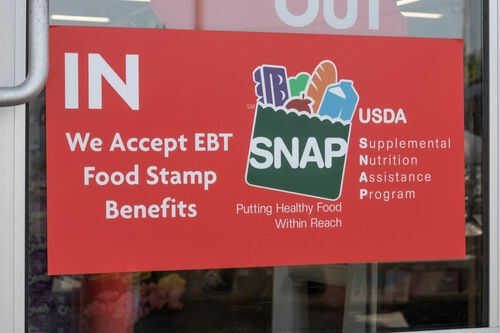
A 74-year-old Boston shop owner just pleaded guilty to stealing nearly $7 million from taxpayers by trafficking food stamp benefits meant for struggling families—while simultaneously collecting those same benefits himself through fraudulent applications.
Story Snapshot
- Antonio Bonheur operated a massive SNAP fraud scheme from a 150-square-foot store that processed more benefits monthly than large supermarkets
- He sold meals donated by Feed My Starving Children—intended for overseas famine victims—for cash while exchanging SNAP benefits at reduced rates
- Bonheur faces up to 20 years in prison and agreed to forfeit nearly $400,000 in seized proceeds from the scheme
- The case exposes systemic vulnerabilities in government welfare oversight that allow small retailers to exploit programs designed for the food-insecure
Tiny Store Processes Millions in Government Benefits
Antonio Bonheur’s Jesula Variety Store in Boston’s Mattapan neighborhood measured just 150 square feet, yet investigators discovered it was processing between $100,000 and $500,000 monthly in SNAP benefits. This dwarfed the $82,000 average for much larger local supermarkets with extensive food inventories. Prosecutors noted that over 70 percent of transactions exceeded $95, an impossibility for a legitimate variety store with minimal stock. Undercover operations caught Bonheur personally at the register exchanging SNAP benefits for cash at reduced rates, pocketing the difference while taxpayers funded the fraud.
Humanitarian Aid Food Sold for Profit
Federal investigators documented Bonheur selling MannaPack meals for approximately $8 per package, despite these items being donated by Feed My Starving Children specifically for distribution to famine victims overseas. These nutritionally fortified meals were never authorized for retail sale. Additionally, the store illegally sold liquor and other ineligible items using SNAP funds. The scheme diverted resources meant for the world’s most vulnerable populations into Bonheur’s personal bank accounts, which he strategically maintained across multiple institutions to conceal the fraudulent proceeds from federal oversight and detection.
Store Owner Defrauded Program While Receiving Benefits
While trafficking millions in SNAP benefits, Bonheur falsified his own income information to qualify for and receive a personal SNAP card funded by the same program he was systematically defrauding. U.S. Attorney Leah Foley emphasized this brazen double-dipping, stating the scheme involved “trafficking millions” while Bonheur simultaneously collected benefits through false statements. He pleaded guilty to one count each of food stamp fraud exceeding $5,000 and wire fraud. Sentencing is scheduled for July 8 before U.S. District Judge Indira Talwani, with Bonheur facing up to 20 years in federal prison, a $250,000 fine, and three years of supervised release.
A second defendant, 21-year-old Saul Alisme of Hyde Park, faces similar charges for operating a parallel scheme at the 500-square-foot Saul Mache Mixe Store. Court documents show both establishments exhibited identical red flags: extraordinarily high SNAP redemption volumes inconsistent with their size, sales of MannaPack meals, and transaction patterns suggesting systematic benefit trafficking rather than legitimate grocery operations. The DOJ investigation relied heavily on transaction data analytics that revealed these anomalies, demonstrating how small urban retailers exploit lax oversight in low-income neighborhoods with high EBT card usage.
Taxpayer Dollars Fund Fraud While Oversight Fails
This case represents approximately $7 million in taxpayer losses, exposing critical vulnerabilities in USDA program administration that conservatives have long warned about. The fraud persisted for years despite glaring statistical anomalies that should have triggered immediate investigation. SNAP is designed to provide food assistance to genuinely struggling Americans, not enrich fraudsters gaming the system. The forfeiture of $400,000 recovers only a fraction of stolen funds. This undermines public trust in safety-net programs and fuels legitimate concerns about government waste and mismanagement. Stronger oversight mechanisms and data-driven monitoring are essential to protect taxpayers and ensure benefits reach those truly in need, not criminal enterprises.
The Mattapan case highlights how SNAP trafficking schemes disproportionately occur in small urban stores where regulatory oversight remains weak. While legitimate small businesses struggle under burdensome regulations, bad actors exploit gaps in enforcement to steal from programs meant for vulnerable populations. The DOJ prosecution sends a necessary deterrent message, but without systemic reforms addressing transaction monitoring and retailer vetting, similar schemes will continue draining public resources. Americans deserve accountability for every tax dollar spent, especially when those funds are intended to feed hungry families rather than line the pockets of fraudsters.
Sources:
Boston convenience store owner admits $7M SNAP benefits fraud scheme, feds say – Boston 25 News
DOJ: 2 men allegedly ran $7M SNAP trafficking case, sold food meant for starving children – KATV
DOJ: 2 men allegedly ran $7M SNAP trafficking case, sold food meant for starving children – KRCR
Two Massachusetts Men Charged in Large-Scale SNAP Benefits Trafficking – Department of Justice