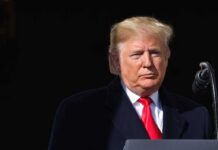
A Conservative Member of Parliament is warning that Beijing is no longer just meddling in Canada’s elections — it is reaching into culture, media, and industry to slowly rewrite the country’s identity from the inside out.
Story Snapshot
- Conservative MP Shuvaloy Majumdar warns that the Chinese Communist Party is targeting Canada’s culture and industry, not just its elections.
- Canadian security reports now say Beijing’s foreign interference is the single greatest threat to the country’s democratic way of life.
- Chinese state-backed media and online campaigns have pushed disinformation to turn Chinese Canadian voters away from Conservatives.
- Experts describe a network of influence groups working to shape media narratives, suppress criticism, and gain control over key resources.
Conservative MP Sounds Alarm on Beijing’s Reach into Canadian Life
Conservative Member of Parliament Shuvaloy Majumdar, who represents Calgary Heritage, has built his career around foreign policy and national security issues and now serves on Parliament’s foreign affairs and human rights committees. His warning about China’s push into Canada’s cultural and industrial life does not come from the sidelines. It comes from a lawmaker with direct access to security briefings, committee testimony, and the growing record on foreign interference in Canada.
Majumdar has long argued that Canada’s past approach to Beijing was reckless, pointing to policies like free trade talks, cyber deals, and extradition arrangements that tied Canada closer to an authoritarian regime.[2] Under the previous Liberal governments, Ottawa flirted with what he called a “China pivot,” turning away from trusted democratic allies and toward a state he describes as hostile to Canadian interests and values.[2] That, he argues, opened the door to deeper interference in Canadian society.
From Election Meddling to Cultural Pressure and Media Control
Canada’s own records now show that Chinese state actors have interfered in federal elections, diaspora communities, and the broader information space. A House of Commons committee heard that Beijing’s espionage and interference now pose the single greatest threat to Canada’s democratic way of life, including efforts to gain control of critical minerals and to capture political and business elites.[16] These are not abstract claims; they were delivered under oath to Parliament’s national security committee.[16]
Canadian intelligence officials have also warned that China targeted the 2019 election by funding a clandestine network of candidates, planting agents in Members of Parliament’s offices, and trying to co‑opt former Canadian officials in order to bend policy toward Beijing’s interests.[17] A public inquiry later concluded that China did engage in foreign interference in the 2019 and 2021 elections, mainly through social media disinformation and pressure on certain candidates and communities.[10] Officials say the overall result did not change, but the pattern of meddling is now clearly documented.[10]
How Beijing’s Narrative Machine Works Inside Canada
Security documents describe a playbook that goes far beyond ballot boxes. The Chinese Communist Party’s United Front system works to co‑opt politicians, civil servants, business leaders, and media figures, often through front groups and friendly “community” organizations.[14] Its goal is to shape how Canada talks and thinks about China by rewarding voices that repeat Beijing’s line and punishing critics with smear campaigns, social pressure, or economic threats.[14]
One submission to the foreign interference inquiry lays out how Chinese Communist Party narratives flood Chinese‑language media in Canada and create a climate of censorship and self‑censorship.[12] The authors say pro‑Beijing stories dominate, while opposing views are pushed out through intimidation of journalists, control over editors, and funding arrangements that tie outlets to Chinese state interests.[12] That is not just influence, they argue, but an organized campaign to undermine Canada’s sovereignty by rewriting what information people see and trust.[12]
Disinformation Aimed Directly at Conservative Voters
During the 2021 federal election, a federal research unit known as Rapid Response Mechanism Canada detected what it said might be a Chinese Communist Party information operation aimed at Chinese‑heritage voters.[4] On the Chinese video platform Douyin, state media accounts like Xinhua amplified the claim that the Conservative platform mentioned China “31 times” and suggested Conservatives wanted to almost break off relations with Beijing.[4] The story was clear: a Conservative vote would hurt Chinese people in Canada.
Academic work on election misinformation reached similar findings. Researchers found that Chinese officials and state media weighed in on the election to push Chinese Canadians away from the Conservative Party by spreading misleading or slanted information on Chinese‑language platforms.[4] While they did not find proof that the interference swung the national result, they did confirm targeted disinformation aimed at one party and its supporters.[4] That directly supports Conservative concerns that Beijing is working to sideline any Canadian government that takes a firm line on China.
Creative Industries and Cultural Identity in the Crosshairs
Majumdar’s sharper warning is that Beijing is now leaning on Canada’s creative and cultural industries to mute criticism and normalize the regime’s image. Public inquiry submissions describe how Chinese Communist Party agents coerce media executives, fund content that aligns with state narratives, and embed pro‑Beijing individuals inside Canadian media organizations.[12] These insiders can steer coverage, block reporting that offends Beijing, and chill open debate on human rights, security, or Taiwan.[12] That kind of pressure hits the heart of culture and free expression.
Canadian experts also warn that these interference efforts are linked to a larger strategy of “elite capture,” where Beijing invests heavily in influential opinion leaders and institutions so that they become dependent on Chinese money and access.[16] Once captured, those voices can be nudged to echo Chinese Communist Party talking points on trade, foreign policy, or domestic issues, even inside democracies like Canada.[16] For Canadians who care about free speech, local control over resources, and the survival of a national identity rooted in democratic values, this is not a distant problem — it is a direct challenge playing out in universities, media, arts, and boardrooms right now.
Sources:
[2] Web – China’s regime suppresses Canada’s creative industries – Facebook
[4] X – Shuv Majumdar (@shuvmajumdar) / Posts / X
[10] Web – Evidence – PROC (44-1) – No. 54 – House of Commons of Canada
[12] Web – Deterrence by Denial: Protecting Chinese Diasporas and Canadian …
[14] Web – Dragon at the door | Macdonald-Laurier Institute
[16] YouTube – CCP’s Influence Groups in North America an ‘All-Weather, All-Ways …
[17] Web – Canada to remain testing ground for Chinese interference