
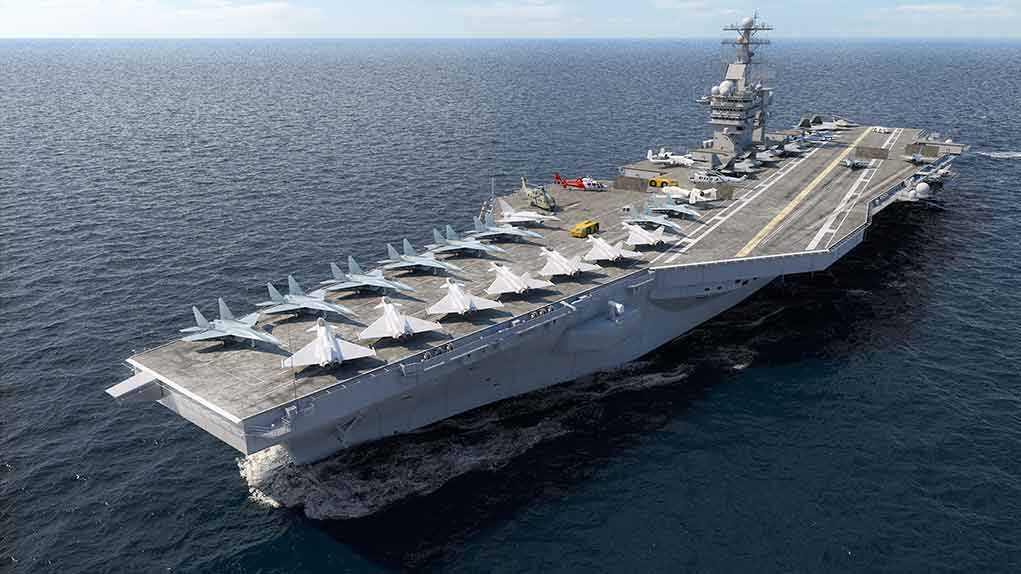
The Navy spent $13 billion on its newest aircraft carrier, only to discover its own stealth fighter ran too hot for the flight deck.
Quick Take
- Government auditors found F-35C testing on USS Gerald R. Ford was still “in its infancy” during the carrier’s construction.
- The F-35C’s engine exhaust runs hot enough that the Navy needed stronger jet blast deflectors than Ford originally had installed.
- Reports say Ford never embarked F-35Cs for sustained flight operations after delivery.
- The newer carrier, USS John F. Kennedy, got the fighter-jet fixes built in before the Navy accepted it.
- The Navy insists Ford can still launch and recover the jet, pushing back on claims it “can’t operate” the F-35C at all.
Billion-Dollar Carrier Missed a Key Fighter Jet Requirement
USS Gerald R. Ford, the lead ship of the Navy’s newest carrier class, was supposed to be ready for the F-35C stealth fighter when it joined the fleet. Instead, the carrier lacked several upgrades the jet needed, including stronger jet blast deflectors to handle its exhaust, designated support areas, and specialized equipment storage. Taxpayers footed the bill for a flagship vessel built without full compatibility for the Navy’s own front-line aircraft.
The F-35C’s F135 engine produces exhaust reported at roughly 3,600 degrees Fahrenheit, intense enough that the Navy identified a need for reinforced jet blast deflectors with better cooling to protect flight deck crews and equipment during repeated launches. That is not a minor maintenance note. It points to a basic engineering mismatch between a brand-new carrier design and the brand-new fighter it was meant to carry into combat.
Government Watchdog Flagged the Problem Years Ago
The Government Accountability Office warned about this years before Ford ever left the shipyard. Auditors found that F-35C integration testing with Ford’s electromagnetic catapults and arresting gear remained “in its infancy,” and they listed a long set of F-35C-specific requirements the ship still needed, from jet blast deflector upgrades to new electrical and ordnance work centers. That is the kind of overlapping, rushed development conservatives have long criticized in Pentagon procurement.
A former Navy spokesman later confirmed the ship could technically launch and recover the F-35C but still needed stronger jet blast deflectors and designated aircraft support areas before it could handle the jet routinely. Reporting this fall said Ford had never actually embarked F-35Cs for sustained operations, a sign the carrier left the shipyard without everything the stealth fighter required for real-world combat use.
Navy Pushes Back on “Can’t Operate” Claims
Navy officials reject the idea that Ford simply cannot handle the F-35C. The service has stated Ford already demonstrated technical compatibility with the jet, describing the jet blast deflector work as refinements meant to support repeated high-tempo launches rather than proof the carrier is incapable of flying the aircraft at all. That distinction matters for an honest reader: a ship needing upgraded hardware for sustained combat tempo is a real problem, but it is different from a ship that cannot fly the jet whatsoever.
Some headlines claiming the flight deck would literally “melt” go further than the evidence supports. No released Navy engineering report, inspection record, or maintenance document in the public domain documents an actual melted or warped deck. The documented facts are narrower but still serious: incomplete integration, required hardware upgrades, and a carrier that skipped sustained F-35C operations for years after joining the fleet.
Second Carrier Built Right the First Time
The Navy appears to have learned something from Ford’s rough start. USS John F. Kennedy, the second Ford-class carrier, is being completed with F-35C support systems built in from the start rather than bolted on later. A Navy press release described a single-phase acquisition strategy that incorporated the jet’s modifications into Kennedy’s construction before delivery, instead of waiting to retrofit the ship after the fact.
The US Navy has begun F-35C flight testing aboard the PCU John F. Kennedy (CVN-79), marking a major milestone for Ford-class aircraft carrier integration 🇺🇸
By @AlexLuck9 https://t.co/xWImgtFyQL— Naval News (@navalnewscom) October 15, 2026
The Navy accepted Kennedy from Newport News Shipbuilding for testing ahead of its planned commissioning, and the carrier has since completed F-35C catapult launches and arrested landings using its electromagnetic launch and recovery systems. That is a win worth noting. But it also raises an obvious question conservative taxpayers should keep asking: why did the Navy’s first $13 billion carrier in the class ship out without the fixes the second one got from day one, and what did correcting that mistake cost taxpayers along the way?
Sources:
gao.gov, armyrecognition.com, twz.com, navy.mil, navair.navy.mil, congress.gov