

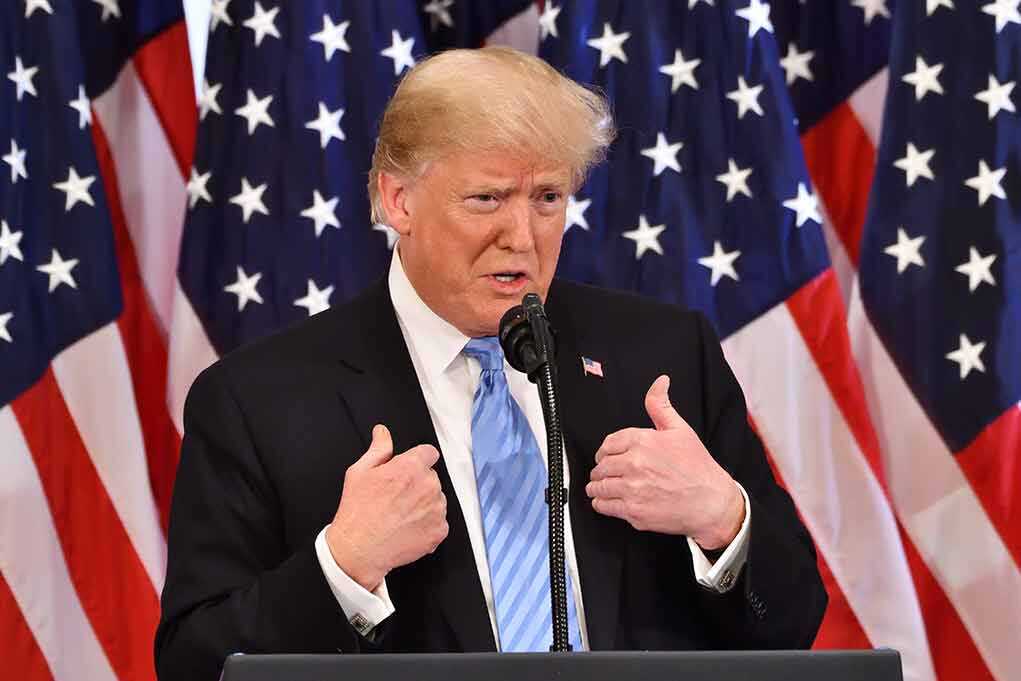
President Trump vowed to be “Mr. Veto,” signaling he will block Democratic bills and force real negotiations on spending, border policy, and culture-war wish lists.
Story Highlights
- Trump said he will veto Democratic bills and leverage talks after repeated rejections.
- The Constitution gives presidents veto power; Congress needs two-thirds to override.
- Overrides are rare in U.S. history, making vetoes a strong shield against bad bills.
- Analysts say veto threats often shape what Congress even tries to pass.
Trump’s Plan: Use The Veto To Force Deals
President Trump told The Hill he will “become Mr. Veto” if Democrats run Congress, saying he will stop bills he views as wasteful, open-border, or culturally extreme. He said Democrats will “send stuff up,” he will veto it, and then they will likely make deals after a few rounds. The message is simple: the White House will not rubber-stamp higher spending, soft-on-crime measures, or attacks on parental rights. The plan sets a clear line to defend taxpayers and the border.
Trump’s posture matches how many conservatives have felt for years. Washington passed massive bills that fueled inflation and packed in left-wing riders on energy, immigration, and speech controls. Voters watched promises on border security stall while costs at the pump soared. The veto is the tool the Constitution gives a president to stop that train and demand real fixes. Trump is saying he will use it, and use it often, to protect core priorities.
How The Veto Works And Why It Matters
Article I, Section 7 of the Constitution lets a president return a bill with objections. Congress can then try to override, but it must muster two-thirds majorities in both chambers to do it. That is a steep hill for any party, even after a wave election. The high override bar means the veto is more than a speed bump. It is a brake that forces the other side to narrow bills, drop poison pills, and come to the table when they want something signed.
History backs up the leverage. Since the founding, presidents have issued thousands of vetoes, while overrides have been comparatively rare. Congressional research shows the override process requires heavy bipartisan support and is not easy to achieve. That record is why past presidents from both parties have used veto threats to shape bills before they are written, not only after they pass. The mere risk of a veto often keeps extreme add-ons out of final text.
What This Means For Spending, Border, And Culture Fights
House and Senate Democrats can pass messaging bills, but they cannot force the White House to sign. If they load up omnibus spending with green energy mandates, sanctuary carve-outs, or censorship schemes tied to “disinformation,” expect a quick veto. If they try gun control that punishes law-abiding owners instead of criminals, expect another one. The practical path becomes targeted, clean bills that address border security, energy supply, and crime with clear outcomes.
For conservatives, this is how limited government should work. The president is a check on runaway spending and culture-war experiments that sidestep parents and police. A credible veto threat can strip out waste and policy riders that never pass on their own. It can also force debate on real border enforcement and American energy strength. When the choice is a clean bill or no bill, power returns to clarity and to the Constitution’s basic guardrails.
The Negotiation Window: Why Repeated Vetoes Change The Game
Trump framed the first weeks after new bills arrive as a pressure test. Democrats can send broad packages to score headlines. The White House can return them with detailed objections. After a few cycles, the pipeline tends to narrow to what can actually be signed. Analysts have seen this pattern before: veto threats and actual vetoes push Congress to trim scope, focus on must-pass needs, and negotiate in earnest when deadlines loom.
None of this guarantees big bipartisan deals. But the math gives the president leverage. Two-thirds overrides are rare and costly, and party leaders know it. That is why the veto can protect border agents from hand-tying rules, shield families from speech policing, and stop tax-and-spend sprees that hit seniors and small businesses. Conservatives wanted a backstop against the left’s agenda. The Constitution provides one. Trump says he is ready to use it.
Sources:
constitution.congress.gov, congress.gov, thehill.com, senate.gov