

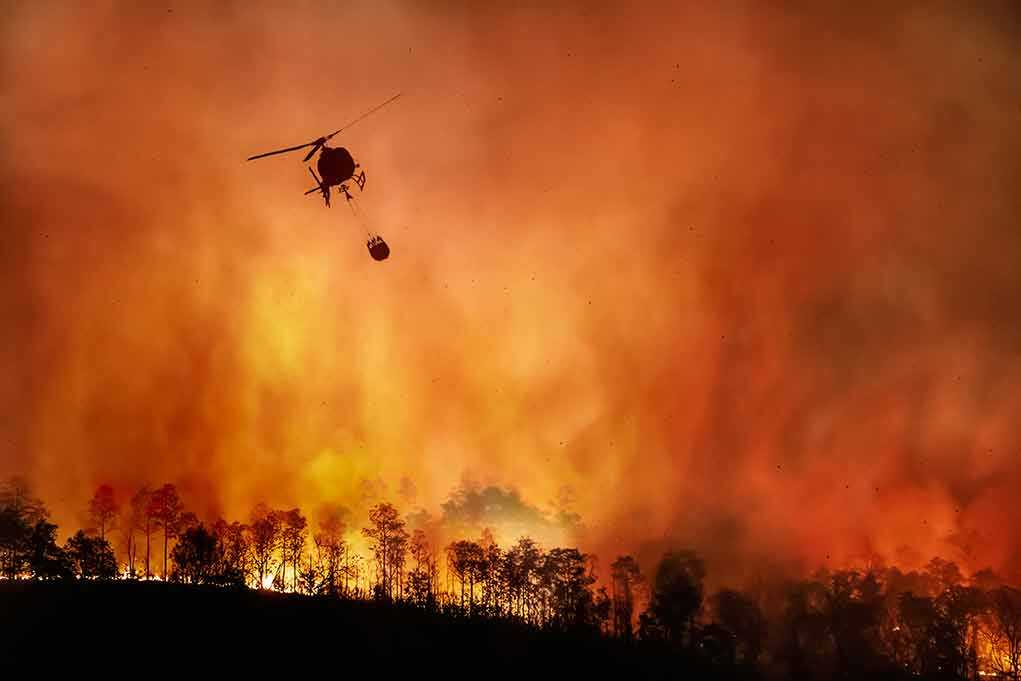
More than 40 groups are telling Congress that overgrown forests are now a national security problem, and they want wildfire prevention written into the defense budget itself.
Story Snapshot
- Over 40 organizations are pushing to add wildfire prevention language to the fiscal year 2027 National Defense Authorization Act.
- The Defense Department already calls wildfire a “significant threat to installations and mission readiness.”
- About 1 million acres of Defense Department land burn every year from wildfire and planned burns.
- Environmental groups say the underlying Fix Our Forests Act would gut science-based review and open land to heavy logging.
Military Readiness at Risk From Wildfire
The coalition wants lawmakers to attach the bipartisan Fix Our Forests Act to this year’s defense bill, the law that funds the military every year. Their argument is simple. Wildfire does not stop at a base fence line. It burns training ranges, damages buildings, and pulls National Guard troops away from their regular jobs to fight fires instead.
This is not a new worry for the Pentagon. The Department of Defense’s own wildland fire program states that fire is a “significant threat to installations and mission readiness” and calls for better policy, funding, training, and fuel management across military land. Roughly 1 million acres of Defense Department land burns each year through wildfire and controlled burns combined.
Senator Tim Sheehy, a Montana Republican, filed an amendment tied to this effort in June, showing the push already has traction inside the Senate. A summer letter to Senate Armed Services Committee leaders Roger Wicker and Jack Reed reportedly warned that dozens of installations face wildfire exposure and that rising firefighting demands on the Guard could hurt overall readiness.
The Fix Our Forests Act Fight
The Fix Our Forests Act is the real engine behind this push. It aims to speed up forest thinning and controlled burns by cutting through some environmental red tape that currently slows projects for years. Supporters, including loggers and some conservation groups, say the current system lets fuel pile up until it becomes the next megafire.
Science backs the basic idea that clearing out dead brush and small trees works. A United States Department of Agriculture Forest Service review found overwhelming evidence that thinning combined with prescribed burning cuts future wildfire severity by 62 to 72 percent compared to untreated land. For folks who watched entire towns burn in recent years, that is not a small number.
Opposition Pushes Back on Logging Fears
Not everyone is on board. Lisa Saltzburg of Defenders of Wildlife argues the bill rolls back “bedrock” environmental protections and cuts science and local voices out of decisions. Cascadia Wildlands goes further, warning the bill could lead to “lawless logging” on national forests with almost no public review.
The Sierra Club and Center for Biological Diversity worry that weaker environmental review could let timber companies log heavily instead of lightly thinning land, under the cover of wildfire prevention. A critic quoted by VTDigger claimed logging can actually make conditions hotter, drier, and windier, speeding up fire spread. These are fair points worth watching as the bill moves, though they focus on the broader forestry law rather than the narrower military readiness argument the coalition is making.
CALIFORNIA: A STATE THAT HAS LOST THE PLOT
California is burning again and I live here. Malibu is under evacuation orders. Families are being forced to flee, and the wind is driving flames through communities that know all too well what fire can take.
And what is Gavin Newsom’s…
— Joe Maria (@Digrevo1) October 16, 2026
What’s Next for the Defense Bill
The fiscal year 2027 defense bill has not passed yet and is currently sitting in a lame-duck holding pattern, meaning the fight over wildfire language could stretch into the final stretch of negotiations. Competing amendments from Senators Adam Schiff and Chris Van Hollen show Democrats want their own version of forest and installation resilience planning attached instead.
For conservative voters tired of watching federal land turn into kindling while Washington argues over paperwork, this debate cuts to the core issue. Readiness means bases that work and troops that train without smoke choking the runway. Common-sense forest management, paired with real oversight instead of endless lawsuits, is the kind of practical fix this fight should produce.
Sources:
stripes.com, congress.gov, denix.osd.mil, redding.com, vtdigger.org, scottpeters.house.gov, research.fs.usda.gov