

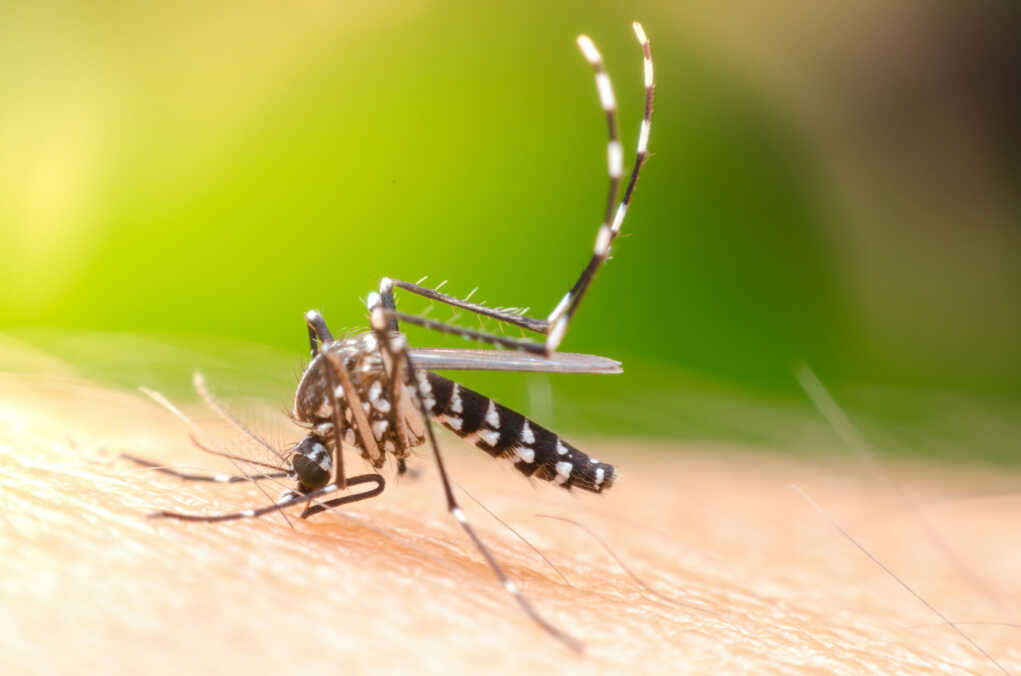
Google’s mosquito division has quietly applied with federal regulators to release up to 32 million lab-treated mosquitoes into California and Florida — and the science behind it is far less alarming than the headline suggests, but also far less proven than its promoters admit.
Quick Take
- Google’s Debug Project has applied to the Environmental Protection Agency (EPA) to release tens of millions of sterile male mosquitoes in California and Florida over two years.
- Southern California pilot programs using the same sterile-male approach already recorded an 82% population reduction in one Sunland-Tujunga neighborhood.
- The released males do not bite, cannot reproduce, and are specifically targeting invasive Aedes aegypti mosquitoes linked to dengue, Zika, and chikungunya.
- California’s mosquito-borne disease burden is measurably rising, giving the program real urgency — but independent proof that releases reduce human infections, not just mosquito counts, is still missing.
Why Google Is in the Mosquito Business
Google’s parent company Alphabet launched the Debug Project specifically to attack disease-carrying mosquito populations using automation and scale. The concept is not new — sterile insect technique has been used in agriculture for decades — but Debug’s contribution is industrial-scale mosquito rearing and sex-separation technology that makes releasing millions of treated males operationally feasible. [19] The company has partnered with the World Mosquito Program to combine automated release technology with biological mosquito-suppression methods. [17] The EPA application for California and Florida represents the program’s most ambitious domestic push to date. [1]
The target is the Aedes aegypti mosquito, an invasive species now entrenched across Southern California and the Central Valley. Unlike native mosquitoes, Aedes aegypti bites aggressively during the day, breeds in bottle caps and flower pots, and transmits dengue, Zika, and chikungunya. [4] California’s Department of Public Health confirmed the state is tracking a measurable increase in mosquito-spread diseases including West Nile virus and dengue. [11] That rising threat is the entire justification for the program’s scale.
How Sterile Male Releases Actually Work
The mechanics are straightforward. Lab-reared male mosquitoes are treated to render them sterile, then released into neighborhoods where they compete with wild males for mates. When a treated male mates with a wild female, the eggs she lays simply do not hatch. Repeat that cycle across enough generations and the local population collapses. The Greater Los Angeles County Vector Control District describes the released insects as “non-biting, sterile male Aedes mosquitoes” whose mating results in eggs that “will not hatch and reduce the mosquito population in the localized area.” [4] Sacramento Yolo Mosquito and Vector Control District spokesperson Luz Maria Robles confirmed the same mechanism in plain terms. [6]
The approach is already producing documented results in California neighborhoods. Releases in Sunland-Tujunga produced an 82% reduction in Aedes aegypti populations in that area. San Bernardino County reported a 44% average decrease in targeted localities, with district-wide counts down 33%. [5] [7] Sacramento released 15,000 treated mosquitoes in South Natomas as the opening phase of a plan covering 400,000 mosquitoes across a 100-acre area. [6] These are not theoretical outcomes — they are field measurements from operational programs already running in California communities.
The Legitimate Questions That Still Need Answers
The honest limitation of the current evidence is that fewer mosquitoes and fewer human infections are not the same metric. Every cited California program reports entomological success — trap counts going down — but none of the available public records document a corresponding decline in actual dengue or Zika cases attributable to the releases. [4] [5] [6] [7] That gap matters. Public health programs ultimately answer to human outcomes, not insect population models. Until a well-designed epidemiological study compares disease incidence in treated versus untreated areas across multiple transmission seasons, the disease-prevention claim remains logical but unconfirmed.
There is also the question of which technology is actually being deployed. Media coverage routinely conflates sterile insect technique, irradiation-based sterilization, and Wolbachia-based breeding interference, which are related but distinct methods carrying different risk profiles and regulatory histories. [2] [8] The Debug Project’s Fresno program used Wolbachia-infected males, not radiation-sterilized ones. [8] Knowing exactly which method Google’s EPA application proposes matters for evaluating both the science and the regulatory record. The application details are not yet in the public domain, which is a transparency problem worth noting regardless of where one stands on the program’s merits. [1] The Centers for Disease Control and Prevention (CDC) confirms that the EPA regulates genetically modified mosquito releases and that state and local authorities must also approve any release — so multiple layers of oversight apply. [18] That regulatory structure is reassuring, but it only works if the underlying application is eventually subject to public scrutiny.
Corporate Involvement Does Not Automatically Discredit the Science
The Google association will trigger reflexive suspicion in some quarters, and that suspicion is not entirely without basis — corporate actors in public health deserve scrutiny. But the operational work here is being carried out by licensed vector-control districts operating under EPA and state oversight, not by a tech company spraying neighborhoods unilaterally. [18] The sterile male approach is specifically designed to reduce insecticide use, which is a conservative, common-sense goal that benefits homeowners, farmers, and anyone who prefers targeted intervention over chemical saturation. [4] Judging the program on its actual mechanism and documented field results is more useful than judging it by its funder’s brand. The results so far are genuinely promising. The proof that matters most — human disease reduction — is still owed to the public.
Sources:
[1] Web – Google planning to release millions of mosquitoes into California to …
[2] YouTube – Tech giant Google has applied with the EPA to release …
[4] YouTube – Sacramento Just Released 400000 Mosquitoes Into The Streets…
[5] Web – Pilot Program Launch in Localized Areas of Sunland-Tujunga
[6] Web – SoCal officials unleash sterile mosquitoes in bid to curb disease
[7] Web – Thousands of sterile mosquitoes released in Sacramento’s South …
[8] Web – Sterile Mosquito Release Program Brings Relief in Southern California
[11] Web – SoCal officials unleash sterile mosquitoes in bid to curb disease …
[17] YouTube – Google’s Plan to Rid the World of Mosquitoes
[18] Web – World Mosquito Program and Google-backed Debug join forces to …
[19] Web – Genetically Modified Mosquitoes – CDC