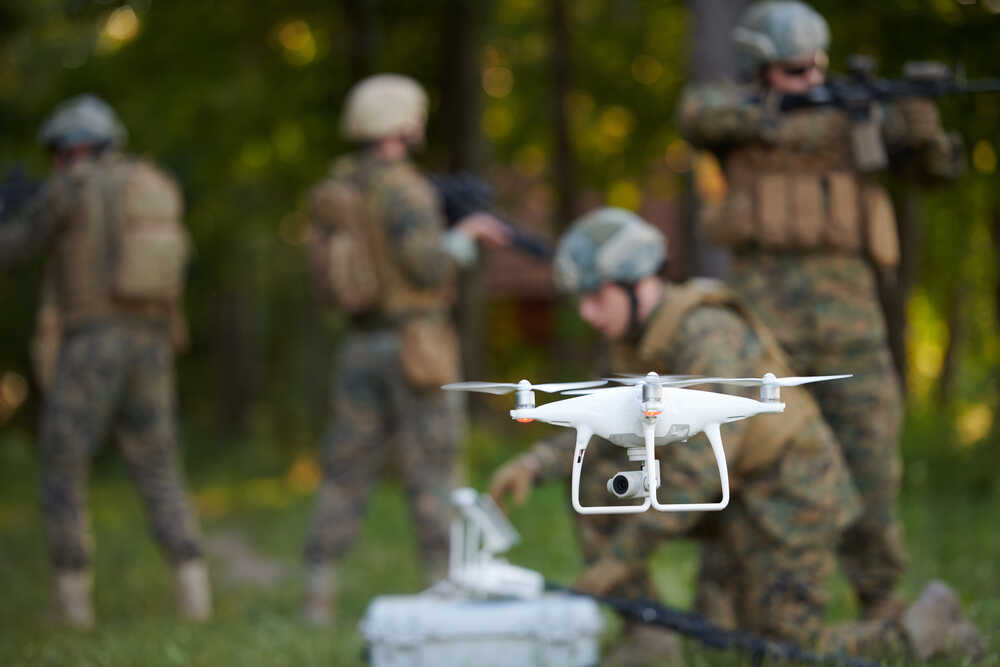
A nuclear‑strike base in North Dakota is rushing to buy rifle‑shaped “Dronebuster” guns because Pentagon red tape has left America’s most sensitive sites exposed to cheap enemy drones.
Story Snapshot
- The U.S. Air Force wants Dronebuster jamming guns to shield a nuclear‑strike base from hostile drones.
- A Pentagon watchdog says mixed counter‑drone rules have left key U.S. bases underprotected.
- Handheld jammers are cheap and fast to deploy but are no silver bullet against advanced drones.
- Army leadership has slammed Dronebuster performance, raising questions about procurement and oversight.
Why A Nuclear‑Strike Base Is Turning To Anti‑Drone “Guns”
The 5th Contracting Squadron at Minot Air Force Base in North Dakota has issued a formal request to buy DZYNE Technologies’ Dronebuster Block 4 handheld anti‑drone systems for the 91st Security Forces Group, which guards nuclear missile and bomber assets.[1] Air Force documents describe this purchase as an “operational necessity,” and the solicitation gives vendors less than two weeks to respond, underscoring how urgent commanders see the drone threat to U.S. nuclear forces.[1][2]
The Dronebuster Block 4 is a rifle‑shaped electronic warfare device that a single airman can carry and operate without vehicles, generators, or fixed towers.[2][13] The system detects and jams control and navigation signals for small drones, including common commercial models, by blasting targeted radio energy so the aircraft loses its link and either returns, lands, or crashes.[11][13] Unlike shooting with bullets, this “soft‑kill” jamming approach avoids stray rounds over American neighborhoods near the base.[4][13]
How Dronebuster Fits A Bigger Counter‑Drone Arms Race
Years before this new nuclear‑base request, the Air Force and Army had already bought earlier Dronebuster models as quick, off‑the‑shelf tools against small unmanned aircraft.[3][5][13] Radio Hill Technologies, now part of Flex Force Enterprises, sold 100 Block 3 Dronebusters to the Air Force in 2017, giving individual airmen a five‑pound jammer they could aim like a radar gun at hostile drones.[3][5][13] Flex Force later reported passing 1,000 systems delivered worldwide, with the device approved as the only handheld electronic attack system for drone defense in U.S. military service.[12][13]
The broader military is pouring money into this trend. The Army’s budget request for 2025 set aside $13.5 million to buy a mix of handheld anti‑drone devices, including 20 Dronebusters, for a single division.[21] Analysts tracking the global military jammer market say ministries of defense now fast‑track man‑portable and vehicle‑mounted jammers because they see control of the radio spectrum as vital to winning modern wars dominated by cheap, explosive drones.[23][28] For Trump‑era defense planners focused on China, Iran, and rogue actors, these compact jammers promise protection without endless, trillion‑dollar boondoggles.
Real Capabilities And Real Limits Of The “Dronebuster Gun”
Dronebuster uses directional radio‑frequency energy to disrupt drone control links in common industrial, scientific, and amateur radio bands, and it can also overwhelm satellite navigation signals like GPS so a drone becomes unstable or falls.[11][13] Current variants can detect drones out to several miles when paired with a wearable sensor kit and defeat targets at more than a kilometer, while newer Block 4 and 4‑EU models add region‑specific frequencies and optional “position, navigation, and timing” attack modes against satellite‑guided aircraft.[3][4][12] This makes them useful stopgaps around fixed sites such as missile silos, fuel farms, and runways.
But even supporters admit these handheld jammers are not a magic shield. Dronebuster is most effective against basic commercial drones and first‑person‑view aircraft that rely on radio control or GPS.[1][11] Emerging threats, like fiber‑optic‑tethered drones or fully autonomous systems that can fly pre‑programmed routes without radio links, are largely immune to jamming.[1][28] That means bases like Minot still need layered defenses, including sensors, larger electronic warfare systems, and kinetic interceptors, to handle drones that cannot be “zapped” electronically.[1][6][28]
Confused Rules, Mixed Reviews, And The Oversight Problem
A recent report from the Pentagon’s Inspector General warned that some U.S. “covered assets” at home, including nuclear and missile defense sites, lack clear and consistent counter‑drone guidance because of overlapping and sometimes contradictory policies.[6] Legal limits on using electronic jamming inside the United States, plus complex approval processes, have slowed fielding of defenses the bases are allowed to use.[6][26] As a result, some installations have only piecemeal coverage, like portable “flyaway kits” and a few Dronebuster units, instead of a full, layered shield.[6]
USAF Seeks 'Dronebuster' Anti-Jammer Gun To Protect Nuclear-Strike Base https://t.co/f2a3k8hdg2
— zerohedge (@zerohedge) June 22, 2026
Soldiers’ experience with Dronebuster is also mixed. During a recent town hall at Fort Drum, Army Secretary Dan Driscoll bluntly called the Dronebuster “f*cking terrible” based on his own experience, even as troops were still training with the latest Block 4 version in Europe and along the southern border.[7][16] His comments highlight a familiar Pentagon problem: hardware that looks good in glossy brochures or limited tests can disappoint in the field if training, sustainment, or integration lag behind the threat.[7][22]
What This Means For Security, Freedom, And Taxpayers
For conservative Americans, the Minot purchase cuts both ways. On one hand, getting affordable, handheld tools into the hands of security forces is a common‑sense step to protect nuclear weapons, bases, and nearby families from cheap enemy drones that terrorists or foreign spies can buy online.[1][6][11] On the other, the mix of rushed solicitations, sole‑source contracts, and harsh feedback from senior leaders raises serious questions about whether Washington is choosing the best tools, training operators well, and guarding taxpayer dollars as carefully as it guards warheads.[6][7][21]
Under the Trump administration’s push to rebuild deterrence while trimming waste, the pressure is now on the Department of War and the services to prove that Dronebuster and similar systems are part of a smart, layered defense, not another Beltway gadget fad.[2][23][28] That means clear rules of engagement for drones over U.S. soil, honest testing against real‑world threats, and fast replacement or upgrades when gear falls short. Americans who value a strong military and limited government should watch how Minot’s “anti‑drone guns” story unfolds, because the same pattern will shape defenses over cities, borders, and critical infrastructure at home.
Sources:
[1] Web – USAF Seeks ‘Dronebuster’ Anti-Jammer Gun To Protect Nuclear-Strike …
[2] Web – 91st SFG Dronebuster – Bid Banana
[3] Web – Power Up to Dronebuster® Block 4 with Next-Generation Counter …
[4] Web – DZYNE Introduces Dronebuster 4-EU, Secures Multi-Million-Dollar …
[5] Web – DZYNE Introduces Dronebuster 4-EU, Expands Production After …
[6] Web – Power Up to Dronebuster® Block 4 with Next-Generation Counter …
[7] Web – Dronebusters – HigherGov
[11] Web – DZYNE launches Dronebuster upgrade programme
[12] Web – US Army Tests Portable ‘Dronebuster’ in Middle East
[13] Web – DZYNE Dronebuster DB4 – Compact Counter-UAS System
[16] Web – Army secretary says the Dronebuster is ‘f*cking terrible’ as soldiers …
[21] Web – Dronebuster: NEWCOM is an Authorized Distributor of DZYNE
[22] Web – Army aims to equip a division with hand-held counter-drone gear
[23] Web – Challenges and strategies in equipping military divisions with hand …
[26] Web – Buyer’s Guide To Counter UAS And Drone Jamming Systems
[28] Web – The U.S. Marine Corps just bought British NightFighter Mini drone …