
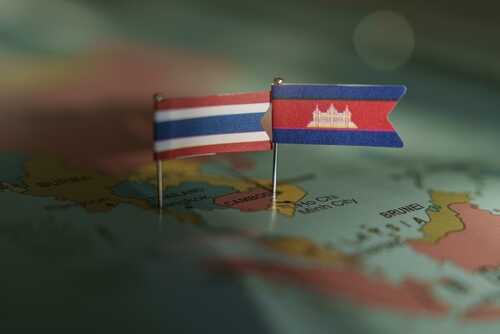
Thailand’s latest military actions in Cambodia have reignited border tensions, threatening regional stability and sparking international concerns.
Story Snapshot
- The Royal Thai Air Force launched airstrikes against Cambodian positions, marking the first combat use of F-16s since the Thai-Lao Border War.
- Cambodia reported civilian casualties, heightening fears of a humanitarian crisis amid ongoing evacuations.
- Thailand’s ultimatum for a ceasefire raises the stakes, with potential for further military escalation.
- This conflict underscores long-standing territorial disputes and challenges in regional diplomacy.
Thai Airstrikes Escalate Border Conflict
On December 8, 2025, the Royal Thai Air Force (RTAF) executed a major airstrike campaign along the Cambodia–Thailand border. This significant military operation targeted Cambodian military positions in Preah Vihear and Oddar Meanchey provinces. The strikes came in response to clashes that had resulted in the death of a Thai soldier in Ubon Ratchathani province. The Thai military’s use of F-16 fighter jets marks a notable escalation in the ongoing border dispute, as these jets had not been used in combat since the Thai-Lao Border War over three decades ago.
In retaliation for the alleged Cambodian use of BM-21 Grad rocket launchers, Thailand’s airstrikes aimed to neutralize artillery emplacements and command zones. The Thai government’s firm stance was further emphasized by a 6 p.m. ultimatum issued to Cambodia, threatening full military strength should a ceasefire not be reached. This ultimatum is a rare diplomatic-military maneuver in ASEAN border disputes, highlighting the severity of the situation.
Watch:
Cambodia Reports Civilian Casualties
Cambodia has accused Thailand of unprovoked aerial attacks, reporting at least four civilian deaths and ten injuries. These casualties raise significant humanitarian concerns, as thousands of civilians have been evacuated from the conflict zones. Schools and hospitals in both countries have been temporarily closed, further compounding the civilian plight. The Cambodian government has denied any aggression, asserting that their actions have been in self-defense. This narrative contrasts with Thailand’s claims of precision strikes aimed solely at military targets.
The ongoing conflict is deeply rooted in historical territorial disputes, particularly surrounding the Preah Vihear Temple. Despite past efforts by the International Court of Justice to mediate these disputes, ambiguities remain, leading to periodic escalations. The current crisis follows a series of clashes earlier in the year, underscoring the fragility of peace in the region.
Implications for Regional Stability
The escalation of the Thailand-Cambodia border conflict has significant implications for regional stability. The use of air power by Thailand underscores the potential for further military engagement, which could destabilize Southeast Asia. The conflict also pressures regional bodies like ASEAN to intervene diplomatically, despite previous failures to resolve underlying territorial issues.
In response to the crisis, both countries have mobilized significant military resources, with Cambodia seeking to bolster its artillery and air defenses. This military buildup could lead to an arms race in the region, involving major powers like the U.S. and China, who have strategic interests in maintaining stability in Southeast Asia.
Sources:
Wikipedia – 2025 Cambodian–Thai border crisis