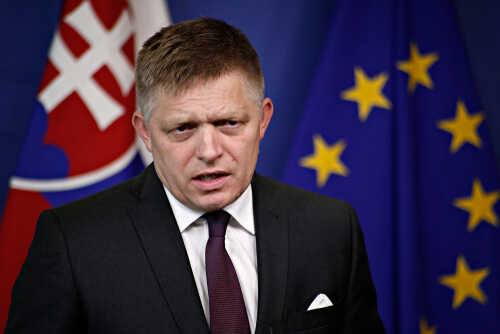
Slovakia’s Prime Minister was gunned down in broad daylight by a so-called pro-Ukraine “pacifist,” and now the trial is revealing a circus of political motives, media finger-pointing, and a nation on edge—just what you’d expect when leftist polarization is left unchecked.
At a Glance
- Slovak Prime Minister Robert Fico survived a shocking assassination attempt by Juraj Cintula, a radicalized “poet” with a political axe to grind.
- The trial is exposing deep rifts in Slovak society, with media and political opposition accused of fueling the attack.
- Cintula’s motives have shifted from outrage over Ukraine policy to vague claims of “cultural strangulation.”
- Slovakia’s government stability and media climate now hang in the balance, with the world watching how this trial sets precedent.
A Prime Minister Shot, a Nation Divided
On May 15, 2024, Slovak Prime Minister Robert Fico—hardly the darling of the globalist elite—was shot multiple times at close range by Juraj Cintula, a 72-year-old former miner who, in the kind of irony only modern Europe can produce, called himself a “pacifist.” Fico was the target for one reason: he dared to push back against the liberal consensus, freezing military aid to Ukraine, questioning NATO, and demanding that Slovak laws—and Slovak borders—actually mean something. Cintula’s bullets were aimed not just at a man, but at the very idea that a country should govern itself, not bow to Brussels and Washington.
🇸🇰 Details on the assassination attempt on Slovakian PM Robert Fico:
The shooter was hiding in the crowd that had gathered at the building where the Prime Minister was speaking. He fired from within the crowd, presumably 3-4 times.
He then tried to escape but was apprehended by… pic.twitter.com/jS3waHm9q0
— DD Geopolitics (@DD_Geopolitics) May 15, 2024
Fico’s government, led by his Smer-Social Democracy party, had already been under siege from progressive opposition parties and the so-called “independent” press for daring to question open borders, anti-family agendas, and endless foreign entanglements. With his absence, the steady hand guiding Slovakia’s nationalist coalition was suddenly missing, and the acting leadership scrambled to keep the ship afloat. The trial that followed was less about justice and more about airing grievances: Cintula confessed, but his motives shifted with the breeze—first Ukraine, then “culture.” The result? An entire society is forced to confront just how deep its divisions run, and whether any leader can survive in a climate where the wrong opinion makes you a target.
Watch a report: Shocking moment when Slovak PM Robert Fico was shot
The Shooter, the Circus, and the Blame Game
Juraj Cintula, now on trial, has become a symbol—a warning—of what happens when political debate turns into a blood sport. The man who claimed to abhor violence now stands accused of terrorism or attempted murder, depending on which legal argument prevails. He has admitted to the shooting, but insists he only wanted to “disable” Fico politically, not kill him. That’s cold comfort to a nation watching its leader recover from gunshot wounds and to a public wondering if its democracy can survive another round of this madness. In court, Cintula has refused to testify, but that hasn’t stopped him from pontificating about his motives, blaming everything from Ukraine policy to “cultural suffocation.” The psychiatric experts called him narcissistic and impulsive, but not insane—a chilling diagnosis for anyone who still believes in civil discourse.
The Fallout: Instability, Precedent, and a Chilling Effect
The aftermath of the shooting has been as ugly as the act itself. Fico’s injuries have sidelined him from public life, and the government he built teeters on the edge of instability. Defense Minister Robert Kaliňák has stepped in as acting leader, but the coalition’s future remains uncertain. The trial’s outcome will set a precedent for how Slovakia—and perhaps Europe itself—handles political violence going forward; whether it is branded as terrorism or a lesser crime will shape the response to future attacks, and the security of every public official who dares to dissent from the status quo.
Meanwhile, the Slovak public is left to pick up the pieces. Trust in institutions has plummeted. The threat of further radicalization looms. And the media, suddenly under scrutiny for their role in fueling polarization, find themselves wondering if the cost of “speaking truth to power” is worth the chaos it unleashes. For those of us watching from afar, the lesson is clear: when debate is replaced by demonization, when opposition is framed as treason, the center cannot hold. The only winners are those who profit from division—and the losers are every citizen who just wants their country back.