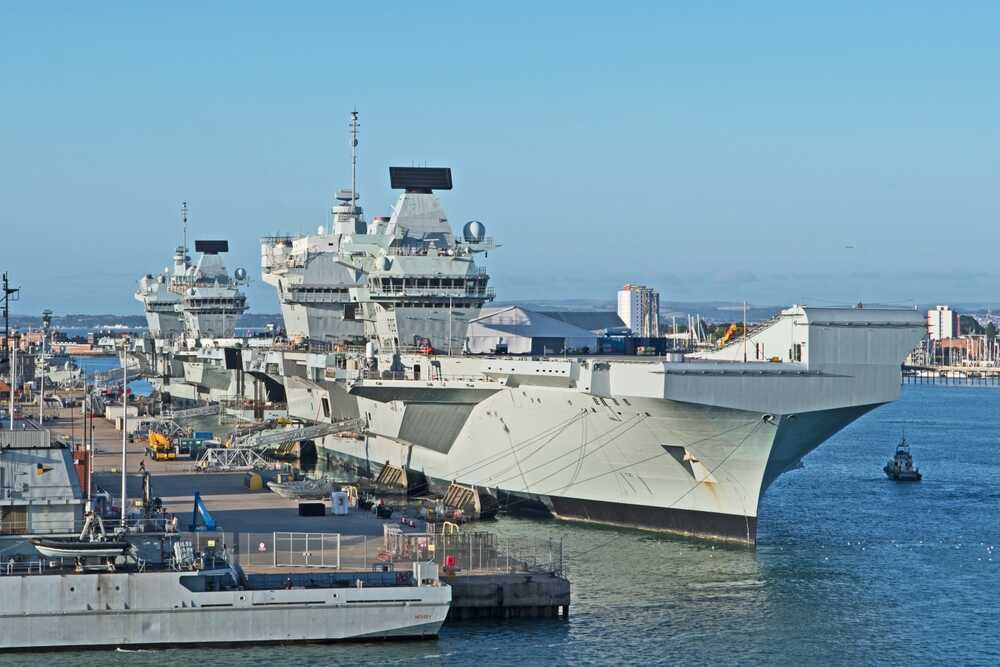
Britain’s once-mighty Royal Navy commanded more aircraft carriers than every other nation combined after World War II, but today struggles to keep just two operational amid maintenance nightmares, crew shortages, and budget constraints that expose a humiliating decline from global maritime dominance to dependency on allies.
Story Snapshot
- Royal Navy operated the world’s largest carrier fleet post-WWII with over 38 carriers ordered during the war, surpassing all other nations combined at its 1945 peak.
- Today only HMS Queen Elizabeth and HMS Prince of Wales remain operational, but maintenance issues, pilot shortages, and limited F-35B aircraft prevent both from deploying simultaneously.
- Decades of decommissioning, technological obsolescence, fiscal austerity, and reliance on NATO allies eroded Britain’s independent naval power projection capabilities.
- The £6.2 billion Queen Elizabeth-class carriers symbolize diminished British influence, with operational tempo questioned as the UK struggles to sustain even minimal carrier presence in 2026.
From Naval Supremacy to Strategic Dependence
The Royal Navy pioneered aircraft carrier warfare, commissioning HMS Argus in 1918 as the first fleet carrier and HMS Hermes in 1924 as the world’s first purpose-built carrier. By 1945, Britain’s wartime urgency produced an unmatched fleet: 10 carriers in commission, 20 under construction, and 8 more ordered, including innovative Colossus-class light carriers built on merchant hulls for rapid deployment. This staggering inventory exceeded the combined carrier strength of the United States, Japan, and other naval powers, cementing Britain’s maritime dominance through innovations like the 1940 Taranto raid that influenced Pearl Harbor tactics.
Post-war reality dismantled this supremacy with brutal efficiency. The rise of jet aircraft rendered light carriers like the Colossus-class obsolete by the 1950s, as their small decks couldn’t accommodate heavier, faster jets. Britain’s economic devastation from World War II debt forced mass decommissioning and exports: Colossus-class ships transferred to France in 1951 and Australia in 1955, while others were scrapped by the 1960s. Defence reviews in the 1960s, triggered by failures like the 1956 Suez Crisis, canceled new carrier programs. By 1984, HMS Hermes’ retirement left Britain without fleet carriers, forcing reliance on requisitioned civilian ships during the 1982 Falklands War.
The Queen Elizabeth-Class Reality Check
Ordered in 2007 to restore power projection, HMS Queen Elizabeth and HMS Prince of Wales represent Britain’s attempt to reclaim relevance. Commissioned in 2017 and 2019 respectively, these carriers cost over £6.2 billion and were plagued by delays and budget overruns. Yet their operational capacity disappoints: the Royal Navy possesses only approximately 30 F-35B stealth fighters, insufficient to fully equip even one carrier’s air wing. Crew shortages and pilot deficits compound the problem, while maintenance demands ensure both ships rarely deploy simultaneously. HMS Prince of Wales faced propeller failures after leading the 2021 Carrier Strike Group deployment, illustrating persistent mechanical vulnerabilities.
This undermines Britain’s strategic autonomy. The carriers frequently host U.S. Navy F-35s to fill air wings, revealing dependence on American assets for credible operations. NATO burden-sharing expectations pressure the UK to contribute carrier presence, but rotational maintenance cycles from 2022 through 2026 limit availability. The Ministry of Defence prioritizes budget efficiency over fleet expansion, leaving the Royal Navy unable to sustain independent operations in critical theaters like the Indo-Pacific or Atlantic. For a nation once synonymous with “ruling the waves,” this reliance on allies for carrier effectiveness represents a stark reversal of fortune tied directly to fiscal mismanagement and strategic shortsightedness.
Lessons in Imperial Decline and Fiscal Consequences
The Royal Navy’s carrier collapse mirrors broader patterns of overextension and austerity. Post-1945 empire dissolution stripped Britain of the global reach justifying massive carrier fleets, while nuclear weapons and missile technology shifted defense priorities away from conventional naval power. Cold War pressures funneled resources toward NATO commitments and nuclear deterrence, leaving carriers vulnerable to cuts. The “disposable” Colossus-class design, intended for three-year wartime service, exemplified short-term thinking that failed to plan for peacetime sustainability. By contrast, the United States invested continuously in supercarriers, maintaining dominance the UK could no longer afford.
Today’s consequences extend beyond military capability. UK shipbuilding regions like Rosyth depend on carrier construction contracts, making cuts economically painful. Royal Navy personnel face morale challenges as operational roles shrink and tradition fades. Politically, Britain’s diminished carrier presence raises questions about post-Brexit global influence, especially as rivals like China expand carrier fleets. The contrast between 1945’s 38-carrier ambition and 2026’s struggle to operate two underscores how fiscal irresponsibility, technological complacency, and strategic drift hollowed out a once-dominant institution. For conservatives wary of government waste and decline, the Royal Navy’s trajectory offers a cautionary tale about the costs of abandoning self-reliance and sustainable defense investment.
Sources:
History of the Royal Navy’s Aircraft Carriers – Forces News
Recessional: Britain’s Aircraft Carrier Fleet 1953-1977
Introduction of Aircraft Carriers into the Royal Navy: Lessons for Naval Doctrine – Naval Review