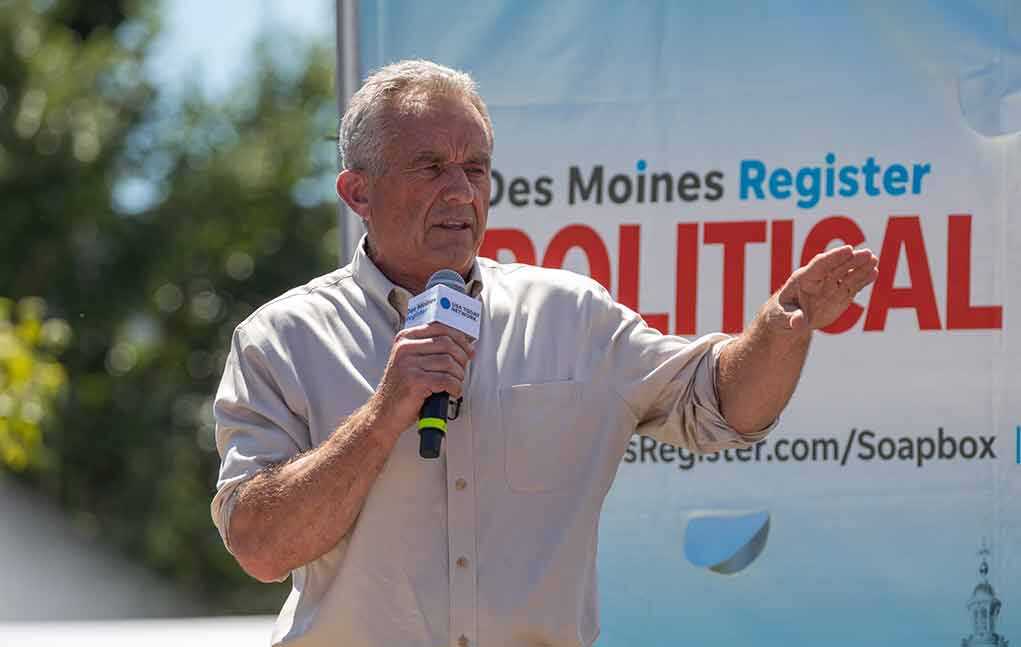
The central significance of Robert F. Kennedy Jr.’s CNN clash with Dana Bash is not the shouting; it is the collision between two rival explanations of the pandemic era: one that treats COVID policy as a grave institutional failure, and one that treats Kennedy’s account as a familiar recitation of debunked claims dressed up as reform.
Key Points
- Kennedy used the interview to argue that pandemic policy “dismantled” constitutional rights and that media coverage helped normalize that outcome.
- Dana Bash challenged him on vaccine efficacy, pandemic response, and the factual basis for his claims, turning the segment into a prolonged on-air argument.
- Kennedy blamed Dr. Anthony Fauci and lockdown-era decision-making for much of the damage he sees in the COVID response.
- Reporting across outlets and clip transcripts shows the same core pattern: Kennedy attacked the media’s COVID framing, while Bash pressed back over statements she said were false or unsupported.
What Kennedy Actually Argued
In the interview, Kennedy did not merely criticize a few editorial choices; he advanced a broader indictment of the pandemic-era information system. He said the media frightened the public, failed to scrutinize public-health authorities, and helped create the conditions for coercive policy. According to contemporaneous reporting, he told Bash that CNN was “scaring people” and was “part of the problem” during COVID.
He also linked that criticism to a constitutional frame, arguing that officials “dismantled” rights during the pandemic and that protecting those rights should be the government’s “primary obligation” in the next crisis. That is the heart of Kennedy’s worldview on COVID: the crisis was not only a biomedical emergency but also a civil-liberties failure, with lockdowns, mandates, and deference to experts treated as evidence of institutional overreach rather than prudent emergency response.
That argument is not new for Kennedy; it follows a long-running pattern in which he casts himself as the lone skeptic willing to question elite consensus. CNN’s own earlier coverage of his public remarks on vaccines and COVID shows the same style: a sweeping challenge to official explanations, paired with claims that he is simply asking hard questions. In that sense, the Bash interview was an extension of an established rhetorical strategy, not an isolated outburst.
Why Dana Bash Pushed Back So Hard
Bash’s role in the exchange was straightforward: she tried to force Kennedy to anchor his claims in evidence and to keep the conversation on pandemic preparedness rather than move it into a general attack on public health institutions. Multiple reports say she rejected his framing and challenged him when he claimed the United States had the “highest death rate from COVID of any nation on Earth,” while also pressing him on vaccine claims and the role of Fauci.
That pushback matters because Kennedy’s interview style depends on confidence and speed. He repeatedly asserts that the mainstream story of COVID is wrong in its fundamentals, then uses that premise to recast disagreement as proof of institutional capture. Bash’s task was to interrupt that momentum, and she did so by insisting that factual claims still require support. The result was not a policy seminar but a procedural fight over who gets to define reality on camera.
The exchange also reflected a deeper divide over the meaning of “preparedness.” Bash approached the subject as a public-health question: what should government do in the next emergency, and what lessons follow from the last one? Kennedy treated it as a constitutional and epistemic question: who gets to speak, who gets silenced, and whether official expertise can be trusted at all. Those are not minor differences in emphasis; they are different theories of the state.
The Substantive Claims in Dispute
The specific claims Kennedy advanced during the interview were expansive. He blamed lockdowns for devastating businesses and schools, argued that many harms were imposed without due process, and blamed Fauci for driving the policy response. He also challenged vaccine-efficacy claims and revived his familiar skepticism toward expert consensus on public health, a position that outlets covering the segment described as part of a larger pattern of misinformation and debunked assertions.
There is a reason this coverage keeps recurring around Kennedy: his public persona rests on treating contested hypotheses as suppressed truths, then presenting institutional resistance as confirmation. That approach can be rhetorically powerful because it flatters audiences who already distrust officials, but it also creates a chronic problem of evidentiary drift. Claims that begin as critiques of pandemic policy often harden into declarations that the entire public-health apparatus was fraudulent.
Still, the interview is best understood as a fight over interpretation rather than a single factual point. Kennedy’s core accusation was that media institutions helped mainstream an emergency mindset that eroded rights. Bash’s core reply was that he was overstating, distorting, or omitting the evidence behind public-health decisions. Both sides were really arguing about legitimacy: whether institutional trust was responsibly exercised during a crisis, or irresponsibly surrendered.
CNN is standing by Dana Bash following her interview with Health and Human Services Secretary Robert F. Kennedy Jr. https://t.co/56Z2A2K9fh
— TV Insider (@TVInsider) August 3, 2026
Why This Keeps Resonating
The reason this clash travels so well is that it compresses a larger national argument into a few sharp lines. Kennedy’s critics hear a public official laundering old vaccine skepticism through the language of rights and reform. His supporters hear a rare insider willing to say that COVID policies were more destructive than the institutions that defended them admit.
That is why the argument remains durable even when the setting changes. Pandemic-era disputes were never only about virology; they were about authority, uncertainty, and the price of obedience during a high-stakes emergency. Once that framework was set, every interview, hearing, or panel became a referendum on the same underlying question: when crisis hits, should society trust its institutions, or assume they will overreach unless aggressively challenged?
In Kennedy’s hands, the answer is unmistakable. He treats the pandemic as proof that elites abused both science and rights. In Bash’s hands, and in the reporting around the interview, that same posture reads as a refusal to separate criticism from unsupported assertion. The fight is unlikely to vanish because it is not really about one interview. It is about who gets remembered as principled resistance, and who gets remembered as reckless misinformation.
Sources:
facebook.com, cnn.com, youtube.com, politico.com, forbes.com, transcripts.cnn.com, instagram.com, thewrap.com, aol.com, timesofindia.indiatimes.com