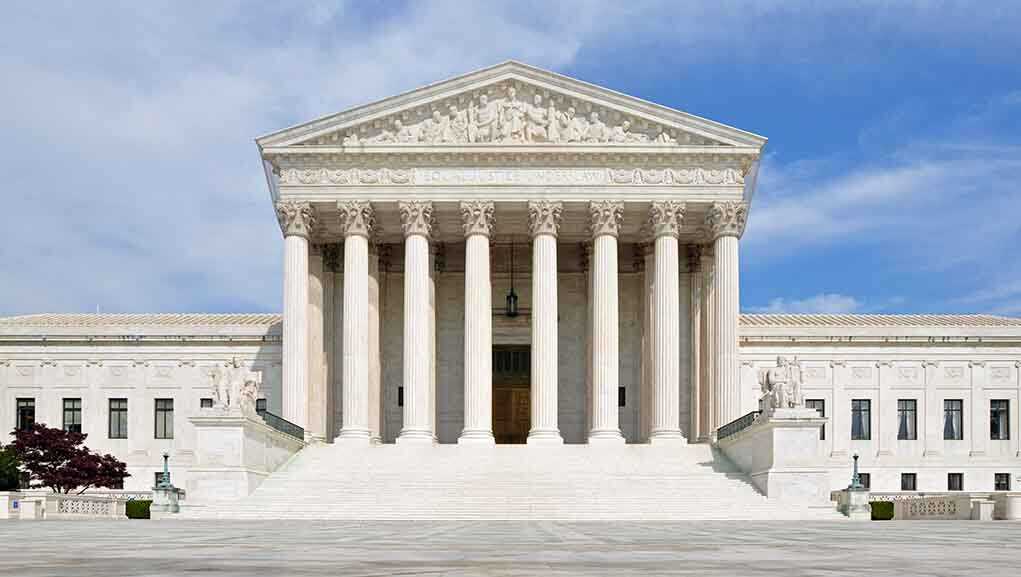
A top House Democrat now says backing Justice Clarence Thomas in 1991 was one of the biggest mistakes of his life, and he wants to pack the Supreme Court to fix it.
Story Snapshot
- Rep. James Clyburn told NBC’s “Meet the Press” he no longer stands by his 1991 vote to confirm Clarence Thomas.
- Clyburn said he expected Thomas to uphold Brown v. Board of Education and the Civil Rights Act.
- Clyburn accused Thomas of showing “very little sensitivity” to his own upbringing in Pin Point, Georgia.
- Clyburn also called for expanding the Supreme Court, floating a “baker’s dozen” of 13 justices.
- Thomas has repeatedly said his rulings follow the Constitution, not personal identity or background.
Clyburn Reverses His 1991 Endorsement
James Clyburn, the South Carolina Democrat and longtime House leader, testified in favor of Clarence Thomas back in 1991, calling him a “good friend” during his Supreme Court confirmation fight. The Senate confirmed Thomas that October by a narrow 52-48 vote. Now, more than three decades later, Clyburn says that support was a mistake. Asked point-blank if he still stood by his decision, Clyburn said, “Absolutely not.”
Clyburn didn’t stop at regret. He went further, saying he “had no idea that Clarence Thomas would rebel the way he has against his own background and experiences.” That’s a striking accusation from a sitting congressman aimed at a sitting Supreme Court justice, one of only two Black men ever to serve on the nation’s highest court.
Attacking Thomas Over His Roots
Clyburn tied his complaint directly to where Thomas came from. He said Thomas showed “very little sensitivity” to “the environment his grandfather grew up” in Pin Point, Georgia, a small Black fishing community near Savannah. In plain terms, Clyburn is arguing that Thomas isn’t being true to his own background because his rulings don’t match what Clyburn expected.
That argument treats judicial philosophy as something owed to skin color and hometown rather than the law itself. Conservatives have long pushed back on this exact framing, the idea that Black Americans must vote or rule a certain way to remain “authentic” to their community. Clyburn’s comments fit squarely into that old pattern, just aimed at a Supreme Court justice instead of a voter.
Thomas Has Answered This Before
Thomas hasn’t stayed silent on how his life shaped his views. He has said segregation itself, growing up in a system where “the government tells you you can’t walk” certain places, shaped his outlook on government power. He has also said his first duty as a justice is to apply “the people’s Constitution,” not his own preferences. Yale Law School has called him “the leading originalist in the country,” someone who believes originalism is the only legitimate way to read the Constitution.
Thomas’s own account treats his childhood, his grandfather’s influence, and his faith as part of one continuous story, not a betrayal of it. Other interviews describe him reflecting on the people and experiences that shaped his jurisprudence over three decades on the bench. None of that lines up with Clyburn’s claim that Thomas turned his back on where he came from.
The Real Target: Expanding the Court
Clyburn’s regret over Thomas didn’t come up in isolation. On the same “Meet the Press” appearance, the 86-year-old congressman signaled support for expanding the Supreme Court, at one point floating a “baker’s dozen” of 13 justices instead of the current nine. That’s court-packing, plain and simple, a decades-old liberal wish list item that would let a future Democrat-controlled Congress stack the bench with reliable votes.
Framing Thomas as having “rebelled” against his roots conveniently sets up the case for why the court supposedly needs more seats. If a sitting justice can be painted as illegitimate because of his rulings, adding new justices sounds like fixing a problem instead of rigging the system. That’s a dangerous road for an institution meant to sit above politics.
Why This Matters for the Constitution
Thomas has sat on the Supreme Court since 1991, ruling on cases involving gun rights, religious liberty, and limits on federal power. Democrats have criticized him for years, but tying that criticism to his race and upbringing crosses a different line. It suggests Black public officials must think a certain way or risk being called disloyal to their own community, a standard no one would apply to a white justice.
Rep. Jim Clyburn, South Carolina's lone Democrat in Congress, said on Meet the Press that he supports expanding the Supreme Court and that he made a mistake supporting Clarence Thomas during the justice's 1991 confirmation proceedings. More: https://t.co/HTDl0oVwrA @ABCNews4
— Perrin Moore (@perrin_moore) August 30, 2026
Clyburn is free to disagree with Thomas’s rulings. Plenty of conservatives disagree with plenty of justices too. But turning that disagreement into a claim that Thomas somehow betrayed his own Black identity, while pushing to add seats to the court at the same time, looks less like principled regret and more like a political play dressed up as personal reflection.
Sources:
mediaite.com, nbcnews.com, abcnews4.com, congress.gov