
President Trump said he would “easily” beat Barack Obama in a head-to-head race and called Obama “highly overrated.”
Story Highlights
- Trump told Stephen A. Smith he would defeat Obama “easily” in a hypothetical race.
- Trump argued he earned more votes than Obama and set state vote records.
- Stephen A. Smith pressed Trump after he labeled Obama a “divider”.
- Official 2024 results provide the vote context Trump referenced.
Trump Declares He Would Beat Obama In Hypothetical Rematch
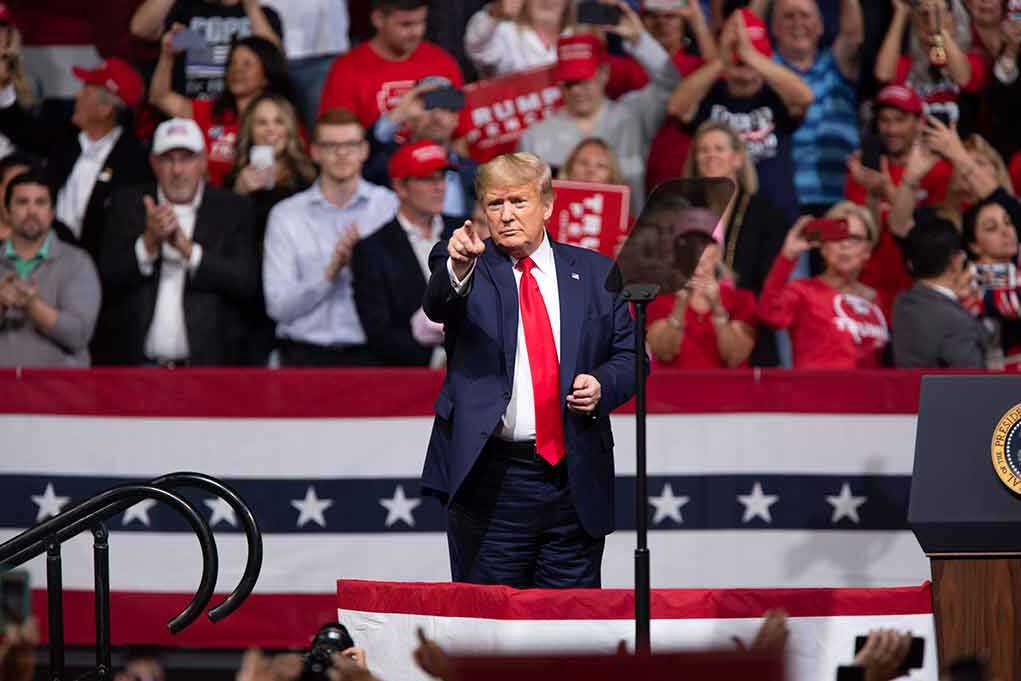
President Trump said he would defeat Barack Obama “easily” if they ran against each other, answering a direct question from host Stephen A. Smith during a White House interview. When Smith asked, “Are you saying you would beat Obama?” Trump replied, “Yes, I think I’d beat him easily.” The exchange came days after midterm elections that drew heavy national attention to both parties’ standing with voters. Trump’s answer left no wiggle room and set off a new round of political debate online and on cable.
Trump also called Obama “highly overrated” and criticized his record. Smith pushed back and asked how Obama could be overrated. The back-and-forth highlighted a sharp contrast between the two men’s public images and coalitions. Smith followed by pressing Trump on unity, after Trump described Obama as a “divider.” The challenge framed the conversation as a test of leadership style and results, not only personality or fame.
Vote Records And The Rationale Behind Trump’s Claim
Trump grounded his prediction in vote totals and state-level records. He said he received more votes than Obama and set records in key states during his presidential runs. That argument points to raw turnout strength and large-state performance. News outlets summarizing the interview reported Trump’s rationale about higher totals and state records, reflecting his claim that his coalition is broader than Obama’s was at its peak.
The Federal Election Commission’s official 2024 results offer context for Trump’s point. The results detail national and state vote counts, the electoral map, and margins from the most recent presidential race. Those figures show where Republicans expanded support in Sun Belt and Heartland states and where Democrats held ground in coastal strongholds. The data set helps explain why Trump points to hard numbers to argue staying power with working families and first-time voters.
Why The Exchange Resonates With Conservative Voters
Conservative voters heard more than a brag. They heard a case that results matter. Trump’s message ties electoral strength to policy fights on the border, inflation, energy costs, and crime. Many on the right still blame the Obama era for jump-starting activist government, culture wars in schools, and rules that made energy more expensive. Trump’s comparison suggests his agenda—drill more, secure the border, and cut red tape—built a coalition that shows up and wins, even in blue-trending suburbs.
The interview also touched nerves about media narratives. Many conservatives say big outlets focus on political theater while ignoring policy outcomes that affect paychecks and safety. Smith’s pushback gave Trump a chance to contrast records on economic growth, wages, and global standing. Supporters argue that strong borders, cheap energy, and secure communities beat talk about identity and status. They see Trump’s confidence as a challenge to the old ruling class and to globalist habits that shipped jobs away.
Legal And Practical Limits Of The Hypothetical
The Constitution’s Twenty-Second Amendment limits presidents to two elected terms. A direct Trump–Obama race cannot happen under current law. The value of the exchange is symbolic: which vision do voters prefer—bigger government that polices speech and energy use, or leaner government that protects the border and wallets? Trump’s answer used the hypothetical to restate priorities that remain central in 2026: lower prices, American energy, school choice, and law and order.
Wait, @grok, Trump says he'd beat Obama "easily" in a rematch.
Who actually wins that one? Be honest
— Wake Up America (@wakeupusa) November 13, 2026
Smith’s question still mattered because it tested confidence and message discipline after a tough midterm cycle for Republicans in several races. Trump did not hedge. He leaned on turnout history, battleground reach, and a promise to keep pushing policies that conservatives say work. Supporters heard resolve. Critics heard bravado. Voters now have a clearer frame for 2026 and beyond: results over rhetoric, borders over bureaucracy, and families over the permanent political class.
Sources:
thehill.com, cnn.com, yahoo.com, mandatory.com