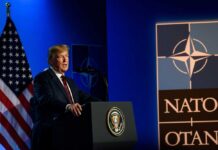

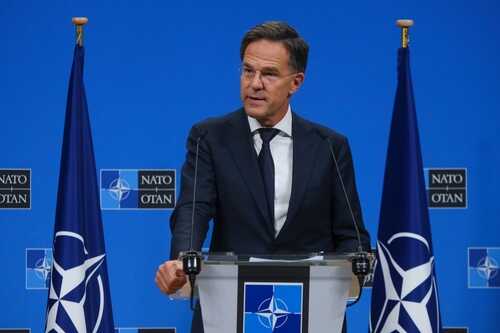
NATO Secretary-General Mark Rutte publicly endorsed President Trump’s strategic decision to deny Tomahawk cruise missiles to Ukraine.
Story Highlights
- NATO chief validates Trump’s refusal to provide advanced Tomahawk missiles to Ukraine
- President cites year-long training requirements and strategic security concerns
- Administration pivots to economic sanctions targeting Russian oil giants instead
- Trump cancels Putin summit after unproductive diplomatic exchanges
NATO Chief Validates Trump’s Strategic Assessment
NATO Secretary-General Mark Rutte delivered a striking endorsement of President Trump’s weapons policy during a White House meeting Wednesday. Rutte acknowledged that Trump’s assessment of Tomahawk cruise missiles was “completely right,” emphasizing that months of intensive training would be required before Ukrainian forces could operate the sophisticated weapons system. The NATO leader stated that “one specific weapons system” would not fundamentally alter the conflict’s trajectory, supporting Trump’s measured approach to military aid.
NATO Chief Admits Trump Is 'Completely Right' About Tomahawks After White House Meeting https://t.co/S2CdShkI2k
— Douglas Jones (@jonedoug) October 23, 2025
Complex Training Requirements Justify Presidential Decision
President Trump outlined the extensive operational challenges that informed his decision, explaining that Tomahawk missiles require a minimum of six months to a full year of intensive training. Trump emphasized the weapon’s complexity stems from its exceptional power and precision capabilities, making it unsuitable for rapid deployment. The President made clear that only American soldiers possess the necessary expertise, stating definitively that the United States would not be “teaching other people” to operate these advanced systems, protecting sensitive military technology and operational security.
Watch: Trump Rejects Sending Ukraine Tomahawk Missiles: ‘Tremendous Learning Curve’
Economic Warfare Replaces Weapons Escalation
The Trump administration announced comprehensive sanctions targeting Russia’s largest oil companies, Rosneft and Lukoil, demonstrating a strategic pivot toward economic pressure over military escalation. Treasury Secretary Scott Bessent characterized these companies as critical components of “the Kremlin’s war machine,” calling for an immediate ceasefire to end the killing. This approach reflects Trump’s preference for applying maximum economic pressure while avoiding deeper military entanglement that could draw American forces into direct conflict with a nuclear power.
Diplomatic Frustrations Lead to Summit Cancellation
President Trump expressed frustration with Vladimir Putin’s negotiating tactics, revealing that their conversations consistently fail to produce meaningful progress toward resolution. Trump canceled a proposed summit with the Russian leader, stating it “didn’t feel right” and wouldn’t achieve the necessary breakthrough for peace negotiations. Meanwhile, Ukraine utilized British-supplied Storm Shadow cruise missiles against Russian targets, demonstrating continued escalation despite Trump’s efforts to prevent further American involvement in offensive operations that could trigger broader conflict.
Sources: