The rapid buildup of US naval forces off Venezuela’s coast has set off a new round of speculation—and concern—over whether Washington is preparing to act decisively against Maduro’s regime.
Story Snapshot
- The US Navy has deployed additional warships, including the USS Gettysburg and the USS Gerald R. Ford carrier strike group, near Venezuela.
- Official statements deny imminent attack plans, but media reports and anonymous sources suggest military options are being prepared.
- Airspace closures off Puerto Rico and heightened operational activity underscore the seriousness of the situation.
- This escalation comes after years of failed leftist policies in Venezuela and renewed US resolve to combat narco-terrorism and defend American interests.
US Naval Buildup Signals Strategic Resolve
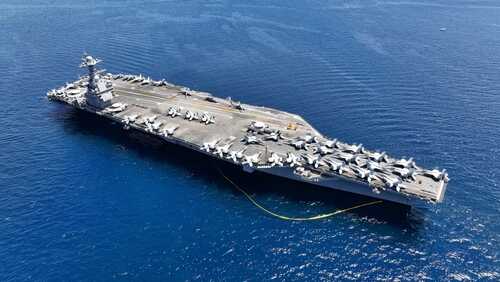
In recent days, US naval forces have massed off the coast of Venezuela, with the Ticonderoga-class guided missile cruiser USS Gettysburg and the USS Gerald R. Ford carrier strike group taking positions in the Caribbean. This surge in military presence follows persistent reports that the Trump administration is considering strikes against Venezuelan targets, especially those tied to narco-trafficking and the regime of Nicolás Maduro. While President Trump and the White House have publicly dismissed the idea of imminent attacks, the scale and proximity of US forces sends a clear message of deterrence and operational readiness.
Watch: US masses more naval forces off the coast of Venezuela – YouTube
The backdrop to this escalation is years of deteriorating US-Venezuela relations, marked by Maduro’s authoritarian rule, rampant human rights abuses, and deepening ties to international drug trafficking. In 2020, the US indicted Maduro and his inner circle for narco-terrorism, offering a $50 million bounty for his arrest—a testament to the gravity of the charges. The Caribbean has long been a key route for narcotics, and US naval operations historically focused on interdiction. Now, the deployment of advanced naval assets suggests a broader posture, potentially targeting Venezuela’s military infrastructure and criminal networks.
US masses more naval forces off the coast of Venezuela https://t.co/TuLKaLYV36
— Kal (@Kh9syl) October 29, 2025
Conflicting Signals: Official Denials and Media Reports
Despite the visible show of force, the Trump administration has denied that strikes are imminent. President Trump responded with a firm “No” when pressed about attacking Venezuela, while a White House spokesperson dismissed anonymous sources as uninformed. Yet, major outlets like the Miami Herald and the Wall Street Journal report that military options are under review, with targets identified and assets in place. The closure of airspace off Puerto Rico for national defense further fuels speculation, as such measures often precede operational activity. This ambiguity leaves observers questioning whether official denials are genuine or a calculated move to maintain tactical surprise.
Regional Impact and Conservative Perspective
The immediate effect of the US naval buildup is heightened tension and uncertainty in the region. Venezuela’s regime, long propped up by socialist policies and criminal networks, faces unprecedented pressure. For the US, disrupting these networks is critical—not only to stem the flow of drugs but also to protect American families and communities from the consequences of failed leftist governance abroad. The presence of US warships acts as both a deterrent and a warning that the era of appeasement is over; American resolve to defend its borders and its values is once again front and center.
Looking forward, the stakes remain high. Any escalation could destabilize regional security, impact global energy markets, and trigger humanitarian consequences for Venezuelan civilians. The conservative outlook emphasizes the need for strong leadership, clear objectives, and respect for constitutional processes.
Sources: