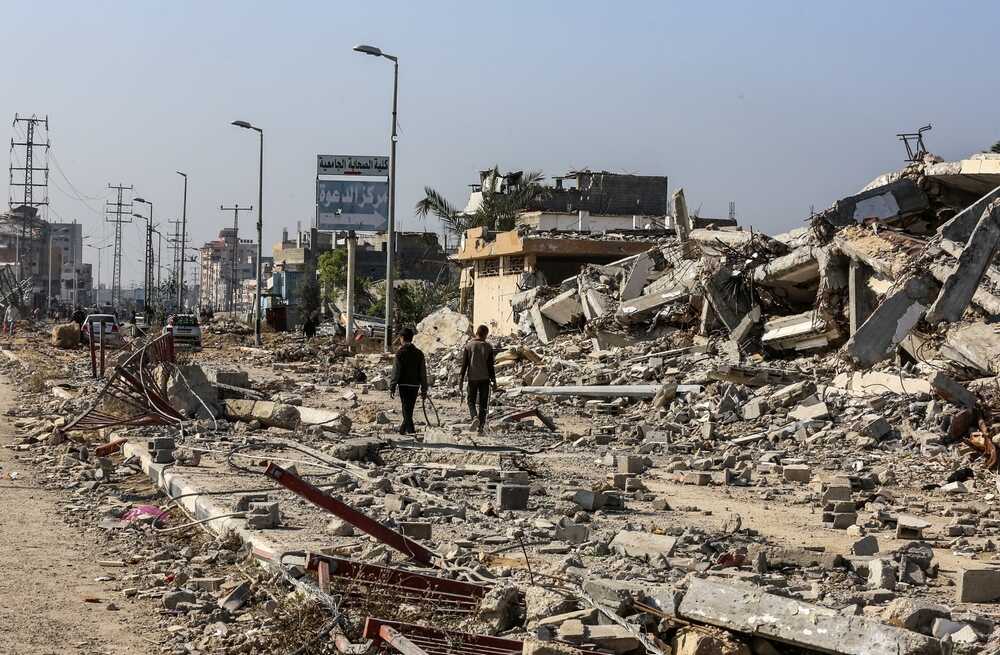
A six-year-old’s recorded pleas for help in Gaza have become a chilling symbol of what happens when war, bureaucracy, and politics collide—and nobody is held accountable.
Quick Take
- Hind Rajab, 6, was trapped in a car in Gaza City after an attack and called for rescue for roughly three hours before the line went silent.
- The Palestine Red Crescent Society says an ambulance dispatched with Israeli coordination was also hit, killing two paramedics.
- Public audio and images of the bullet-riddled vehicle amplified global outrage and renewed scrutiny of “safe routes” and civilian protections.
- By early 2025 retrospectives, no public accountability or clearly documented IDF findings were presented in the available reporting summarized here.
What Happened to Hind Rajab—and Why the Audio Hit So Hard
Hind Rajab was fleeing Gaza City on January 29, 2024, with six family members during an Israeli evacuation order, according to accounts cited by the Palestine Red Crescent Society (PRCS) and later media coverage. Their Kia came under attack, and the adults in the vehicle were killed. Hind survived at first, trapped in the car, and called PRCS for help, repeatedly saying she was scared as gunfire was reportedly heard.
PRCS said Hind remained on the line for roughly three hours as rescuers tried to reach her. That detail—time passing while a child begged for help—turned the incident into a visceral reference point for the war’s human cost. The story spread widely because it offered something rare in modern conflict coverage: a direct, personal record of fear and desperation, rather than a secondhand summary after the fact.
The Rescue Attempt, Coordination Claims, and the Ambulance Deaths
PRCS reported that an ambulance was dispatched to reach Hind and that the mission proceeded with Israeli coordination. PRCS later said the ambulance was attacked, killing two paramedics, and argued the strike showed a failure to protect humanitarian responders. In the available reporting summarized in the research, the Israeli Defense Forces did not provide a specific public statement addressing Hind’s case, leaving a factual gap that continues to fuel competing narratives.
In conflicts, that kind of gap matters. When official explanations are missing or incomplete, activists fill the space with certainty, and governments fall back on broad talking points. PRCS has characterized the incident as deliberate targeting, while Israel has generally argued that Hamas operates among civilians and that combat conditions create unavoidable risks. The research provided does not document conclusive, adjudicated findings assigning criminal liability to any specific commander or unit.
Verification Efforts and What Can (and Can’t) Be Proven from Public Evidence
The incident gained traction in part because independent verification efforts were discussed in connection with PRCS materials, including audio and geolocation work, and reporting about visible bullet impacts on the vehicle. The research summary also references a Forensic Architecture/PRCS report describing munitions patterns consistent with IDF systems such as Merkava tanks and quadcopter fire. Even so, open-source material rarely answers the hardest questions: who ordered what, under what rules, and with what target identification.
That uncertainty is not just academic. Americans have watched institutions—domestic and international—promise transparency and deliver delay. Conservatives often see selective enforcement and politicized oversight; liberals often see impunity for powerful allies. Hind’s case sits at the intersection of both complaints: a graphic, individualized tragedy paired with a slow-moving accountability process that, years into the war, has not produced widely accepted closure in the public record summarized here.
Why This Story Keeps Coming Back: U.S. Policy, Trust, and the Limits of Washington’s Leverage
The broader context remains the Israel-Hamas war that followed Hamas’s October 7, 2023 attack, in which about 1,200 Israelis were killed and roughly 250 hostages were taken, followed by Israel’s Gaza campaign aimed at dismantling Hamas. By late 2025, Gaza health officials cited more than 53,000 Palestinian deaths, according to the research summary. Hind’s story resurfaces because it is easy to understand, hard to forget, and politically combustible.
Critics argue the U.S. response under the prior administration projected moral certainty without forcing decisive accountability from an ally. Supporters of the alliance argue U.S. pressure has limits when Hamas embeds among civilians and when Israel faces sustained rocket and terror threats. What is clear is that Washington’s credibility suffers when it cannot convincingly show that humanitarian corridors are real, that investigations are transparent, and that civilians are more than talking points in press briefings.
The Horrific Story of a 6-Year-Old in Gaza 😔 https://t.co/j7TALho63Y via @YouTube
— Elicier (@Moehecan) May 5, 2026
For Americans already convinced that “the system” protects insiders—whether the complaint is about foreign policy elites or domestic bureaucracies—this case functions like a stress test. If a child’s recorded emergency call cannot produce a widely trusted accounting, many voters conclude that accountability is reserved for the powerless. The research provided indicates no major public breakthrough on responsibility after early 2025 coverage, which helps explain why the story remains a rallying cry across the political spectrum.
Sources:
The killing of six-year-old Hind Rajab in Gaza should shame us all
Gaza child tries to escape flames after Israel school attack