

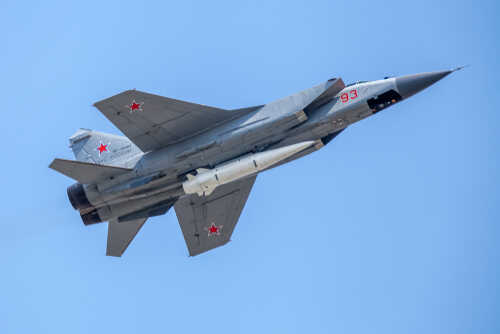
Estonia’s airspace violation by Russian fighter jets has escalated tensions, prompting a UN Security Council meeting.
Story Highlights
- Three Russian MiG-31 jets violated Estonia’s airspace on September 19, 2025.
- Estonia brought the issue to the UN and NATO, citing a threat to its territorial integrity.
- This incident marks a significant escalation in Russia-NATO tensions.
- Russia claims a navigational error, but Estonia and NATO dispute this explanation.
Russian Jets Violate Estonian Airspace
On September 19, 2025, three Russian MiG-31 fighter jets reportedly entered Estonian airspace for nearly twelve minutes. The intrusion was intercepted by Italian Air Force jets operating under NATO command, highlighting the delicate balance of power and the ongoing tensions in the Baltic region. Estonia’s swift response, including bringing the matter to the United Nations Security Council, underscores the gravity of the situation.
Estonia, a NATO member since 2004, has a history of tense relations with Russia, exacerbated by the latter’s military activities near NATO borders. This incident is distinguished by its duration and the armed nature of the jets, setting it apart from previous brief violations. The Estonian government seeks to leverage international institutions to ensure accountability and deter further aggression.
The map shows the flight path of three Russian MiG-31s that violated Estonian airspace near Vaindloo island on 19 Sept. They remained for nearly 12 minutes with transponders off, no radio contact. NATO Baltic Air Policing F-35s responded. Russia’s 4th airspace violation this year pic.twitter.com/LPsPUoFtHq
— Estonian Defence Forces | Eesti Kaitsevägi (@Kaitsevagi) September 20, 2025
International Reactions and Diplomatic Efforts
The United Nations Security Council convened on September 23, 2025, to address Estonia’s accusation, with Estonia urging for NATO consultations under Article 4. This article allows member states to request consultations when their security is threatened, a rare invocation that signals the seriousness of the situation. NATO allies have agreed to hold these consultations, reaffirming their commitment to Baltic security.
Russia, however, denies any intentional violation, attributing the incident to a navigational error. This claim has been rejected by Estonia and NATO, who view the incursion as a deliberate test of NATO’s response mechanisms. As diplomatic efforts unfold, the potential for increased military deployments in the region looms, further straining Russia-NATO relations.
Watch: BREAKING: Russian MiG-31 Jets Violate Estonian Airspace | WION
Implications for Regional Security
The short-term implications of this incident include heightened military alertness in the Baltics and increased NATO air policing. In the long term, this event could lead to further NATO deployments and set a precedent for similar future incidents. The broader impact on regional stability, investment climates, and diplomatic relations between Russia and the West could be significant, influencing political and economic dynamics in the region.
The incident has drawn various expert opinions, with security analysts viewing it as a calculated move by Russia to test NATO’s resolve. While Western analysts largely perceive the incursion as provocative, Russian commentators have downplayed it as routine military activity. The ongoing diplomatic efforts and consultations will likely shape future interactions between these geopolitical players.
Sources:
Explaining NATO’s Article 4: Estonia Seeks Consultations After Russian Incursion
Russia’s Violation of Estonia’s Airspace
Estonia Confronts Russia at UN After Brazen Airspace Violation