

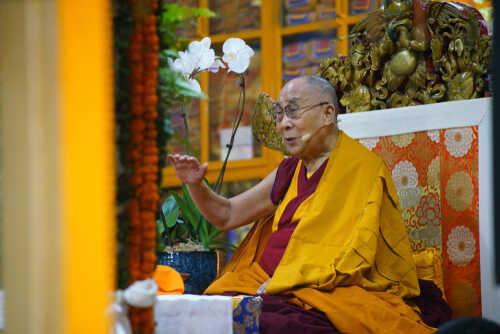
The Dalai Lama has firmly declared his intent to preserve Tibetan Buddhism’s rich spiritual lineage, asserting he will not be its last leader.
At a Glance
- The Dalai Lama confirms that Tibetan Buddhist leadership will endure beyond his lifetime.
- The successor will be chosen by Buddhist traditions, excluding China’s influence.
- China claims authority over the successor search in Tibetan areas.
- The successor’s appointment is a battleground between China and Tibetan autonomy.
A Promise of Continuity
The Dalai Lama has publicly committed to ensuring the continuation of Tibetan Buddhist leadership, dismissing speculation about him being the final holder of this sacred position. His declaration reaffirms that the spiritual lineage, an integral aspect of Tibetan identity, will thrive beyond his lifetime. He emphasized that his successor should be chosen through traditional Tibetan Buddhist practices, deliberately excluding external, particularly Chinese, involvement in this sacred process.
The Dalai Lama has announced that he will have a successor after his death, continuing a centuries-old tradition that has become a flashpoint in the struggle with China’s Communist Party over Tibet’s future. https://t.co/irTn46TYYg
— News 3 Now / Channel 3000 (@WISCTV_News3) July 2, 2025
This decision comes amid ongoing tensions with China, which claims the authority to determine the successor within its borders. Since fleeing to India in 1959, the Dalai Lama has tirelessly advocated for Tibetan autonomy, establishing a government-in-exile in Dharamshala. Despite China’s claims, the Dalai Lama insists that his inner circle alone has the right to identify his successor, a process that will be overseen by The Gaden Phodrang Trust, an Indian religious body of Buddhist monks.
Watch a report; Dalai Lama confirms having a successor after his death
The Geopolitical Chess Game
The battle for Tibetan spiritual leadership is set against the backdrop of geopolitical strain between China and India. The Chinese Foreign Ministry asserts it has the power to control reincarnation rites, stating that “the reincarnation of the Dalai Lama must adhere to the principles of domestic search in China.” Meanwhile, the Dalai Lama firmly counters Beijing’s assertions: “No one else has any such authority to interfere in this matter.” This clash emphasizes the cultural and political importance of the Dalai Lama’s succession.
Within the Tibetan community, preparations are underway for the Dalai Lama’s 90th birthday celebrations, underscoring his enduring influence and the vibrant culture that thrives even in exile. Tibetan leaders and the broader community brace for a future where autonomy debates grow fiercer, especially with increased tensions between China and India over the asylum extended to the Dalai Lama. The Dalai Lama’s stance on autonomy rather than independence echoes among Tibetan leaders who question the current strategy amidst these ongoing adversities.
A Resilient Cultural Legacy
Despite these challenges, the Dalai Lama’s actions strengthen Tibetan Buddhism’s resilience against cultural erosion and external pressures. His unyielding dedication symbolizes a powerful commitment to preserving not just a spiritual lineage but also the hopes of millions following its tenets worldwide. This declaration is a fortification against erosion, ensuring the Tibetan Buddhist tradition continues to inspire and guide future generations, unaffected by political machinations or waning interest.