A Brooklyn coffee shop just turned a $9 cup of coffee into a national test of free speech, religious liberty, and equal treatment under the law.
Story Snapshot
- Poetica Coffee publicly refunded Rep. Dan Goldman and told the Jewish congressman not to come back over his pro-Israel stance.
- The Department of Justice (DOJ) Civil Rights Division has opened a civil rights investigation into whether the ban was illegal discrimination.
- Federal law bans discrimination based on religion or national origin, but does not treat political views as a protected class.
- The fight now centers on whether calling someone a “genocide enabler” is political speech or a cover for bias against a Jewish lawmaker.
What Happened Inside Poetica Coffee
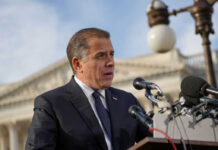
Over the weekend, New York Democrat Representative Dan Goldman stopped at Poetica Coffee in Brooklyn with his young daughter and bought a drink, describing a pleasant chat with a barista who was wearing a hijab.[5] Later, the cafe posted his photo online, blasted his strong support for Israel’s war against Hamas, and announced it had refunded his $9.82 purchase and did not want his business.[3] The message told Goldman never to come back, turning one quiet visit into a national flashpoint.[3]
In the now-deleted post, Poetica wrote that it does not serve “racists, fascists, homophobes, genocide enablers, or anyone in between,” and tied Goldman’s money to the pro-Israel lobbying group AIPAC.[3] The post mocked him with a line about their coffee not tasting like “genocide juice,” directly linking the ban to his strong pro-Israel voting record and public comments on Gaza.[2] After backlash, the shop pulled the account, but screenshots spread quickly and fueled protests, counter-protests, and legal pressure.
Why The DOJ Is Now In The Middle
Harmeet Dhillon, the Assistant Attorney General for the Civil Rights Division, announced that the Department of Justice (DOJ) has opened a civil rights investigation into Poetica Coffee.[1] She said federal law forbids public places like coffee shops from discriminating against customers based on race, religion, or national origin and called the cafe’s behavior “reprehensible” and “potentially illegal.”[1] Investigators are now looking at whether the ban targeted Goldman for being Jewish, not just for his politics on Israel.[4]
Federal civil rights law gives businesses wide freedom to refuse service for many reasons, including political views, as long as the refusal is not based on a protected trait like religion.[5][16] That means Poetica could be safe if it proves this was only about Goldman’s stance on Israel and war policy. But if the evidence shows he was singled out as a Jewish congressman, the case could become a clear violation of the Civil Rights Act, with serious penalties and possible action against the chain.[4]
Free Speech, Faith, And Double Standards
This case hits a nerve because many Americans are already worried that “political correctness” is being used to silence views on hot issues like Israel, immigration, and crime.[21] Surveys show most people believe speech codes and cancel culture are shutting down honest debate, especially on college campuses and in blue cities.[21] For older conservatives watching this story, a cafe bragging about banning a Jewish lawmaker over his support for Israel looks less like “tolerance” and more like open hostility to both faith and dissent.
At the same time, the law draws a bright line: you cannot refuse service because someone is Jewish, Muslim, Christian, Black, or from a certain country.[18] That is why the language Poetica chose matters so much. Critics argue that tossing around broad slurs like “racist” and “fascist” in the same breath as “genocide enabler,” then telling a Jewish congressman to stay away, crosses from political disagreement into religious and ethnic targeting.[3] Jewish advocacy groups say it echoes ugly boycotts from the past, where shop doors were closed to Jews as a group.[3]
What This Means For Everyday Americans
For many families, a local coffee shop used to be a neutral space, where neighbors with different views could share a table without a fight.[19] Now, more cafes and bars in big cities advertise their politics first and their menu second, drawing lines about who is welcome based on moral judgments about wars, borders, or police.[1][20] Legal writers note that cases like this are still rare in court, because most businesses avoid open bans and hide decisions behind vague claims about “conduct” instead of identity.[1]
🚨🚨🚨 Brooklyn coffee shop Poetica Coffee under civil rights investigation after banning pro-Israel Democrat congressman. https://t.co/0Zr9ItFVjchttps://t.co/rKYkDMZJNp https://t.co/Q5BmPXhVe9
— Claire Balan (@ClaireBalan) June 24, 2026
The Poetica case forces a hard question: if a business can loudly exile a Jewish, pro-Israel lawmaker today, what stops a different shop from tossing out a church group, a gun owner in a Second Amendment hat, or a border agent tomorrow? Under today’s law, political belief is not a protected class. But once government steps in, as the DOJ has here, conservatives need to watch closely to ensure the response defends equal treatment and religious liberty, rather than creating new speech codes that punish only one side of the debate.[4]
Sources:
[1] Web – Demonstrators converge outside Poetica Coffee over the shop’s decision …
[2] Web – Rep. Dan Goldman addresses Brooklyn coffee shop banning … – CNN
[3] Web – Why a Brooklyn coffee shop banned a congressman after his visit
[4] YouTube – DOJ steps in after Brooklyn coffee shop rejects congressman
[5] Web – Brooklyn Coffee Shop Tells Jewish US Congressman Not to Return …
[16] Web – DOJ Opens Investigation into Brooklyn Café That Banned Pro-Israel …
[18] Web – [PDF] The Real Reason Liberals Drink Lattes – University of …
[19] Web – The coffee shop has sparked outrage with their warning. – Facebook
[20] Web – What Coffee Shop Talks Have Taught Me About Our Political Division
[21] Web – Coffee is Political: Community Statement – Indianapolis Coffee Guide