Taiwan’s military blocked the Danjiang Bridge for the first time in a live-fire drill, turning a new Taipei gateway into a test of how fast the island can seal off a route to the capital.
Quick Take
- The Danjiang Bridge was closed for a defensive blockade drill during the Han Kuang exercises.
- The drill tested how Taiwan would stop an enemy advance toward Taipei.
- Troops used barriers, barbed wire, and sandbag positions at the bridge.
- The exercise was part of Taiwan’s annual war games against a possible Chinese attack.
Bridge Defense Becomes a Live Test
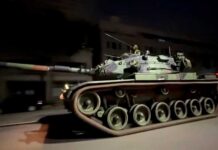
Taiwanese troops rehearsed sealing off the Danjiang Bridge in New Taipei on Thursday night, the latest Han Kuang exercise aimed at preparing for a possible Chinese attack. The drill placed concrete blocks, steel hedgehogs, barbed wire, and HESCO barriers across a critical crossing that leads toward Taipei. Reuters reported that soldiers set up the defenses at the bridge’s entrance to the Tamsui River route, which gives access to the capital.
The bridge opened to traffic in May and connects Tamsui and Bali at the mouth of the Tamsui River. Reporting said the site was chosen because it offers a fast route toward Taipei if hostile forces seize nearby landing points or the Port of Taipei. Focus Taiwan said the Army’s 53rd Engineer Group was assigned to the blockage drill, showing that this was real operational training, not a photo-op.
Han Kuang Drills Target Combat Readiness
The Han Kuang exercises have served as Taiwan’s main war games since 1984, and officials say they are designed to test combat readiness against a possible Chinese invasion. The Ministry of National Defense described this year’s drills as combat readiness, computer-assisted command, and joint defense exercises run as one continuous scenario. That structure matters because it shows the bridge drill was part of a wider defense plan, not a stand-alone event.
Reporters said the Danjiang Bridge exercise was meant to simulate blocking and denying access to the bridge and its approach ramps. Focus Taiwan reported that the military wanted to slow an enemy advance toward Taipei’s political and economic center. The same outlet said the blockade drill was also meant to collect operational data and improve future defensive preparations, which suggests the army treated it as a practical test of route denial and engineering speed.
A Familiar Pattern of Route-Denial Training
The Danjiang Bridge drill fits a pattern Taiwan has used before. Taipei Times reported earlier blockade work around the Tamsui River estuary, including past drills that used nets, oil drums, platforms, and even a simulated strike on Guandu Bridge. Last year, Taiwan also staged bridge-defense drills on other crossings near Taipei to delay a simulated advance into the city. The new bridge simply gave planners another key choke point to test.
🇹🇼 Taiwanese troops deployed anti-tank obstacles, barbed wire, and sandbag positions across the newly opened Danjiang Bridge during the annual Han Kuang military exercises.
The drill rehearsed sealing off a vital Tamsui River chokepoint that could serve as a direct approach into…
— Defender (@voiceofdefender) August 7, 2026
That pattern reflects a plain military logic. If an enemy force breaks ashore near the river mouth, Taiwan would want to slow movement into Taipei fast enough for heavier forces to respond. The Danjiang Bridge is now part of that thinking because it sits on a route that can move troops, vehicles, and supplies toward the capital. For supporters of a strong defense posture, the drill shows an army trying to prepare before a crisis, not after one.
Sources:
insiderpaper.com, taipeitimes.com, zhvrgroup.com, x.com, facebook.com