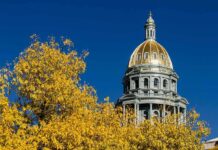


California’s governor just erased 548 jury-ordered death sentences with one pen stroke, replacing them with life without parole.
Story Snapshot
- Governor Gavin Newsom commuted every death sentence in California to life without parole, affecting 548 inmates.
- Families of murder victims say the move strips away the justice juries delivered after long trials and appeals.
- Newsom cites moral objections and an “imperfect” system, framing executions as incompatible with California values.
- Some cases require California Supreme Court review due to prior felonies, adding a legal checkpoint to the process.
Newsom’s Statewide Commutation and Its Immediate Impact
Governor Gavin Newsom announced he will commute all 548 California death sentences to life without the possibility of parole. His open letter calls the change an exercise of constitutional clemency power and labels death row in California the largest in the Western Hemisphere. National outlets reported the same scope and substance, confirming that the action changes sentences rather than pausing executions. This means juries’ ultimate punishment in every case becomes a permanent life term, no parole, across the board.
The order applies at once to those with a single felony conviction, while cases involving two or more felony convictions will go to the California Supreme Court for review before they take effect. That review adds a legal step but does not change the governor’s stated goal. California had already not carried out an execution since 2006. Newsom previously halted executions in 2019, and now he has converted the sentences themselves to life terms.
Victims’ Families Say Justice Was Overturned
Relatives of the murdered say the commutations undo the justice that juries decided and courts upheld. Local reporting captured families who called the move a betrayal and said the death sentence was the only fitting answer to the crimes. Their view is simple: the state asked them to trust the system, and it delivered a verdict. Now the state has wiped that verdict away in one sweep, leaving families to wonder what their years in court were for.
Not every family agrees. Some relatives support life without parole, saying it can spare years of appeals and public attention around executions. Even so, the policy forces one outcome for every case, no matter the victim’s family view or the case history. For many conservatives, that top-down approach treats painful, personal losses like a policy line item, and it weakens deterrence and moral clarity in the worst crimes.
Newsom’s Rationale and the Limits of His Case
Newsom argues executions are immoral, unfairly applied, and incompatible with California values. He says the system is imperfect and calls the death penalty a costly failure. He also frames life without parole as the state’s most severe lawful punishment. Those claims explain why he acted, but they do not change the basic fact that every jury-chosen sentence has been replaced by executive action, without case-by-case clemency records presented to the public.
Supporters point to the decades-long pause on executions in California and to cost concerns. But the governor’s letter and reporting do not show that any commuted inmate will be released; sentences become life without parole, not parole-eligible. That means public safety in terms of release is not at issue in the official action. The debate is about justice, deterrence, and whether a single office should erase hundreds of jury sentences at once.
Constitutional Power Versus Constitutional Culture
The California Constitution gives a governor clemency power, and Newsom used it here. For many Americans, the question is not only can he, but should he. Juries heard facts, weighed evidence, and spoke for their communities. When an executive replaces their judgments in mass form, citizens see a tilt toward centralized power over community standards and rule-of-law expectations anchored in trials and appeals. That tension will define the fallout and likely spur legal and legislative pushback.
TRUMP CALLS NEWSOM’S MASS DEATH ROW COMMUTATION A DISASTER FOR JUSTICE IN AMERICA
President Trump tore into Gavin Newsom on Saturday after the California governor announced plans to convert the death sentences of hundreds of the state’s most violent murderers into life without… pic.twitter.com/YGrhfjUO6H
— Sami Nathaniel (@NathanielSami) November 15, 2026
President Trump condemned the move as a disaster for justice, mirroring the outrage many families feel. The federal government does not control California’s clemency process, but the national debate will grow. Expect district attorneys, state lawmakers, and victims’ groups to press for transparency on each case, stronger rights for families, and guardrails on mass clemency. Justice should be personal, careful, and faithful to what juries decided—not rewritten by decree.
Sources:
mediaite.com, gov.ca.gov, cnn.com, afp.com, nwaonline.com, upi.com