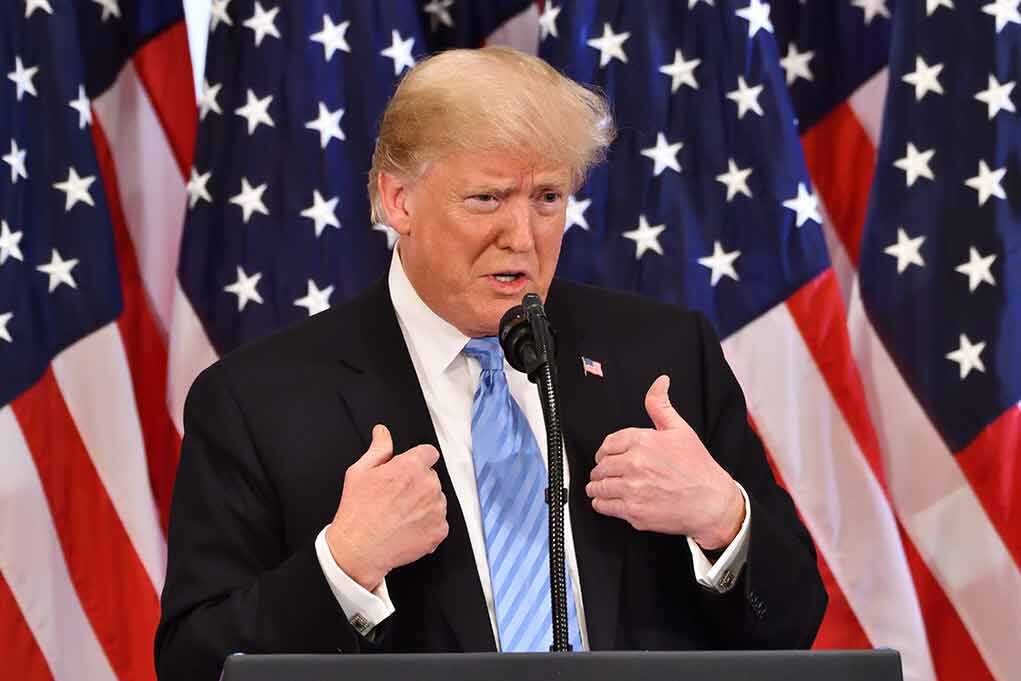
Trump’s most consequential foreign-policy damage may not be the agreements he abandoned or the summits he disrupted, but the deeper institutional injury: allies, adversaries, and American diplomats learning that U.S. commitments can be revised on impulse. That kind of reputation loss is slow to accumulate and even slower to repair.
Key Points
- The strongest case against Trump’s diplomacy is not a single failed initiative; it is the pattern of instability, unilateralism, and alliance friction described across Senate, think-tank, and scholarly analyses.
- The central mechanism is credibility erosion: when foreign governments cannot predict whether Washington will stand by an agreement, diplomacy becomes harder, slower, and more transactional.
- The damage is widely described as durable because alliances, institutional habits, and reputations do not bounce back the moment a president leaves office.
- The harder question is not whether Trump disrupted diplomacy, but how much of that disruption becomes lasting structure rather than temporary turbulence.
Credibility Is the Currency Trump Spent
The core argument in McGlinchey’s framing is straightforward: Trump did not merely make diplomacy noisier; he made the United States less dependable as a diplomatic actor. The Senate Foreign Relations Committee Democratic staff report said his “chaotic decision-making has debilitated U.S. diplomacy” and left the country “more isolated and less trusted by other global actors,” while Brookings argued that the United States lost influence with allies and squandered soft power. In practical terms, that means foreign governments must now price in the possibility that an American promise, threat, or opening may be reversed abruptly, sometimes for reasons that have little to do with the substance of the issue at hand.
This is why credibility matters more than rhetoric. Diplomacy depends on repetition, signal stability, and a basic expectation that counterparts are negotiating with a government, not a mood swing. The 2020 Senate report described foreign officials who could not tell who spoke for the president or whether a policy announcement would survive the news cycle. MIT scholars made the same point in more theoretical language: Trump’s style, they wrote, signaled contempt for cooperation, weakened U.S. reputation, and risked hobbling the institutional architecture through which diplomacy is conducted. That is not decorative criticism. It is a structural diagnosis.
How Damage to Diplomacy Actually Becomes Durable
Diplomatic damage becomes long-lived when it changes behavior on the other side. Allies begin hedging instead of trusting; they build parallel channels, diversify security ties, and stop assuming Washington will carry the same weight tomorrow that it did yesterday. Adversaries, meanwhile, test the seams. The Senate report was explicit that Trump’s hostility toward multilateral alliances left the United States withdrawn and isolated, creating openings for China and Russia. CFR, Brookings, and the Center for European Reform all made related arguments: the immediate disruption was visible, but the reputational and institutional consequences could outlast any one administration.
That is the key mechanism behind the “generation” language. Reputations in international politics are sticky because they are built over years and discounted slowly. Once allies decide they need redundancy against the United States, they do not instantly unlearn that habit when a new president arrives; once embassies and ministries treat Washington as volatile, they start organizing around volatility. Reuters reported in 2026 that 109 of 195 U.S. ambassadorial posts were vacant, underscoring how hollow diplomatic capacity can compound reputational weakness when personnel and institutional continuity lag behind presidential rhetoric. The point is not merely that Trump was abrasive. It is that abrasiveness, combined with withdrawals and reversals, can deform the operating environment of diplomacy itself.
Where the Evidence Is Strongest, and Where It Is More Interpretive
The strongest evidence here is not a spreadsheet proving an exact number of lost alliances or a clean metric of “credibility.” It is a convergence of institutional and expert assessments, across different organizations, pointing in the same direction: alliances were strained, multilateral commitments were weakened, and U.S. standing suffered. Those are not trivial claims, and they are not confined to one ideological lane. Even analyses outside the Senate report’s partisan frame describe Trump’s foreign policy as transactional, unilateral, and corrosive to the multilateral system.
The weaker point is the claim of permanence. “Last a generation” is an argument about persistence, not a directly measured fact. Brookings was careful on this point, saying none of Trump’s changes were irreversible but that they were hard to reverse. That is the most defensible formulation. It acknowledges the central truth: diplomatic repair is possible, but it is costly, slow, and incomplete if the underlying habits that produced the damage are not corrected. Claims of generational harm are therefore best understood as a forecast grounded in institutional logic, not as a settled historical verdict already proven by time.
Why Allies and Institutions Matter More Than Headlines
One reason the argument persists is that foreign policy damage often hides in plain sight. Tariffs, withdrawals, summit theatrics, and sharp public threats are easy to see; the quieter consequences are deferred. A diplomat who no longer believes Washington’s word does not issue a press release about it. An ally who begins building alternative arrangements rarely announces that the United States has become less central. This is why commentary from the Berkeley scholar in 2025, and the Reuters reporting in 2026, matters: both point to a broader erosion of power, prestige, and diplomatic capacity rather than a single failed deal.
That broader erosion is also why the multilateral system sits at the center of the story. The Senate report, CEBRI analysis, and ISS Forum paper all emphasize the same dynamic: when Washington walks away from agreements or treats institutions as disposable, it does not simply reject constraints; it gives rivals room to shape the rules instead. In a system where influence is partly exercised through convening power, agenda-setting, and trust, that is a serious loss. It does not require catastrophe to matter. A steady loss of confidence is enough.
What the Broader Record Suggests About the Future
The available evidence supports a sober judgment: Trump’s foreign policy did real damage to U.S. diplomacy, and much of that damage operated through trust, procedure, and institutional habit rather than through one dramatic rupture. That makes it both harder to measure and harder to undo. A successor can restore treaties, refill posts, and repair some alliances. What cannot be restored overnight is the assumption that the United States will behave predictably under pressure.
That is why the most serious reading of McGlinchey’s claim is not that every consequence is permanent, but that the cost of repair will outlast the political cycle that produced the damage. The record compiled by Senate Democrats, Brookings, MIT, CFR, and later European and journalistic analyses points in the same direction: the United States emerged with less trust, less institutional coherence, and more incentive for others to hedge. That is how diplomatic damage becomes legacy. It survives not as a headline, but as a changed bargaining environment.
🚨 CrawlHub · Newswire · 12h Brief
Aug 02President Trump announced a halt to planned US-Israeli strikes on Iran, citing progress in negotiations with Iran and other Middle Eastern countries. This decision follows Saudi Crown Prince Mohammed bin Salman's concerns over escalation… pic.twitter.com/7yQ3e7AUtm
— CrawlHub (@TheCrawlHub) August 2, 2026
Sources:
foreign.senate.gov, americanprogress.org, news.berkeley.edu, cebri.org, direct.mit.edu, cfr.org, thehill.com, cer.eu, brettclt.medium.com