
The Pentagon is finally testing cheaper ways to shoot down cheap drones, but the price gap is still a national security headache.
Quick Take
- The Army says Lockheed Martin’s **GRIZZLY** container launcher shot down a test drone with a Joint Air-to-Ground Missile at Yuma Proving Ground.[1]
- Reporters say the new setup is meant to give the military a faster, more flexible answer to small drone attacks.[1][6]
- The broader fight is still about cost, because Shahed-style drones are far cheaper than many U.S. interceptors.[2][4]
- Lockheed’s test comes as the Pentagon pushes more low-cost drone defenses and faster buying methods.[2][4][7]
Why This Test Matters
The Army and Lockheed Martin say GRIZZLY hit a mid-sized aerial drone during recent testing at Yuma Proving Ground in Arizona.[1] The system sits inside a 10-foot shipping container and uses the M229 launcher base with added software and radar support.[1][3] That matters because the military needs defense tools that are easier to move, hide, and place near bases or ships without building large fixed sites.
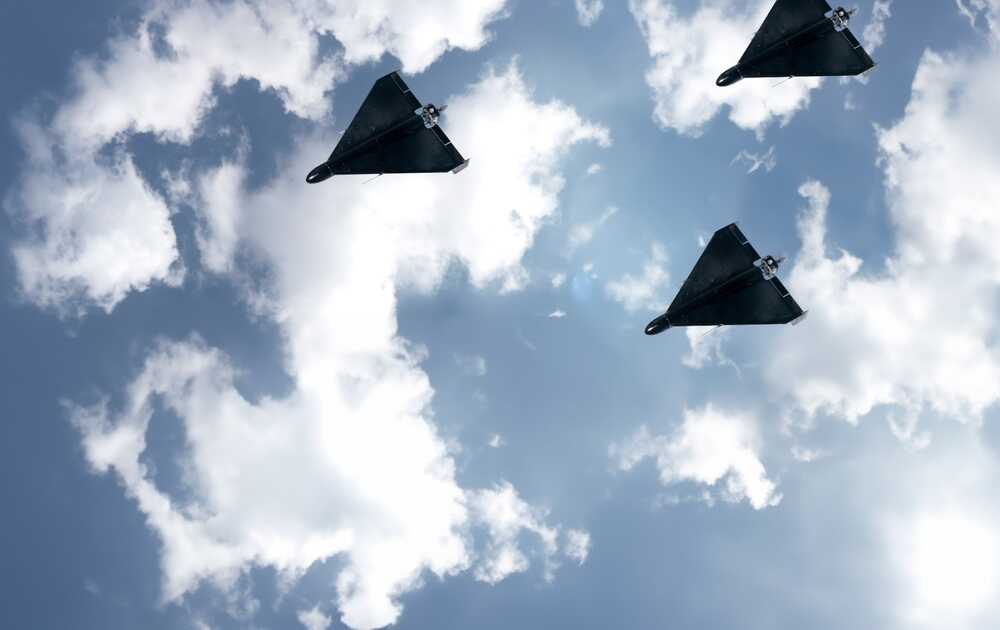
The test also shows how the Pentagon is trying to answer a problem that keeps getting worse. Iran’s Shahed drones and similar systems are cheap, hard to stop, and built to force defenders into wasting much more money than the attacker spends.[2][4] ABC News reported that the Pentagon has also deployed its own low-cost uncrewed attack system, called the Low-Cost Uncrewed Combat Attack System, and wants to buy more than 300,000 domestically made weaponized drones by 2027.[2]
The Cost Problem Still Rules The Battlefield
The biggest issue is not whether the Army can shoot down one drone. The issue is whether it can do that at scale without burning through expensive missiles. Task & Purpose reported that the Joint Air-to-Ground Missile used in the GRIZZLY test is far cheaper than a Patriot PAC-3 interceptor, but it is still not as cheap as the drones it must stop.[1] That is the same ugly math that has driven years of concern inside defense circles.
The Conversation reported that the Pentagon abolished its old requirements process in August 2025 and replaced it with a more agile system meant to speed up anti-drone buying.[4] The same report said officials are leaning more on flexible tools like Other Transaction Authority to move faster than the old bureaucracy allowed.[4] Even so, the article warned that the major defense acquisition process still moves slowly, which is why many conservatives see the Pentagon as trapped in its own red tape.[4]
What The GRIZZLY Test Does And Does Not Prove
GRIZZLY gives the Army a new option, but it is not a full answer by itself. A report on the system noted that it carries eight missiles, which limits how long it can stay in the fight during a swarm attack.[4] The same report said the radar used in the test, the Fordham Trueview AR 40, can give off signals that may reveal the launcher’s position.[4] Those are real limits, and they matter in any fight where drones arrive in numbers.
Still, the test is a sign that the Pentagon is moving toward cheaper, more practical defenses instead of relying only on high-end missiles. Reuters and other outlets reported that the launcher uses commercial parts, can be mounted on land or at sea, and was built to reduce logistics and cost.[6][7] That kind of approach fits a basic conservative idea: spend taxpayer money on systems that work, not on bloated programs that cannot keep up with the threat.
Sources:
[1] Web – The $20,000 Drone That Should Wake Up the Pentagon
[2] Web – Iran leans on Shahed drones to penetrate U.S. defenses – NBC News
[3] Web – What to know about Iran’s low-cost, long-range Shahed drones …
[4] YouTube – $20,000 Drone vs $4 Million Missile: The War of Numbers in West Asia
[6] Web – America Downs Cheap Drones With Million-Dollar Missiles. A Fix Is …
[7] Web – Cheap drones are reshaping the war in the sky – Reuters