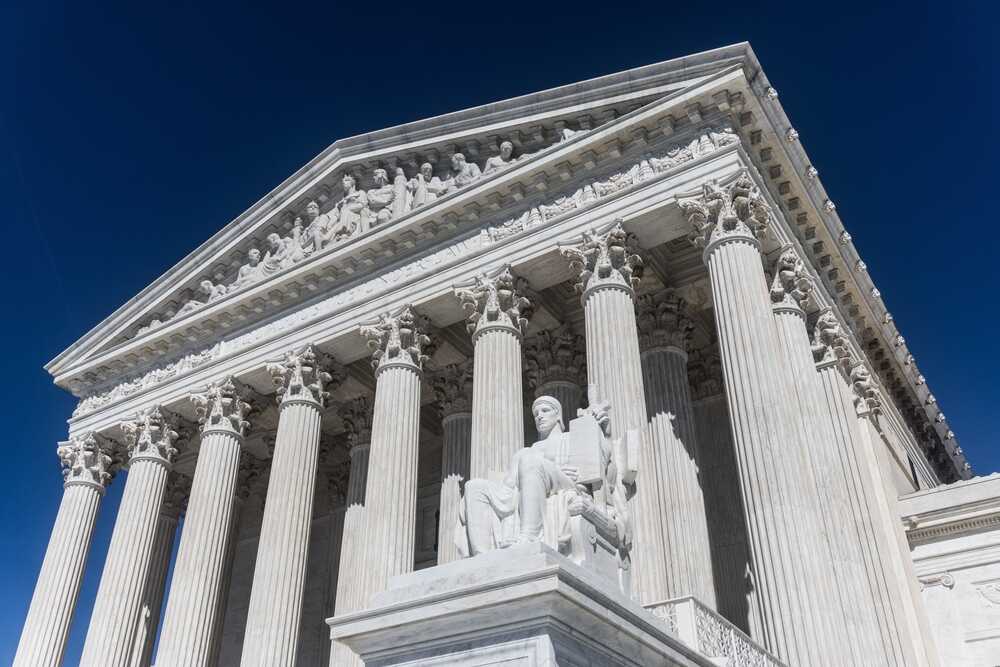
The Supreme Court just handed the Trump administration a fast-moving win on deportations—while reigniting a volatile fight over whether “speed” is being bought at the price of basic due process.
Quick Take
- SCOTUS issued a 6-3 emergency stay that lifted lower-court blocks on certain third-country deportations tied to Trump’s immigration crackdown.
- The dispute centers on whether migrants can be removed to countries that are not their homeland without advance notice and a meaningful chance to object.
- Lower courts ordered removals paused and, in some instances, directed actions like returning flights; the administration sought emergency relief.
- The Court’s action spotlights a recurring national tension: border enforcement demands quick decisions, while courts insist procedures must be followed.
What the Supreme Court Allowed—and Why It Matters
The Supreme Court’s April 7, 2025 per curiam action granted the Trump administration emergency relief, lifting a lower-court injunction that had restricted deportations of certain migrants to “third countries” rather than their countries of origin. The underlying litigation includes challenges to removals involving destinations such as South Sudan and claims that migrants were not given adequate notice before being sent elsewhere. The decision signaled that enforcement can proceed while the cases continue.
For conservatives who prioritize border control and public safety, the practical impact is straightforward: the ruling reduces the ability of district courts to freeze removals nationwide on short notice. For civil-liberties advocates, the central concern is also straightforward: deportation is an irreversible government action, and mistakes can put people in danger. The record described in filings and dissents shows the Court is being asked to referee not only policy, but process.
How the Case Reached the Court on an Emergency Track
Lower-court litigation accelerated in early 2025 as federal judges entered temporary restraining orders and injunctions that halted or limited certain removals. One Boston-based injunction focused on whether people could be sent to a third country without explicit notice and an opportunity to respond. A separate set of events in Washington, D.C. involved temporary restraining orders tied to removals of Venezuelan nationals alleged to be connected to Tren de Aragua, with court orders described as stopping or delaying flights.
The administration asked the Supreme Court for emergency intervention after contending the lower-court restrictions were impeding core executive functions in immigration enforcement. The Court’s stay effectively overrode the immediate constraints imposed by those orders. Critics point to the “shadow docket” posture—high-stakes decisions made quickly, often without full briefing and argument—as a process that can leave the public with fewer answers about the Court’s reasoning on questions that shape national policy.
The 6-3 Split: Enforcement Authority vs. Notice and Due Process
The dissent, led by Justice Sonia Sotomayor and joined by Justices Elena Kagan and Ketanji Brown Jackson, warned the Court was granting emergency relief after the government had “repeatedly defied” a lower-court order. That framing matters because it turns the dispute into more than a technical fight over immigration procedures; it becomes a question of whether court orders can be treated as optional during fast-moving operations. The majority, by contrast, allowed enforcement to continue.
At the heart of the legal conflict is the due process question: what minimum notice and opportunity to contest removal is required when the government seeks to deport someone to a third country rather than their homeland. The research summary indicates that critics argue migrants risk being sent to places where they face torture or peril, while supporters of the policy emphasize the need for rapid removals—particularly for individuals accused or convicted of serious crimes.
The Broader Trend: Courts, Deadlines, and Limited Review
A related procedural issue is how easily migrants can access federal court review when removal orders move quickly. The American Immigration Council argues that recent Supreme Court doctrine has created “confusion” and “new hurdles” for review, including disputes over a 30-day deadline for filing petitions. In one case discussed in the research, the Court treated that deadline as a claim-processing rule rather than a jurisdictional bar, leaving room for tolling when a litigant is diligent, but preserving a strict timing framework.
ABC News: SCOTUS Considering Whether Trump 'Unlawfully Ordered' Migrants Sent Homehttps://t.co/3CL9NBfzrF pic.twitter.com/M0p2QdiTLY
— Twitchy Team (@TwitchyTeam) April 30, 2026
Politically, the case lands in a familiar place: voters across the spectrum increasingly believe powerful institutions protect themselves first and fix problems second. Conservatives see a system that tolerated years of porous borders, then ties enforcement up in court. Liberals see a government willing to move people across borders with limited transparency. The available sources confirm the Court’s emergency stay and the dissent’s warning, but details about how frequently these removals occur post-ruling remain limited in the provided research.
Sources:
Supreme Court of the United States — Opinion (24A931)
DC Circuit Shoots Down Trump Border Asylum Ban