

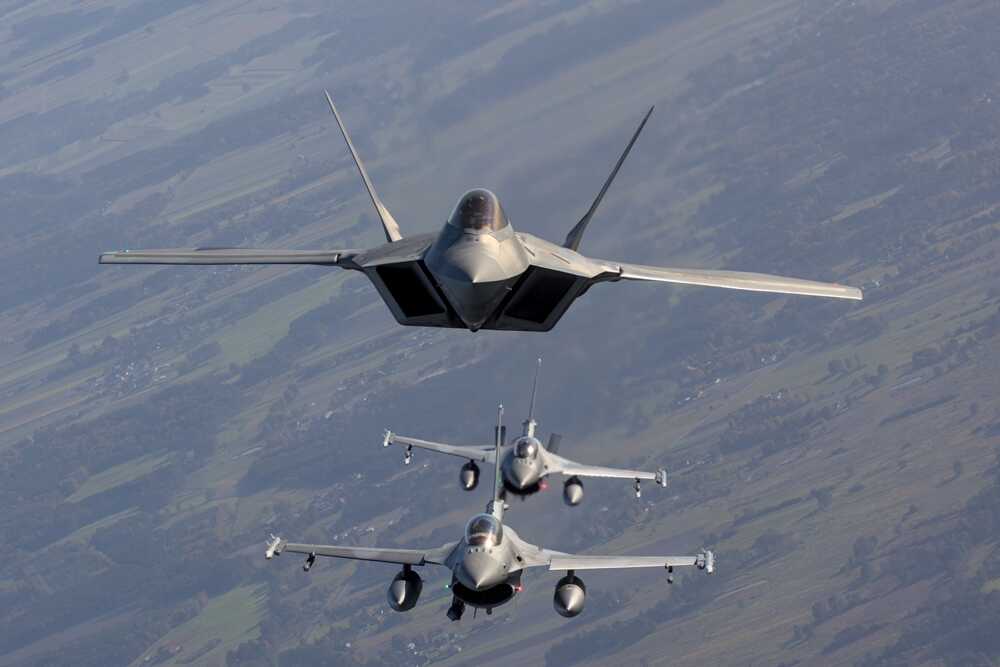
America’s air-superiority edge is riding on a shrinking fleet of F-22s that can’t be replaced—while the Air Force’s next answer isn’t expected until the 2030s.
Quick Take
- F-22 Raptor production ended after 195 aircraft, and restarting the line is widely described as economically and industrially impractical.
- The operational F-22 inventory is commonly cited around 185 aircraft, increasing pressure on maintenance and readiness.
- Next Generation Air Dominance (NGAD)—sometimes discussed with an “F-47” placeholder—has an expected fielding timeline in the 2030s, not soon.
- Past procurement cuts, shifting priorities, and an export ban helped lock the U.S. into a “no-new-F-22s” reality.
Why the F-22 Line Can’t Simply Be “Turned Back On”
The Air Force’s F-22 Raptor is a unique air-superiority platform, but the U.S. stopped building it years ago and dismantled much of what made production possible. Publicly available histories and fact sheets describe how production ended after 195 aircraft, including test jets, and the industrial ecosystem moved on. When specialized tooling, supplier networks, and production know-how disperse, restarting is not like reopening a warehouse—it becomes a major reconstitution effort with steep cost and schedule risk.
F-22 procurement decisions were shaped by post–Cold War budget pressures and later by the post-9/11 focus on counterinsurgency, when high-end air dominance seemed less urgent to Washington. The planned buy was cut dramatically over time, and the program’s high unit cost became a political target. Decisions by Pentagon leadership and Congress ultimately capped production, while an export restriction also reduced the potential scale that could have helped keep the line warm and suppliers engaged.
What a Smaller F-22 Fleet Means for Readiness
The Air Force operates a far smaller F-22 force than originally envisioned, with widely cited figures around 185 operational aircraft today. That reality matters because airframes age, attrition happens, and maintenance becomes more demanding as parts and specialized labor grow harder to sustain. When a capability is both irreplaceable and limited in quantity, every aircraft down for depot work tightens the margin for global commitments—especially for deterrence missions that assume U.S. fighters can win on day one.
The Raptor’s role is not easily substituted. The F-35 remains in production and is a core U.S. tactical aircraft, but it was designed with a different emphasis and mission set than the F-22’s pure air-dominance origins. Meanwhile, keeping the F-22 relevant requires continuous upgrades, training time, and sustainment funding. That combination puts policymakers in a familiar squeeze: spend heavily to keep a small legacy fleet sharp, or accept risk until a next-generation replacement arrives.
NGAD and the “F-47” Talk: A 2030s Timeline, Not a Near-Term Fix
NGAD is described as the Air Force’s sixth-generation path to maintain air dominance, but public reporting and analysis point to affordability concerns and timeline pressure. By the mid-2020s, the program faced reviews and pauses tied to cost, with commentary suggesting per-aircraft prices could reach levels that force hard tradeoffs. Even with prototyping and demonstrators discussed publicly, the practical message to taxpayers is simple: the “next Raptor” is not right around the corner.
The “F-47” label appears in some commentary as a stand-in for the next air-dominance fighter, but the designation itself is not presented as an official, settled program name in the provided research. What is clearer is the expected window: the 2030s. That leaves the United States in an awkward in-between era where the best air-superiority fighter it ever built can’t be restarted at scale, and the replacement is still years away from fielding.
The Strategic and Political Lesson Washington Keeps Relearning
The most grounded takeaway from the available sources is not partisan—it’s structural. When Washington ends production, scraps tooling, and lets supply chains dissolve, the nation loses options. That’s the kind of long-term vulnerability conservatives have warned about for years: bureaucratic short-termism that looks “efficient” on paper until a new threat environment arrives. Today’s debate over funding, industrial capacity, and modernization should be driven by that lesson, not by wishful thinking.
For voters who care about national sovereignty and deterrence, the F-22/NGAD gap raises an uncomfortable but necessary question: can the U.S. defense-industrial base still surge when it has to? The research here supports a limited conclusion—restarting F-22 production is widely portrayed as unrealistic, and NGAD is not expected until the 2030s—so the near-term answer relies on sustainment, upgrades, and smart procurement choices that avoid repeating the same “shut it down and hope” cycle.
Sources:
https://en.wikipedia.org/wiki/Lockheed_Martin_F-22_Raptor
https://www.airandspaceforces.com/weapons-platforms/f-22/
https://www.everycrsreport.com/reports/RL31673.html
https://www.codeonemagazine.com/article.html?item_id=88
https://www.af.mil/About-Us/Fact-Sheets/Display/Article/104506/f-22-raptor/
https://www.lockheedmartin.com/en-us/news/features/history/f-22.html