
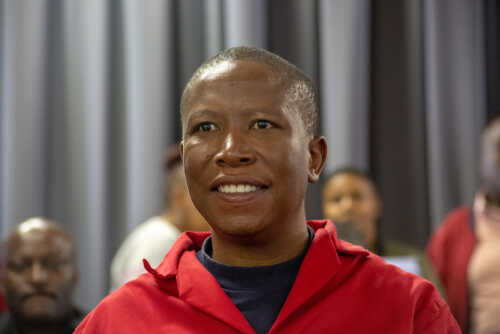
South Africa’s radical left-wing leader Julius Malema demands government seizure of farms allegedly abandoned by Afrikaners who fled to America, while continuing his inflammatory rhetoric against white farmers.
At a Glance
- Julius Malema, leader of South Africa’s Economic Freedom Fighters (EFF), is demanding the government seize farms allegedly abandoned by 49 Afrikaners who emigrated to the US
- Malema has repeatedly used inflammatory language about white farmers, including leading chants of “Kill the Boer!” at rallies
- Former President Trump confronted South African President Ramaphosa with videos of Malema’s rhetoric, raising international concerns
- The EFF, South Africa’s fourth-largest political party with nearly 10% of the vote, advocates for land expropriation without compensation
- South Africa has not enforced hate speech laws against Malema despite his provocative statements
Malema Demands Seizure of “Abandoned” Farms
Julius Malema, the controversial leader of South Africa’s Economic Freedom Fighters (EFF), has called for the South African government to release details of land allegedly abandoned by 49 Afrikaners who emigrated to the United States. During a “VAT Victory March” celebrating the halting of a value-added tax increase, Malema insisted that any idle land should be immediately repossessed and redistributed to South Africans. This demand aligns with the EFF’s radical land reform agenda, which includes the controversial policy of expropriation without compensation.
“We don’t have a problem with people leaving. But if so-called farmers have left voluntarily, we are asking for the addresses of those farms”, said Julius Malema.
Malema questioned the legitimacy of the Afrikaner emigrants as farmers, suggesting they never actually owned land. “If they were real farmers, why is the media not giving us the list of those farms they left behind? Nothing about them looked like farmers. They looked like car guards — that’s why they didn’t own land,” Malema stated. The identity and property details of these emigrants have not been independently verified, and no official list of abandoned land has been released by authorities.
International Tensions Over “White Genocide” Claims
The controversy surrounding Malema’s stance on land reform has attracted significant international attention, particularly from former US President Donald Trump. Reports indicate that Trump confronted South African President Cyril Ramaphosa with videos showing Malema leading rally chants of “Kill the Boer!” and “Shoot to kill!” – slogans widely interpreted as incitement against white farmers. Ramaphosa reportedly attempted to downplay Malema’s influence, arguing that his rhetoric does not reflect official government policies.
— 𝖡𝖠𝖡𝖠 𝖸𝖠𝖦𝖠 ®✞ (@Recon1_ZA) May 10, 2025
Malema has firmly rejected allegations of “white genocide” in South Africa, calling such claims a “deliberate lie.” During his recent speech, he stated: “There is no genocide in South Africa. If there is, then leaders of AfriForum should follow those 49 people and go live in the U.S. That way, they can lead by example.” The US immigration policy that reportedly granted refugee status to these Afrikaners citing racial persecution has itself become a point of contention in the already heated debate.
Political Influence of the EFF
Despite President Ramaphosa’s delegation reportedly describing the EFF as a small opposition party with limited influence, electoral results tell a different story. The EFF secured nearly 10% of the vote in South Africa’s last general elections, making it the fourth-largest political party in the country. This significant electoral presence gives Malema a substantial platform from which to promote his controversial land reform agenda, which centers on expropriation without compensation.
Following Trump’s meeting with Ramaphosa, the EFF reportedly issued a defiant statement declaring, “Kill the Boer, Kill the Farmer! Victory is Certain!” Critics have pointed out that South Africa has not enforced hate speech laws against Malema despite his inflammatory rhetoric. This perceived legal immunity has emboldened the EFF leader to continue making provocative statements that many observers believe exacerbate racial tensions in a country still grappling with the legacy of apartheid.
The Broader Land Reform Debate
Malema’s recent demands about seizing allegedly abandoned farms reignites the broader debate on land reform in South Africa. The issue of land ownership and redistribution remains one of the most contentious political topics in the country, where the effects of colonial and apartheid-era land policies continue to shape the socioeconomic landscape. While mainstream political leaders like Ramaphosa advocate for more measured approaches to land reform, Malema’s radical stance continues to resonate with portions of the electorate frustrated by the slow pace of change.
The controversy surrounding Malema and the EFF’s position on land reform highlights the deeply rooted complexities within South Africa’s ongoing struggle to address historical injustices while maintaining economic stability and social cohesion. As the debate continues, international observers remain concerned about the potential impact of inflammatory rhetoric on South Africa’s delicate racial dynamics and the security of property rights within the nation.