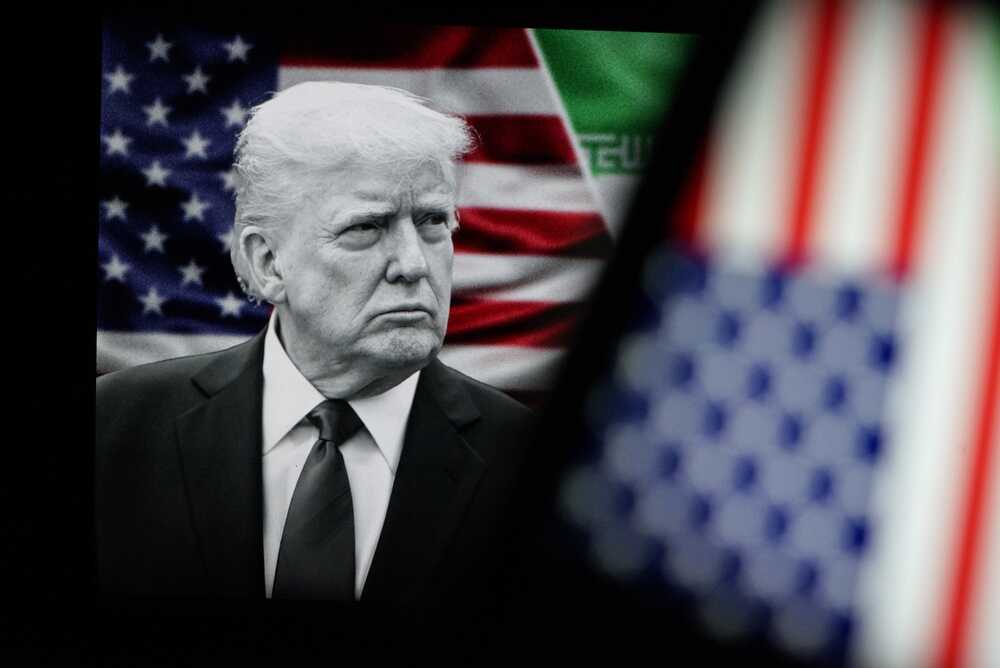
Trump’s newest Iran-war timeline is testing MAGA’s patience with another “just a few more weeks” promise—especially as energy prices and alliance politics collide with America First instincts.
Story Snapshot
- President Trump told the nation on March 31 that the U.S. will keep hitting Iran “extremely hard” for two to three more weeks, extending the war beyond earlier estimates.
- Operation Epic Fury began Feb. 28 as coordinated U.S.-Israeli strikes aimed at Iran’s missile forces, naval capabilities, and nuclear infrastructure.
- Reporting shows repeated claims that the campaign is “ahead of schedule” while official expectations for the end date have shifted several times.
- Iran has launched retaliatory attacks at Gulf partners, raising the risk of wider regional blowback and higher energy costs.
- Trump also signaled alliance pressure by raising NATO withdrawal threats during the same period, adding uncertainty for allies and Congress.
Trump’s Prime-Time Message: Two-to-Three More Weeks
President Trump’s March 31 prime-time address put a new marker on Operation Epic Fury: two to three more weeks of “extremely hard” attacks before the U.S. wraps up operations. The timing matters because the campaign began Feb. 28, and earlier public estimates pointed to a four-to-six-week window. That gap—between “almost done” messaging and a longer runway—has become the central political and credibility issue at home.
Trump did not give a fixed end date, but he framed the mission as nearing completion while keeping pressure on Tehran. Coverage of the address also tied the military timetable to diplomacy, as the administration has described talks in late March while warning of heavier strikes if negotiations fail. For voters who backed Trump to end “forever wars,” the lack of a clear off-ramp—and the shifting end-date language—lands as a red flag.
How the Timeline Shifted While Officials Claimed Progress
Public messaging from the White House and Pentagon has repeatedly stressed that the operation is progressing quickly, yet the expected finish line has moved. A documented timeline of statements shows Trump and Defense Secretary Pete Hegseth using “ahead of schedule” language while offering changing estimates for how long strikes would continue. The March 31 “two to three weeks” update effectively extends the war beyond the earlier outer limit many Americans heard.
Hegseth’s public defense has been consistency on objectives rather than calendar dates: destroy Iran’s missile threat, cripple its navy, and prevent a nuclear capability. That framing is designed to reassure skeptics this is not Iraq-style nation building. Still, many conservatives now judge outcomes by whether Washington can accomplish concrete goals without sliding into open-ended commitments—especially when the same leaders describe progress yet keep revising the timeline.
What We Know About the Military Campaign So Far
Available reporting describes a heavy air campaign against Iranian targets, including operations around Tehran and strikes using high-end U.S. capabilities. Accounts of the campaign reference B-52 flights deep into Iranian territory and the use of large bunker-buster munitions against hardened facilities. The strike package described by CENTCOM at the outset included naval-launched Tomahawks, HIMARS, and strategic bombers, signaling a high-tempo effort to hit fortified missile infrastructure.
Outside casualty totals remain incomplete, but one early-March compilation cited at least 25 deaths, including civilian fatalities, and hundreds of recorded attacks across many provinces. Those numbers are limited and time-bound, not a full accounting of the war’s total cost. From a constitutional and accountability perspective, the concern for many voters is that a sustained bombing campaign can expand faster than Congress and the public can track—especially when official briefings emphasize momentum more than measurable endpoints.
Diplomacy, “New Regime” Talk, and the Energy-Price Squeeze
Late March brought mixed signals: Trump described productive conversations with Iran and ordered a temporary pause on some strikes against energy infrastructure, while also threatening severe attacks on power plants, oil facilities, and other strategic assets if talks failed. He also claimed the U.S. was in discussions with a “new and more reasonable regime,” a phrase that has not been independently clarified in the public record and could reflect negotiating rhetoric rather than confirmed regime change.
The Strait of Hormuz and energy exports sit underneath the politics of this war because any disruption can hit American families through higher prices. The administration’s threats and Iran’s ability to retaliate add volatility to global markets, and retaliatory strikes have reportedly targeted Gulf partners. For MAGA voters already angry about inflation and high costs, a Middle East conflict that risks tightening supply lines can feel like Washington gambling with household budgets.
Alliance Pressure and NATO Talk Complicate the Endgame
Trump’s address period also included renewed pressure on NATO, with reporting that he raised the prospect of a U.S. withdrawal. That posture can be read two ways: leverage to force allies to carry more of the load, or an added uncertainty during a live conflict that already involves Israel and impacts Gulf partners. Either way, alliance brinkmanship during kinetic operations complicates coordination, congressional oversight, and public confidence in the plan.
The bottom line for conservatives is straightforward: the public has heard “short,” “decisive,” and “ahead of schedule” while the clock keeps getting extended. Supporters who want strength without regime-change chaos will look for clear metrics—what targets were destroyed, what threats were removed, and what conditions trigger a stop. Without that, the two-to-three-week promise risks sounding like the same elastic timeline Americans were told to reject.
Sources:
https://www.politifact.com/article/2026/mar/30/Trump-Hegseth-Iran-war-timeline/
https://www.cbsnews.com/news/trump-primetime-speech-iran-today-2026-04-01/
https://www.ndtv.com/video/iran-war-week-5-trump-s-shifting-timeline-on-war-1078954