
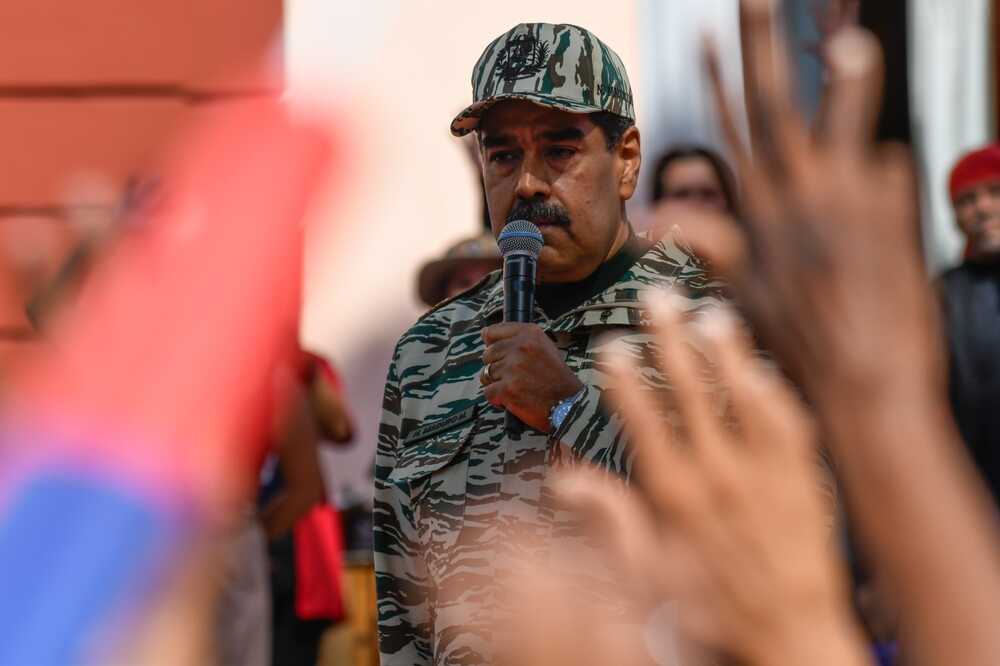
President Trump’s U.S. forces captured Venezuelan dictator Nicolás Maduro, delivering a crushing blow to Iran’s anti-American “resistance axis” and exposing leftist cheers for terrorist regimes right in America’s backyard.
Story Snapshot
- U.S. captures Maduro on January 3, 2026, disrupting deep Iran-Venezuela ties built on oil swaps, drones, and ghost ships.
- Iran faces $2 billion debt loss and anxiety over losing its key Latin American ally, with Foreign Minister Araghchi denying any rupture.
- Chavista loyalist Delcy Rodríguez takes interim power; Trump administration ramps up pressure to sever Iran links.
- Venezuela’s fall weakens Hezbollah proxies and Iranian smuggling near U.S. borders, boosting American security.
Maduro’s Capture Shatters Iran-Venezuela Alliance
U.S. forces captured Nicolás Maduro on January 3, 2026, four days after Venezuela’s military commissioned Iranian Mohajer-6 drones. This decisive action ended Maduro’s regime, a linchpin in Tehran’s sanctions-evading network. The partnership, rooted in mutual defiance of American sanctions, relied on ghost ships transporting Iranian condensates to dilute Venezuelan heavy crude. Iran’s investment exceeded $15 billion since Hugo Chávez’s era, funding projects that expanded Tehran’s influence near U.S. shores. Conservatives see this as vital enforcement of sovereignty against globalist threats.
Deep Ties Exposed: Oil, Drones, and Hezbollah Foothold
Iran and Venezuela formalized a 20-year cooperation roadmap in 2022, covering energy, automotive, and construction sectors. Key milestones included the 2023 El Palito refinery renovation by an IRGC-linked firm for €110 million and President Raisi’s visit inaugurating an Iranian supermarket in Caracas. Hezbollah maintained a presence for smuggling operations, while Iranian drones bolstered Venezuelan deterrence. These ties created a permissive foothold for Iranian logistics and anti-U.S. messaging, undermining American interests in Latin America. President Trump’s intervention halts this encroachment.
Iran’s Anxiety and Defiant Rhetoric
Iranian Foreign Minister Abbas Araghchi declared on January 5, 2026, that U.S. actions are “doomed to fail,” while spokesperson Esmaeil Baqaei confirmed ongoing contacts with interim leader Delcy Rodríguez’s authorities. Ex-MP Heshmatollah Falahatpisheh urged debt recovery from Venezuela as early as December 15, 2025, highlighting Tehran’s $2 billion exposure. No mission closure is planned, but analysts draw Syrian parallels to Venezuela’s instability. This facade masks Iran’s fears of losing a critical ally amid domestic protests and Trump administration threats.
U.S. Victory Weakens Global Threats
Senator Marco Rubio toured the Caribbean in February 2026 to reassert U.S. interests following strikes and Iran warnings. The Trump administration demands Venezuela end Iran ties, gaining leverage against proxy threats. Short-term impacts include disrupted ghost ship oil flows and Venezuelan production dips without Iranian tech. Long-term, Iran may retrench post-Khamenei, shifting influence to Bolivia or Nicaragua. This blow to the resistance axis limits Tehran’s Western Hemisphere projection, protecting U.S. families from smuggling and terrorism. Leftist support for such regimes ignores these dangers to conservative values.
Iran and Venezuela: Guess Who the Left Is Cheering For https://t.co/7k0bbfFgBI
— Trish Smothers (@tasmothers) March 1, 2026
Expert Views on Strategic Shifts
Think tanks like JISS outline three scenarios for Iranian continuity in Venezuela, urging U.S. enforcement to minimize gains. Atlantic Council notes Maduro’s capture disrupts oil ties originating in Chávez’s anti-imperialism. Gulf International Forum highlights enduring military aid like drones. Stimson Center predicts broader resistance failure. Optimism prevails for U.S. wins, countering warnings of Iranian adaptation. These insights affirm Trump’s policy restores limited government abroad, prioritizing American security over globalist alliances.
Sources:
Le Monde: Venezuela-Iran risks losing a key economic and military ally
JISS: The Iran-Venezuela Axis After Maduro
Gulf International Forum: Iran’s Reach in Latin America
Atlantic Council: The Venezuela-Iran Connection and What Maduro’s Capture Means for Tehran
Stimson Center: Iran After Khamenei: Recalibration or Retrenchment
WLRN: Rubio Heads to Caribbean to Reassert US Interests